Introduction: A refined problem in a crowded space
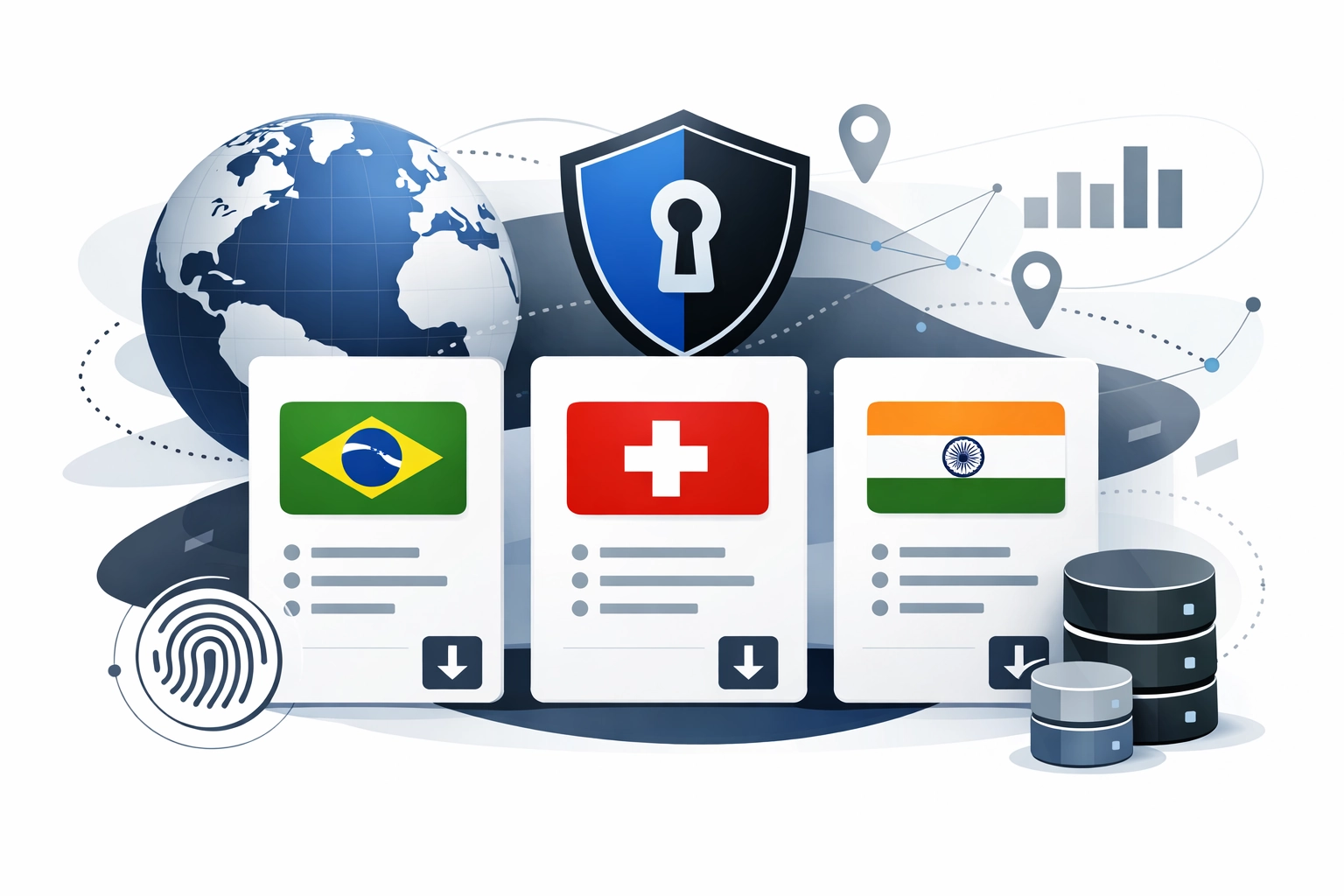
As brands go global, many teams lean on downloadable country website lists as a quick cue for localization opportunities. The three lists named in this piece—Brazil (BR), Switzerland (CH), and India (IN)—are frequently cited in practice because they illuminate regional web footprints, competitor ecosystems, and potential local partners. But the utility of these lists hinges on more than raw addresses or domain counts. To harness them responsibly, teams must adopt a privacy‑first governance posture that accounts for data provenance, regulatory constraints, and ongoing risk signals. This article offers a practical, non‑marketing framework—built for both beginners and seasoned practitioners—focused on using downloadable BR/CH/IN lists with integrity.
Why a privacy‑first framework matters in country lists
Downloadable country website lists can be powerful for localization experiments, channel planning, and risk mapping. Yet several forces complicate their use: data provenance, recency, and alignment with country‑level privacy regimes. Brazil’s LGPD, Switzerland’s revDPA, and India’s evolving data protection landscape shape what is permissible when processing personal data or even metadata associated with domain registrations. In parallel, the industry is transitioning from WHOIS to RDAP, a move that improves privacy control and data minimization but requires new tooling and governance discipline. Understanding these shifts helps avoid overstatement of a list’s completeness and prevents brittle decisions when regulatory or technical environments change. For context on the RDAP transition, see ICANN’s recent guidance and Verisign’s RDAP initiative. (icann.org)
A five‑step, privacy‑first lifecycle for BR/CH/IN lists
The following lifecycle describes how to source, validate, localize, govern, and audit country lists in a way that respects local data laws and supports robust brand localization. Each step includes practical actions and concrete guardrails suitable for a cross‑functional team.
- 1) Validate provenance and update cadence
- Document the source, update frequency, and any licensing constraints for the BR/CH/IN lists you intend to use.
- Prefer sources with explicit data provenance statements and regular refresh cycles. When possible, cross‑check with RDAP/Whois data to gauge currency and accuracy without exposing personally identifiable information.
- Practical anchor: reference Brazil’s LGPD official texts to remind teams that handling personal data requires proper governance, even when working with bulk lists. LGPD official text.
- 2) Apply data minimization and regulatory alignment
- Treat domain list metadata (registrant data, contact details) as sensitive if it contains personal information; rely on RDAP data minimization principles where applicable. ICANN and RDAP discussions emphasize privacy controls over legacy WHOIS data. ICANN RDAP sunset guidance and Verisign RDAP.
- Map each country to its privacy baseline: Brazil (LGPD), Switzerland (revFADP), India (IT Act framework and related amendments). Official references include Brazil’s planalto.gov.br text and the Swiss government pages outlining revFADP. LGPD official text, Swiss Data Protection Act overview.
- 3) Map the list to localization needs (not all lists are equal)
- Define business questions (e.g., market entry, SEO localization, partner discovery, or compliance monitoring) and align the list scope accordingly. For BR/CH/IN, consider language, cultural expectations, and local consumer trust signals as part of the mapping.
- Evaluate how local regulations intersect with your use case. In Brazil, LGPD emphasizes data protection; in Switzerland, revDPA aligns closely with GDPR expectations; in India, data localization considerations coexist with IT Act requirements. Official sources help frame these decisions. LGPD official text, Swiss data protection policy.
- 4) Build a governance‑driven workflow (no “set and forget”)
- Establish a recurring audit cadence, ideally quarterly, to prune stale domains, verify current ownership status via RDAP, and reassess regional relevance. The RDAP transition is ongoing; periodic checks help maintain accuracy. See ICANN and Verisign primers for this shift. ICANN RDAP sunset, Verisign RDAP.
- Embed governance into existing brand‑risk oversight workflows; ensure privacy, legal, and security teams participate in refresh cycles.
- 5) Monitor, report, and close the loop
- Track metrics such as recency, domain removal rate, and localization impact (e.g., localized landing page performance, translation accuracy, and consumer trust signals). Use these signals to refine source selection and update timing.
- Document lessons learned and publish a concise governance note for stakeholders. Include an expert view: the value of data provenance and continuous monitoring; acknowledge that no bulk list is a perfect map for every market.
Country‑specific considerations: BR, CH, IN through a privacy lens
Each country combines distinct privacy expectations, regulatory oversight, and digital ecosystems. Understanding these nuances prevents over‑reliance on a single list and helps shape localization that respects local norms.
- Brazil (BR)
- LGPD creates a framework for processing personal data, including how registrant data can be used and shared. Bulk lists may contain data elements that fall under sensitive handling; ensure internal guidelines align with the LGPD’s rights of data subjects and transfer restrictions. Official text and summaries are available from Brazilian government sites. LGPD official text.
- Localization often means Portuguese language content and culturally attuned user experiences; ensure that any data used for localization remains compliant and privacy‑minded.
- Switzerland (CH)
- revFADP strengthens data protection alignment with GDPR while preserving country‑specific nuances. Organizations with activities in Switzerland should consider appointing local privacy contacts and aligning cross‑border data transfers with Swiss standards. Official policy pages and updates are published by the Swiss government. Swiss data protection basics.
- Swiss consumers expect transparency about data usage; this can shape how you present country‑specific lists and localization signals on your sites.
- India (IN)
- India’s data protection discussions focus on safeguarding personal data while enabling commercial innovation. The Information Technology Act and related amendments provide context for data handling practices. When using country lists for localization, teams should ensure that any processing of personal data in the Indian context adheres to applicable laws and reasonable security practices. See MEITY resources and official bill texts for current guidance. MoTEI/MEITY review of legislations.
- Localization strategies often require English and local language support; ensure accessibility and consent practices are clear for users in IN markets.
Expert insight and a common pitfall
Expert insight: A governance‑driven approach to country lists emphasizes provenance, currency, and privacy controls. Even high‑quality lists require ongoing validation via RDAP/WHOIS checks and cross‑functional review to avoid stale data misrepresenting market opportunities or exposing the brand to risk. In practice, this means pairing bulk lists with a live query layer that can validate current ownership and registrations before deployment in localization experiments.
Common mistakes to avoid:
- Assuming a downloadable list is complete for all local contexts. Lists are snapshots; markets evolve, and new domains appear that may not be captured in a fixed file.
- Overlooking data protection compliance when handling domain metadata that includes personal information. Even aggregated data can implicate privacy if not processed with care.
- Neglecting ongoing RDAP/WROIS validation after initial import. The RDAP transition means data access and visibility can change; a standing audit cadence mitigates surprises.
A practical toolkit for BR/CH/IN lists (a non‑table framework)
To operationalize the five‑step lifecycle without a spreadsheet‑heavy workflow, use this compact framework you can apply in sprint cycles. The structure mirrors the five steps above and is designed to be embedded in a cross‑functional workflow with minimal friction.
- Toolkit step 1: Provenance dossier
- Create a one‑pager for each list: source, date of extraction, license terms, refresh cadence, and contact for data governance.
- Document any use restrictions and the intended localization use cases (e.g., landing page localization vs. partner discovery).
- Toolkit step 2: Privacy guardrails
- Define data minimization rules and ensure alignment with LGPD, revFADP, and India’s emerging framework where applicable.
- Incorporate RDAP checks as the primary verification method for ownership and current status while avoiding unnecessary exposure of personal data.
- Toolkit step 3: Market mapping touchpoints
- Link each domain to localization signals (language, currency, content type) and map to product or service lines.
- Record observed consumer interactions (e.g., CTR differences, engagement metrics) to align with market needs.
- Toolkit step 4: Governance cadence
- Set quarterly reviews with privacy, legal, and product leads; adjust refresh frequency based on market dynamism.
- Publish a short governance note after each cycle, highlighting decisions, risks, and next steps.
- Toolkit step 5: Operational metrics
- Track list freshness (days since last update), removal rate, and localization hit rate (percentage of domains leading to localized assets).
- Include a qualitative assessment: data provenance confidence score and a privacy risk rating for the list as used in localization projects.
Client integration: where webatla’s tools complement this approach
Practical workflows for teams using downloadable country lists benefit from a few trusted sources and tools. In this context, consider pairing BR/CH/IN lists with dedicated governance platforms and data‑quality services. The client’s country inventories and data assets offer a concrete, policy‑aligned backbone to your localization efforts. For example, a Brazil‑focused country list can be accessed here: Download Brazil BR websites list, and a broader List of domains by Countries directory can help with cross‑country benchmarking. For data verification and ongoing monitoring, leverage the RDAP/WIPO‑style database: RDAP & WHOIS Database.
Putting it into practice: a Brazil, Switzerland, India use case
Imagine a mid‑sized consumer tech brand aiming to test localized pages and partner ecosystems in BR, CH, and IN within a six‑month window. The privacy‑first framework would guide them to: (1) acquire country lists with clear licensing, (2) validate currency via RDAP lookups and cross‑checks, (3) map each domain to localization assets (translations, tax rules, payment methods), (4) drive governance reviews with privacy and legal teams, and (5) monitor performance and adjust scope as data quality shifts. In BR, LGPD considerations would shape consent flows on localized assets; in CH, revFADP alignment would inform cross‑border data handling; in IN, the evolving framework would require close attention to user consent and data protection expectations. Each step is supported by primary sources that describe the regulatory landscape and the RDAP transition in practice. See the cited sources for more detail on data protection regimes and the RDAP transition.
Limitations and ongoing challenges
The framework is practical but not a panacea. A few clear limitations deserve emphasis:
- Data provenance gaps: Bulk country lists may omit new domains or reflect a bias toward certain registries. Regular RDAP checks mitigate this risk, but no list is perfectly complete.
- Regulatory drift: Data protection regimes evolve, and compliance interpretations differ across jurisdictions. Ongoing education and engagement with local counsel are essential.
- Technical fragility during the RDAP transition: While RDAP improves privacy and data structure, it can introduce latency and variability across registries. Plan for fallback strategies and monitoring. RDAP state of play.
- Localization quality vs. list scope: A strong list is a starting point, not a finish line. Localization success depends on content quality, language accuracy, and culturally appropriate UX, not solely on domain ownership signals.
Key takeaways
Using downloadable BR/CH/IN country lists can accelerate localization insights if you anchor the process in a governance framework that respects data provenance, privacy, and regulatory realities. Tie the list lifecycle to a clear localization strategy, a privacy‑by‑design approach, and a disciplined auditing cadence. When you pair credible lists with live validation (via RDAP) and cross‑functional oversight, you shift from a reactive compilation of addresses to a proactive, compliant, and scalable localization program.
Supplemental reading and sources
For readers seeking deeper grounding, the following sources provide context on data protection regimes and the RDAP transition that informs how country lists should be handled in practice:
- ICANN: RDAP sunset and the move away from legacy WHOIS. RDAP sunset guidance.
- Verisign: The RDAP initiative and ongoing support for RDAP. Verisign RDAP.
- ICANN: A primer on RDAP performance and deployment. RDAP primer.
- Brazil: LGPD official text and summary for policy alignment. LGPD official text.
- Switzerland: revFADP and data protection policy overview. Swiss DP basics.
- India: MEITY legislative references for data protection context. Legislation review.
- Public official Brazilian LGPD legislation text. LGPD PDF.