Problem first: your brand lives in a landscape of lookalikes, not just your primary domain
Every day, attackers and opportunists surface new impersonation domains, typosquats, and lookalike brands across an expanding set of top-level domains. For brand teams, that means a sprawling, evolving digital footprint that’s hard to monitor with a single domain or a static portfolio. The consequence is real: customer confusion, revenue leakage, and reputational harm from domains that imitate your brand or misdirect traffic. The solution isn’t simply cataloguing domains; it’s turning bulk lists into targeted, governance-ready signals that support risk-based decision making. This article explores a practical pipeline to convert downloadable domain inventories—such as niche extensions like .website, .sh, or .autos—into actionable risk signals that inform protection, localization, and vendor governance.
A pragmatic pipeline: from list to signal
Bulk domain lists have obvious value, but raw lists are noisy and rapidly outdated. The real value emerges when you apply a disciplined pipeline: curate, normalize, enrich with registration data, score risk, and embed into governance workflows. The core idea is simple: treat every domain in a downloaded inventory as a potential signal that must be verified against the brand, the business context, and regulatory obligations.
We’ll sketch a repeatable workflow that teams can adapt without overhauling existing processes:
- Ingest and normalize: standardize formats, de-duplicate variants (e.g., hyphenated forms, homoglyphs), and map domains to brand assets.
- Enrich with authoritative data: pull registration data via RDAP/WHOIS, ownership changes, DNS hosting, and first/last seen timestamps to gauge freshness and legitimacy.
- Assess alignment with the brand: measure lexical similarity to brand terms, product names, and official campaigns.
- Contextualize by risk category: impersonation risk, phishing risk, typosquatting risk, or historical abuse signals.
- Score and triage: translate signals into a transparent risk score and a recommended action plan (monitor, take down, or register a defensive domain).
- Operationalize: integrate with your governance tools, issue escalation tickets, and maintain auditable records for regulators and executives.
Intentionally, this pipeline blends editorial rigor with automation. It’s not about eliminating noise entirely but about surfacing high-signal domains that deserve attention, while keeping a defensible trail for audits and leadership reviews.
Why niche TLDs matter for governance and localization
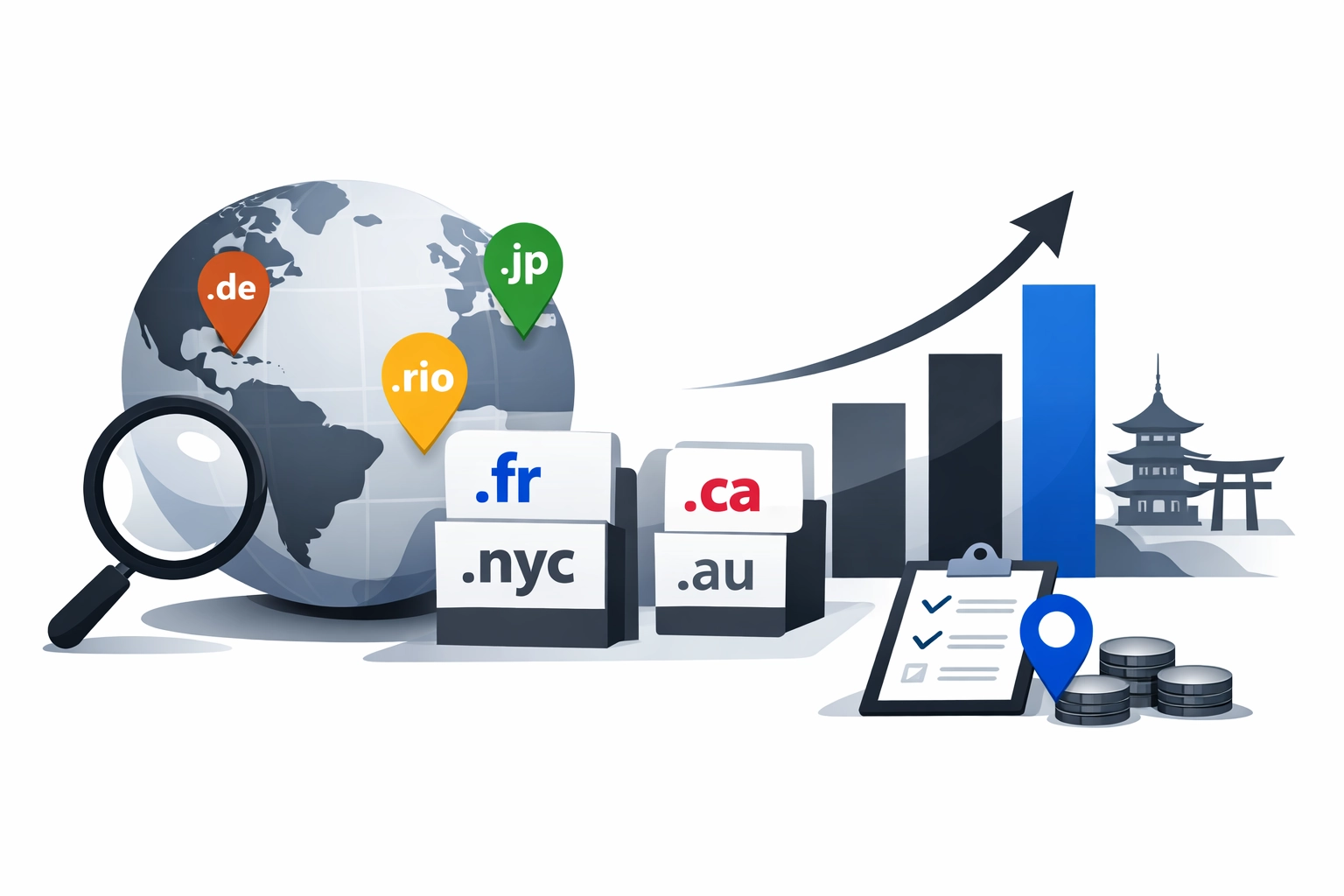
Many organizations default to a handful of global extensions (for example, .com, .net, .org) when planning brand protection. Yet modern portfolios increasingly hinge on niche and geo-specific TLDs to support localization, commerce, and regional campaigns. In practice, niche lists—like .website, .sh, or .autos—can reveal risk vectors that your core domain strategy overlooked. A downloaded inventory that includes these extensions enables teams to spot potential mis-targeted traffic, counterfeit storefronts, or misaligned compliance requirements in specific markets.
The value here is twofold: first, you gain visibility into non-core domains that could affect local trust and customer experience; second, you unlock opportunities to preemptively defend or janitor domains before issues arise in a given market. This approach aligns well with a governance mindset that treats every extension as a possible surface of risk or opportunity, not as a static asset class.
Expert insight: industry practitioners increasingly emphasize that cross-TLD monitoring delivers a clearer picture of brand footprint and impersonation risk than focusing on core extensions alone. The practical takeaway is to incorporate a targeted subset of niche domains into your risk scoring and governance workflows rather than attempting to chase every possible extension at once.
A sample scoring framework: turning signals into decisions
To move beyond ranking domains by “bad vs. good,” apply a decision-oriented scoring framework that translates signals into concrete actions. The following framework is designed to be lightweight, auditable, and compatible with existing risk management processes. You can adapt weights to your industry, brand size, and regulatory environment.
| Signal | What it implies | Suggested action |
|---|---|---|
| Registration data freshness | Recent registrations or frequent ownership changes may indicate opportunistic use or a current threat actor. | Flag for manual review; add to watchlist; consider defensive registration if brand risk is high. |
| Lexical similarity to brand | Domain name resembles the brand or product names (typos, homographs, or added terms). | Monitor; assess impersonation risk; prioritize for takedown or defensive campaigns if traffic risk is material. |
| Hosting/location patterns | Unusual hosting regions or DNS infrastructure may signal malicious intent or data leakage concerns. | Investigate; evaluate legal/compliance exposure; consider blocking or takedown if aligned with risk policy. |
| Geographic/ language signals | Domains tied to jurisdictions where you lack brand protection reach or local law constraints. | Allocate regional monitoring; adjust localization plans; prepare jurisdiction-specific enforcement. |
| Historical abuse signals | Past abuse (phishing, malware, scams) associated with similar domains or registrants. | Higher priority for enforcement or sinkholing; coordinate with legal and security teams. |
| Relation to supply chain partners | Domains used by vendors or affiliates that resemble your brand. | Flag for vendor risk review; require contractual controls or blocking policies if needed. |
In practice, the score is a composite metric. A domain with strong brand similarity and recent ownership changes in a high-risk jurisdiction may score higher than a well-established, clearly separate domain in a low-risk country. The goal is to enable teams to triage efficiently while preserving a defensible audit trail. The exact weights will vary, but the framework itself remains a repeatable, scalable approach for teams of all sizes.
Integrating downloadable domain lists into the governance workflow
Downloadable domain inventories are just raw material unless integrated with product, legal, and security workflows. The following integration approach helps ensure that lists translate into defensible actions:
- Link lists to brand assets: map domains to official brand names, registered trademarks, and product SKUs to quickly identify impersonation risk.
- RDAP and WHOIS data as a signal layer: enrich each domain with registration data to assess ownership legitimacy and continuity. RDAP, as the successor to WHOIS, provides structured data that is easier to automate and verify. RDAP overview (and related research) confirms its role as a modern data access protocol.
- Automation with controls: automate ingestion, enrichment, and scoring, but keep human review for high-risk cases and for regulator-facing reports.
- Auditing and governance: maintain versioned records of decisions, including rationale for monitoring, takedowns, or domain acquisitions.
- Vendor and localization considerations: include vendor domains and geography-focused signals to strengthen supply-chain risk management and local-market readiness.
For readers already leveraging a robust domain data workflow, the next step is to embed these signals into procurement and vendor management processes. That means expanding beyond defensive registrations to include ongoing monitoring, incident response playbooks, and escalation paths for identified risks.
To illustrate practical options, consider the following concrete use cases that benefit from including niche TLDs in the downloaded inventories:
- Vendor portals on niche domains: a supplier uses a .website domain for a B2B portal; cross-check this with your contract and security policies to prevent misdirection or credential stuffing vectors.
- Geographical launches and campaigns: a regional marketing push uses .autos or .sh domains in localized campaigns; monitoring these helps ensure regional assets stay aligned with the official brand.
- Counterfeit storefronts: shoppers may encounter a .website domain that mirrors your e-commerce experience; early detection enables quicker takedowns and customer redirection to legitimate channels.
From a client perspective, a portfolio that includes niche lists complements existing domain assets and helps your governance teams be more proactive. See how a provider like webatla curates TLD inventories and offers RDAP/WHOIS data for building a defensible domain strategy, including a robust set of TLD and country inventories. List of domains by TLDs and RDAP & WHOIS Database illustrate how third-party data assets can plug into your workflow.
Case study: a hypothetical brand facing cross-TLD risk
Company X, a mid-sized consumer electronics brand, discovers several suspects in a regional market using a .website domain that mirrors their product line and a social media profile with a closely related brand name. They pull a downloadable inventory that includes .website and other niche extensions and run it through the scoring framework. The result: a handful of domains score high for impersonation risk due to brand-name similarity, recent registration, and hosting in a jurisdiction with weak enforcement signals. The team cross-references DNS data and owner records via RDAP to confirm ownership ambiguity and partners with legal to file a takedown for the strongest cases, while adding several domains to a watchlist and securing defensive registrations in the most threatening extensions. The process reduces the exposure window for potential customer confusion and helps inform localization decisions for the next regional campaign.
This scenario demonstrates how niche-domain inventories—when paired with a disciplined scoring approach and governance workflow—can deliver a measurable improvement in brand protection without the overhead of chasing every new TLD.
Limitations and common mistakes to avoid
Despite their value, downloadable domain lists are not a silver bullet. Below are key limitations and frequent mistakes to keep in mind as you implement or optimize your practice:
- Data provenance matters: not all lists are equal. The accuracy and freshness of the data depend on the source, the data collection cadence, and how often ownership changes are reflected in the feed. Always verify against primary registration records (RDAP/WHOIS) and keep an auditable trail.
- Assuming all noise is risk: bulk lists inevitably include domains with no relation to your brand. Apply risk-focused filters and scoring rather than discarding potential signals outright.
- Misinterpreting variants: typos, homoglyphs, and added terms can create false positives. Use a structured similarity assessment and manual review for edge cases.
- Overreliance on a single extension: focusing only on core extensions can leave blind spots in markets where impersonation occurs or where regulatory frameworks differ.
- Legal and regulatory considerations: enforcement strategies must align with local laws and platform policies. Blind takedowns or mass-blocking can trigger legal challenges or customer confusion.
- Automation without governance: automated workflows improve speed but can erode accuracy if they lack review gates for high-risk domains. Always maintain human-in-the-loop for enforcement decisions.
Expert note: practitioners emphasize that the best results come from harmonizing data provenance, risk scoring, and governance processes. RDAP-backed data, when combined with a disciplined workflow, supports more accurate decision making and a defensible audit trail. However, the accuracy of any given signal depends on data quality and the timeliness of updates.
Operationalizing: 3 practical takeaways for teams
- Start with a defensible core: pick a limited, high-risk subset of niche extensions (for example, .website and .autos) to monitor intensively, while continuing broader monitoring for core extensions. This reduces noise and accelerates ROI.
- Pair lists with data-backed verification: always enrich with RDAP/WHOIS data and cross-check against brand assets and trademark records.
- Embed in governance and vendor processes: integrate signals into supplier risk assessments, MSA clauses, and regional localization plans. Maintain an auditable history of decisions to support compliance and board reporting.
For teams seeking a turnkey capability, consider how the client ecosystem can support these needs: a central domain inventory hub, access to a RDAP & WHOIS database, and structured TLD lists that align with regulatory and localization priorities. See the client’s portfolio pages for context and options: .com domain list, pricing, and the broader TLD directory.
One final caveat: use, don’t confuse, domain lists
Downloaded domain inventories are a powerful fuel for brand protection and localization strategies, but they don’t replace human judgment. The strongest outcomes come from teams that combine structured analytics with expert review, clear ownership boundaries, and a documented risk appetite. In a world where brand impersonation is on the rise, a disciplined approach to turning lists into signals enables faster responses, better resource allocation, and stronger governance across the enterprise.
Conclusion: turning data into defensible growth
Downloading a domain list is not an end state—it’s the starting point of a governance-driven practice. By normalizing lists, enriching them with registration and hosting data, applying a principled risk framework, and embedding signals into procurement, security, and localization workflows, teams can navigate the complex terrain of global domain portfolios with greater confidence. In addition to improving protection, this approach supports responsible localization and regulatory compliance, helping brands grow safely in an increasingly jurisdiction-aware environment.
Note on sources and data practices: RDAP is the modern successor to WHOIS for domain registration data, offering structured responses that facilitate automation and governance. For a broad overview of RDAP’s role and consistency with WHOIS data, see sources discussing the RDAP standard and its relationship to WHOIS.
Key references: RDAP and WHOIS data availability and reliability; cross-TLD risk management; and practical brand-protection tooling. For additional context on domain risk and brand protection practices, see industry resources such as Infoblox’s brand protection capabilities and professional literature on online brand governance.