Introduction: a naming problem that benefits from data, not guesswork
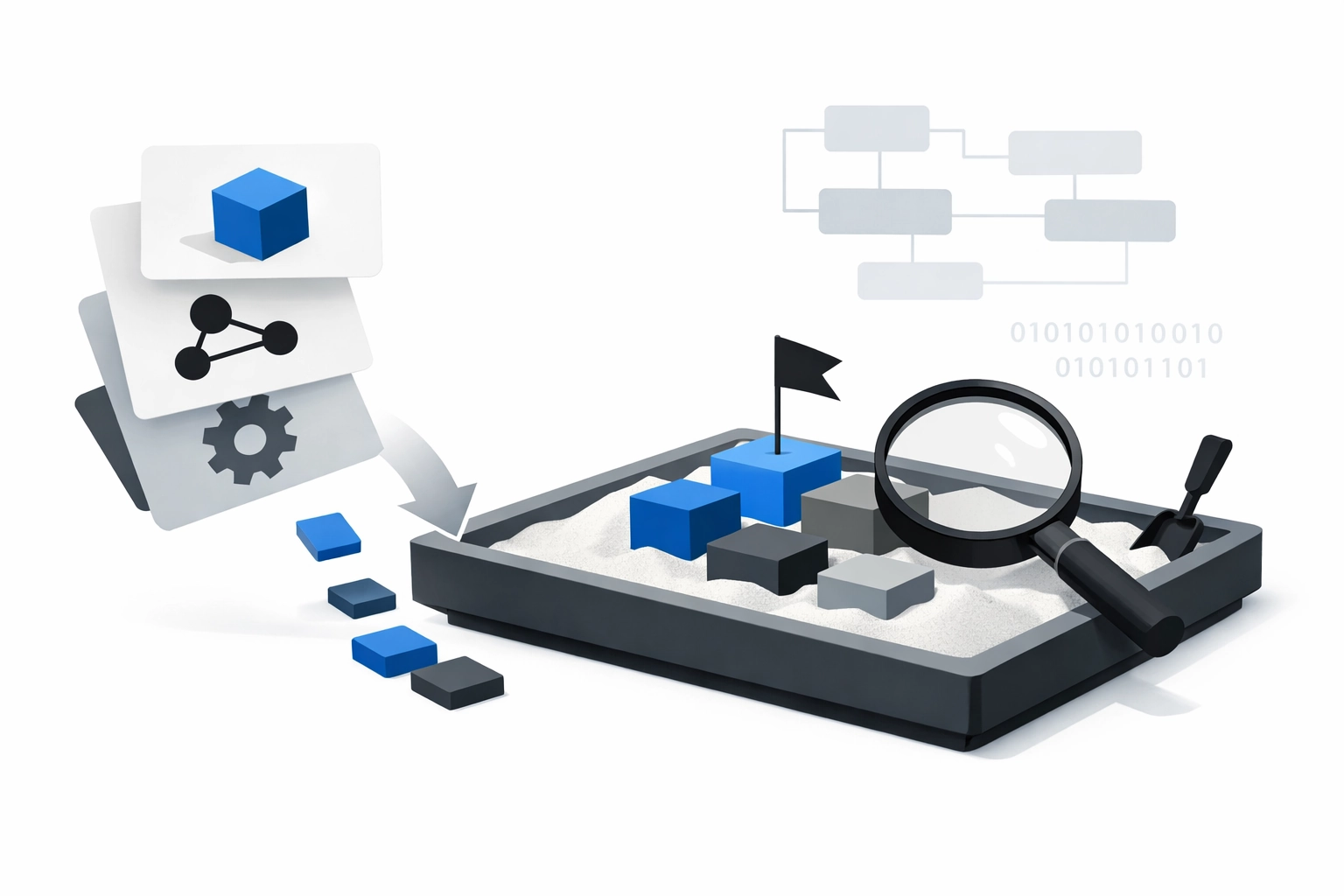
Brand naming often starts with a spark of creativity but succeeds only when that spark can be tested against real-world signals. In the era of global branding, a single name needs to work across markets, be memorable, and survive the governance constraints that come with domain portfolios. A practical approach is to treat naming as a data problem: assemble a domains database of candidate names, check their presence across TLDs, assess potential risk signals, and then run low-stakes tests that reveal consumer and partner responses before any registration fees are incurred. This article outlines a concrete workflow for using a downloadable list of .systems domains to prototype a brand-safety testing Ground, while integrating core privacy and governance considerations that modern domain programs demand. Note: this is a framework for experiments and governance, not a map of which exact name to buy. It connects the dots between creative naming, risk-aware domain testing, and scalable brand governance. Client example: the System-systems testing page provides a living illustration of how a domain extension can live alongside broader portfolio work. For teams exploring US-market naming, a Download list of United States (US) websites can help seed experiments without losing sight of global implications.
From a technical standpoint, the way domain data is accessed is evolving. The public, plain-text WHOIS system has given way to a structured, privacy-aware model known as the Registration Data Access Protocol (RDAP). RDAP offers standardized JSON responses and better privacy controls, which matter when you’re benchmarking brand concepts against real data. ICANN’s RDAP initiative and related RFC specifications provide the governance backdrop for modern lookups and data handling. This shift—from traditional WHOIS to RDAP—has implications for how you source, interpret, and reuse domain data in branding work. ICANN’s RDAP overview and the accompanying IETF RFCs establish the baseline for query formats and data models that underwrite responsible brand testing. (icann.org)
A data-driven approach to branding: why a domains database matters
Successful brand portfolios aren’t built on a single token or a single extension. They require a scalable, auditable view of how names behave across a spectrum of domains, including niche TLDs such as .systems. A robust domains database supports three core capabilities:
- Consistency and comparability: you can compare candidate names against a standardized set of signals (availability, similarity to existing brands, potential confusion with established terms, and security posture) rather than relying on anecdotal checks.
- Risk awareness: early visibility into typosquatting risks, brand imitation signals, or potential regulatory friction helps you steer naming toward safer options.
- Governance and provenance: a traceable data lineage makes it easier to demonstrate due diligence to stakeholders and regulators while enabling audit-ready portfolio decisions.
In practice, a domains database grows more valuable as you layer in structured data from RDAP-based lookups, security signals, and localization constraints. The move from pure WHOIS to RDAP means you’re more likely to get machine-readable certainty, at the cost of dealing with privacy redactions where required by law. That trade-off is precisely the kind of governance question branding teams must wrestle with when they source bulk domain data for naming experiments. For teams that want a deeper dive into the evolution of these data systems, ICANN’s guidance on RDAP and the IETF’s RDAP specifications provide the authoritative roadmap. RDAP overview and the RFC set (RFC 7480–7484) describe how queries, responses, and security layers should operate in practice. (icann.org)
A practical framework for using downloadable domain lists to test naming
Below is a step-by-step framework designed to help branding teams use downloadable domain inventories in a safe, governance-conscious way. The framework emphasizes a disciplined workflow rather than a single magical checklist, and it intentionally accommodates niche extensions like .systems as part of a broader portfolio strategy. The primary objective is to translate creative ideas into testable signals that inform decision-making without committing to registrations prematurely.
- Step 1 — Define your naming intent. articulate the brand personality, target audience, and product category. Decide what success means in your tests (recall, intent to purchase, perceived credibility) and set guardrails to avoid confusing overlaps with established brands.
- Step 2 — Build the inventory from downloadable domain lists. start with a curated set of candidate names and pair them with domain inventories that include a range of TLDs, including niche extensions like .systems. Use a defensible data source, and document the provenance of every list you use. For teams exploring US-market signals, you can also consult a dedicated list of United States (US) websites to calibrate U.S.-centric signals during early experiments.
- Step 3 — filter for signal quality and risk. apply a three-layer filter: (a) linguistic similarity and potential brand confusion, (b) technical health signals (DNS, SSL, phishing risk indicators), and (c) privacy/compliance posture (RDAP-based data with redaction where applicable). This is where RDAP’s structured data becomes valuable, as it supports reproducible filtering across campaigns. See ICANN’s RDAP guidance and RFCs for implementation details. Note: RDAP data can be redacted by privacy rules; plan your tests to cope with partial visibility. (icann.org)
- Step 4 — design a testing protocol that respects governance constraints. run anonymized, non-registration-based experiments such as name-preference surveys, landing-page mockups, or intent studies that reference domain-like experiences without exposing personal data. If you need to verify the data you’re using, rely on RDAP-enabled lookups and record-keeping rather than raw, plaintext WHOIS, which can be inconsistent with modern privacy regimes. IETF RDAP update and ICANN’s RDAP page provide the governance framework for these lookups. (ietf.org)
- Step 5 — localize and test responsibly. if your brand will operate in multiple markets, simulate localization signals using country-code or geographic TLDs where appropriate. When you test in US contexts, incorporate the Download list of United States (US) websites to ground your experiments in a domestic signal set, while keeping your eyes on global applicability. Localization is a double-edged sword: it can improve relevance but also introduces risk if you misinterpret local spelling, tone, or cultural connotations.
- Step 6 — governance and documentation. maintain a governance rubric that records data provenance, list source versions, data handling decisions, privacy mitigations, and decision rationale. A clear, auditable trail helps you defend naming outcomes to executives and compliance teams. You can also point stakeholders toward client resources such as the List of domains by TLDs and the RDAP & Whois Database pages for broader context.
Expert note: a disciplined approach to data tends to outperform pure intuition in naming choices. A practitioner with experience building domain portfolios emphasizes that structured, testable signals—not single-domain hero shots—drive durable branding outcomes. The idea is simple, but execution matters: maintain a clean data provenance, document filtering criteria, and ensure that privacy controls are respected throughout the workflow. This aligns with industry guidance on data access protocols and governance standards. Expert insight: structured data and privacy-aware lookups improve reliability and trust in branding decisions. See ICANN/ RDAP guidance and RFCs for the technical backbone. Limitations: even with RDAP, redactions can obscure important details, so practitioners should design tests that remain valid under partial visibility. (icann.org)
An illustrative workflow: applying the framework to a hypothetical naming sprint
Imagine you’re assessing five candidate brand names for a new software-as-a-service product. Each name exists in multiple language contexts and will need a protective, domain-backed footprint. Here’s how you could apply the framework using a downloadable domain inventory, including a .systems test layer, while staying aligned with privacy and governance norms.
- Initial screening: from a downloaded list, select 20–25 plausible candidates that are easy to pronounce in target markets and have minimal risk of unintended or negative associations. Document linguistic intent for each candidate.
- Domain-health check via RDAP-inspired signals: for every candidate, examine at least three domain-namespace signals (DNS health, TLS presence, and registration status patterns) and note any red flags. RDAP-based data helps standardize this review across domains and TLDs. Warning: in some registries, data may be redacted; factor this into your risk scoring. (icann.org)
- Risk scoring and shortlisting: assign a risk score on a simple 1–5 scale for each candidate across language-fit, brand-confusability, privacy posture, and geotarget suitability. Shortlist the top 3–5 candidates with the strongest, lowest-risk profiles.
- Local testing with US signals: use a Download list of United States (US) websites as a baseline to gauge how name perception might fare in the domestic market, then contrast with international signals using a broader domain inventory. This helps prevent a US-centric bias from skewing global brand perception.
- Documentation and governance: capture decisions in a living document, tying each shortlisted candidate to specific data sources and rationale. Ensure compliance and privacy controls are clearly stated in the record. The result is a defensible, auditable slate from which internal stakeholders can select a final name and domain strategy. Client references such as the systems-focused landing and the broader domain lists hub illustrate how this data-driven approach can scale in practice. (icann.org)
Expert insight and practical limits
Industry observers emphasize that the shift to RDAP isn’t just a technical upgrade; it’s a governance and privacy improvement that enables more reliable, auditable data flows for brand portfolios. ICANN’s RDAP guidance and the supporting RFCs codify how practitioners should query, interpret, and store registration data in a way that respects privacy while remaining useful for brand decisions. Meanwhile, the reality of redacted fields under privacy regimes means testing must be designed to work even when some data are hidden. This is not a flaw in RDAP—it’s a reminder that governance and process design matter as much as the data itself. RDAP and governance; IETF RDAP update. (icann.org)
Limitations and common mistakes to avoid include over-reliance on bulk lists as a definitive authority. Bulk domain inventories are powerful for screening but not a substitute for stakeholder validation, legal review, or real-world customer testing. A frequent pitfall is assuming that every candidate with favorable linguistic signals is automatically worth pursuing without considering market-specific signals, competitive overlap, or regulatory frictions. Typosquatting risk—where attackers register visually similar domains—remains a practical concern in any domain-testing program. Industry coverage highlights that lookalike domains can harbor threats, underscoring the need for proactive brand protection and testing discipline. (techradar.com)
Limitations and common mistakes in bulk-domain testing (a quick guide)
- Mistake 1 — Treating a downloaded list as a gold standard. bulk inventories are snapshots. Always document versioning and provenance, and supplement with privacy-aware RDAP data rather than raw WHOIS outputs.
- Mistake 2 — Ignoring privacy and compliance. GDPR and other regulations require data minimization and controlled access. RDAP-enabled lookups with proper authentication provide safer access than plaintext WHOIS from older registries.
- Mistake 3 — Overfitting to a single market. tests anchored only to US signals can mislead global branding. Use a diversified domain inventory and localization checks to avoid myopic conclusions.
- Mistake 4 — Equating search volume with brand suitability. a top keyword or high search volume does not guarantee a good brand fit; semantic appropriateness and legal clearance matter just as much.
- Mistake 5 — Underestimating governance needs. a lightweight approach may yield quick wins but can undermine long-term risk management and portfolio hygiene. A robust governance rubric helps prevent missteps as the portfolio grows.
Putting it all together: a concise, actionable conclusion
Brand naming in a connected world demands a disciplined, data-driven approach. A domains database built from downloadable inventories—carefully filtered, privacy-conscious, and well-governed—forms the backbone of durable brand strategies. By pairing creative ideation with structured RDAP-enabled lookups, localization considerations, and a clear governance trail, naming teams can test concepts with confidence and scale responsibly as portfolios expand. The .systems extension is a reminder that niche TLDs and domain inventories can play meaningful, testable roles in brand experiments when used with discipline and care. For teams establishing their workflow, consider starting from a core repository of candidate names, pair it with a robust data strategy (including a US signals baseline when appropriate), and embed a governance rubric that records data provenance, decision criteria, and privacy safeguards. If you’re exploring additional domain data resources, the client resources shown here offer a practical starting point: systems-focused portfolio page, domain lists hub, and RDAP & Whois data.
Appendix: quick-reference, practical takeaways
- RDAP provides structured, privacy-aware domain data and is becoming the standard for gTLD lookups. (icann.org)
- When testing names, maintain a clear data provenance and governance trail to support auditable decisions. (ietf.org)
- Use niche TLD inventories (such as .systems) as a sandbox for branding experiments, not as a sole basis for purchasing decisions.
- Be mindful of typosquatting risks and other brand-safety signals that can emerge in bulk inventories. (techradar.com)