Smart Domain Hygiene for AI-Era Brands: Guarding Brand Safety with Niche TLD Inventories
As brands increasingly rely on automated and AI-assisted workflows to manage their presence online, domain hygiene has moved from a tactical protection activity to a strategic governance discipline. The sheer scale of domain portfolios, the rise of privacy-forward data protocols, and the proliferation of niche top-level domains (TLDs) create both opportunities and risks. For modern brands, the question isn’t merely which domains exist, but how to orchestrate a defensible, localization-aware, and compliant domain ecosystem. This article offers a data-driven framework to build and maintain a domain hygiene program that marries governance rigor with practical tooling—including niche TLD inventories and RDAP-backed data—so you can defend brand signals, support localization goals, and stay resilient in 2026 and beyond. (icann.org)
The domain hygiene challenge in the AI era
Traditional domain strategy focused on securing a handful of core extensions (.com, .net, .org) is no longer sufficient. The AI era compounds brand risk: auto-generated content can reference or mimic brand names elsewhere, and shadow domains in niche TLDs can dilute brand authority or mislead consumers. Moreover, new data-protection regimes and RDAP adoption change how practitioners access registration data, affecting due diligence and monitoring workflows. Industry observers anticipate a gradual but pervasive shift from WHOIS to Registration Data Access Protocol (RDAP) to address privacy concerns while enabling responsible data access. Organizations such as ICANN and national registries have begun highlighting the RDAP transition as a strategic data-access evolution. (icann.org)
Alongside data-access changes, brand hygiene now requires a cross-functional approach: governance, security, and localization teams must align on risk signals, data provenance, and response playbooks. A key takeaway from the industry is that better data governance leads to faster, safer decision-making when evaluating bulk lists, monitoring lurking risks, and deciding which niche TLDs deserve ongoing attention. For reference, RDAP’s JSON-formatted data offers clearer, machine-readable signals for automated monitoring and can be a more privacy-respecting alternative to legacy WHOIS views. (en.wikipedia.org)
A structured approach: The Domain Hygiene Governance Pyramid
To systematize domain hygiene, adopt a four-layer governance model that translates risk signals into actionable steps. This pyramid is intentionally domain-first—driven by data rather than by marketing narratives—and is designed to accommodate niche TLDs alongside legacy extensions.
- Discovery: map the brand footprint across all relevant TLDs, including niche and geographic extensions.
- Validation: verify ownership, redress gaps with RDAP-backed data, and assess potential brand–domain conflicts.
- Protection: implement governance-backed controls, monitoring, and takedown workflows for risky or misused domains.
- Localization & Compliance: optimize domain choices for multilingual markets while ensuring regulatory alignment and user trust.
Each layer informs the next, and the process benefits from having a clear inventory, data provenance, and a defined decision authority. A robust set of data sources—RDAP endpoints, trusted bulk lists, and vendor-provided feeds—helps ensure you’re acting on current signals rather than yesterday’s mistakes. (icann.org)
Level 1: Discovery — casting a wide net (and why it matters)
Discovery begins with a formal inventory of domains that could plausibly bear your brand or user signals. The broader your discovery, the lower your long-term risk of brand confusion, phishing, or counterfeit experiences. A practical discovery exercise includes:
- Cataloging core brand names, product lines, and key trademarks across TLDs.
- Including niche and geographic extensions that customers may encounter in specific markets.
- Assessing potential naming variants and typographic similarities that could be exploited by bad actors.
- Integrating data from downloadable domain lists to expand visibility in under-served spaces. For example, practitioners sometimes consider niche inventories such as download list of .su domains, download list of .pics domains, or download list of .beer domains to surface signals outside mainstream extensions. These lists must be treated with provenance and validation standards to avoid stale or malicious data entering your workflows. (sidn.nl)
In practice, discovery is not a one-off audit. It should be a recurring activity synchronized with product launches, marketing campaigns, and regulatory reviews. A modern approach pairs human review with automated checks against RDAP data, enabling you to flag domains with ambiguous ownership or questionable hosting practices that could undermine user trust. The ongoing shift to RDAP—particularly for gTLDs—means you’ll be relying on structured, machine-readable data to scale discovery reliably. (sidn.nl)
Level 2: Validation — turning signals into decisions
Discovery without validation yields information overload. Validation translates signals into trusted risk scores and clear actions. RDAP improves consistency of data presentations across registries, but validation also requires cross-checks with other sources, including trademark databases and web content signals. Key validation steps include:
- Cross-reference RDAP records with trademark records to identify potential conflicts or duplications.
- Check for domain ownership changes or recent registrations that may indicate opportunistic behavior.
- Assess hosting quality and security posture (e.g., TLS certificates, content safety) to determine the risk of user-facing abuse.
- Flag high-risk domains for rapid triage, even if ownership appears legitimate at first glance.
Experts emphasize that the transition to RDAP will influence validation workflows by offering structured data fields and standardized status signals, making automated triage more reliable and privacy-respecting at scale. Organizations should design validation criteria that leverage RDAP fields (registrar, registered date, status, contact redaction where applicable) and align with internal risk tolerance. (icann.org)
Level 3: Protection — governance-backed control and monitoring
Protection translates validated signals into a concrete action plan. It combines policy governance, technical controls, and operational playbooks to minimize misuse and protect users. A practical protection program includes:
- Registrar locks and DNSSEC where appropriate to reduce tampering risk.
- Automated monitoring for new registrations that resemble your brand or product names, across both mainstream and niche TLDs.
- Procedures for takedowns or disputes, including timely communications to registries and registrars when misuse is detected.
- Clear ownership of the decision process (who can authorize takedown requests, who maintains the inventory, who handles localization checks).
Brand protection in the AI era increasingly relies on a governance framework that links domain risk signals to enterprise risk management. In other words, digital risk must be visible in board-level risk dashboards, not buried in IT or marketing silos. The RDAP-era data landscape supports this by enabling consistent, privacy-conscious data access for monitoring and incident response. (icann.org)
Level 4: Localization & compliance — turning signals into credible signals for users
Localization is more than translation; it is about providing trusted, local experiences that respect regional norms and regulatory constraints. Niche TLDs can be valuable for localization when used thoughtfully and in a governance-backed way. Considerations include:
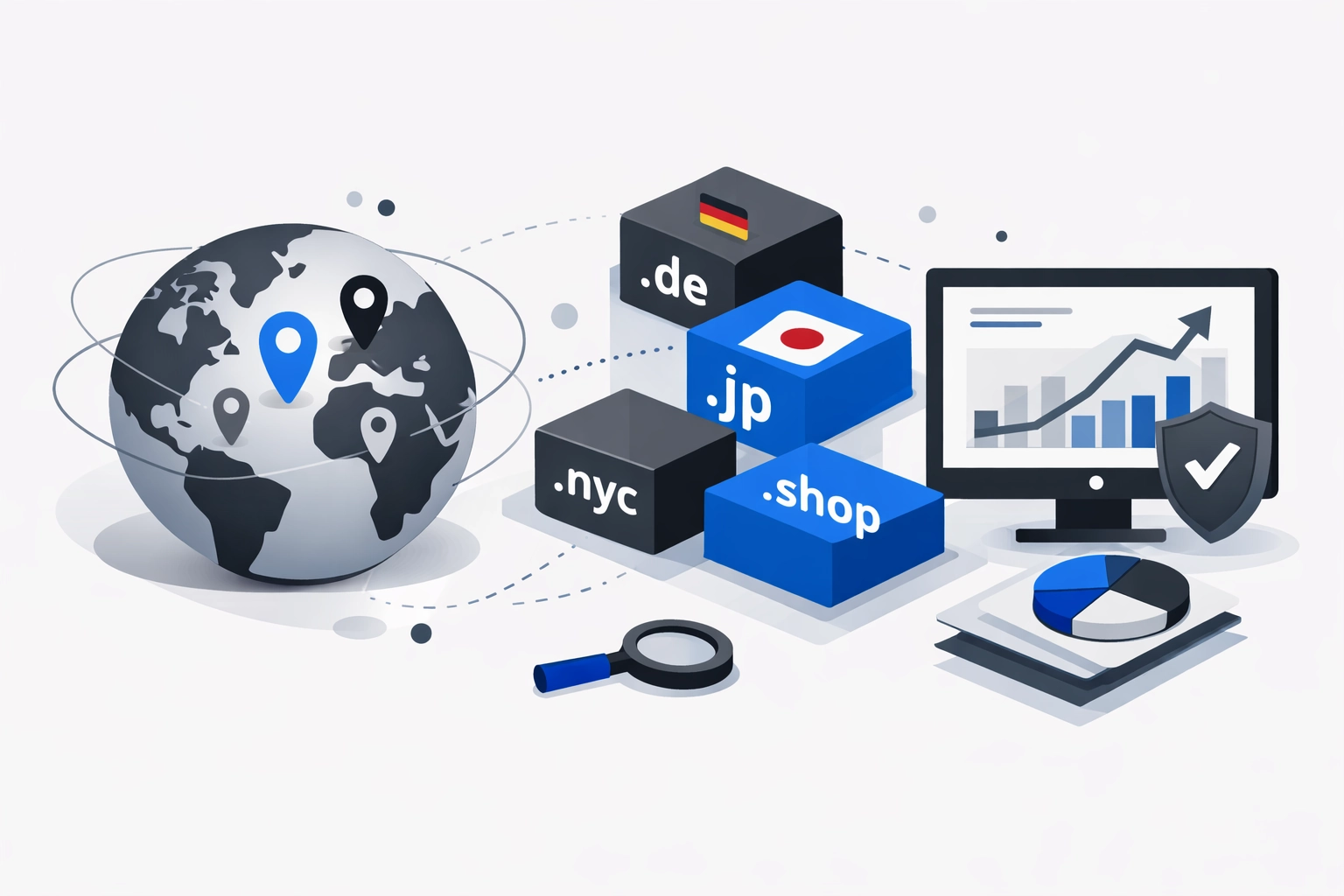
- Using geographically meaningful TLDs (e.g., .berlin, .nyc, etc.) to signal local relevance without overreliance on a single dominant extension.
- Ensuring content and security posture on localized domains meet regional standards and user expectations.
- Coordinating with legal/regulatory teams to maintain consistency in branding across markets.
- Maintaining a clear mapping between local domains and the central brand strategy to avoid fragmentation.
Localization, when paired with rigorous domain governance, can enhance user trust and reduce misinterpretation or phishing risk in multiple markets. It also aligns with privacy-conscious data practices, as RDAP data can support localization teams without exposing sensitive ownership details in bulk. (icann.org)
Practical playbook: from bulk domain lists to actionable risk maps
A key challenge for modern brands is translating raw domain data into actionable risk maps. Below is a compact, repeatable playbook that combines governance discipline with practical tooling, including the use of niche domain inventories and RDAP-based data signals. The steps are designed to be low-friction yet robust enough for enterprise-scale portfolios.
- Step 1 — Define risk profiles: determine what kinds of domains pose the most risk for your brand (e.g., typosquat, lookalike domains, misused local variants).
- Step 2 — Build a tiered inventory: categorize domains by risk tier (core, elevated risk, localization potential). Include niche TLDs in the consideration set where they provide a strategic signal for localization or credibility.
- Step 3 — Validate with RDAP-backed data: use RDAP resources to confirm registration status, dates, and ownership signals; apply privacy-aware filters when needed.
- Step 4 — Monitor and respond: establish ongoing monitoring, alerting, and rapid-response workflows for newly registered or fast-changing domains that intersect with your brand signals.
- Step 5 — Measure governance impact: track risk reduction, takedown timeliness, and localization outcomes to demonstrate a tangible governance ROI.
In practice, this framework supports a nuanced use of niche domain inventories. For example, the strategic value of niche lists becomes evident when they surface domains that could threaten local brand integrity or create credible but misleading experiences in specific markets. In parallel, organizations should expect to rely on credible data sources; bulk lists require provenance checks and ongoing validation to avoid introducing stale or malicious domains into decision pipelines. (sidn.nl)
Data sources and governance: RDAP, WHOIS, and the data-access era
The domain data landscape is undergoing a calibrated shift. WHOIS data is being replaced or complemented by RDAP in many registries to improve data privacy and standardization. This transition has practical implications for due diligence, risk scoring, and automated monitoring. The ICANN update and related governance discussions highlight the shift toward RDAP as the frontline data-access protocol for generic TLDs, with privacy-preserving features like data redaction where required by regulation. Practitioners should design their workflows to accommodate RDAP responses, including understanding which data fields are available and how redaction affects signal fidelity. (icann.org)
From a practitioner’s perspective, RDAP brings more predictable data structures for automation, but it also makes provenance even more important. When you import a bulk list or a feed of domains for monitoring, you should record its source, timestamp, and any observed data quality flags. As a practical matter, many teams pair RDAP data with independent checks (e.g., trademark databases, public content signals) to validate risk signals before action. Industry discussions and technical primers emphasize that while RDAP improves privacy and interoperability, it is not a silver bullet; governance and human oversight remain essential. (blog.netim.com)
Where the client fits: integrating with WebAtLa’s data and tools
For teams building a defensible, localization-friendly domain portfolio, a layered set of client resources can accelerate maturity. The client provides several relevant touchpoints that fit naturally into the Domain Hygiene Governance Pyramid:
- RDAP & WHOIS Database: a centralized source for registration data signals and provenance—crucial for validation and governance dashboards. (icann.org)
- List of domains by TLDs and List of domains by Countries: practical feeds to support discovery across geographic and thematic spaces. (sidn.nl)
- Pricing and related data services: budgeting for ongoing monitoring, risk scoring, and takedown workflows. (sidn.nl)
- Additional client pages for specific TLD inventories (.com, .nyc, .berlin): these can anchor localization and governance mapping to real-world markets.
Integrated workflows can leverage the client’s data assets to support the discovery, validation, and protection layers. As data-access norms evolve, having a trusted data partner that provides NDAs, provenance annotations, and clear data-use policies becomes a strategic asset. (For broader context on data access and governance, see the RDAP transition guidance above.) (icann.org)
Expert insight and common mistakes
Expert practitioners consistently highlight two points. First, domain hygiene is a governance problem, not just a technical one. It requires clear ownership, documented decision criteria, and board-level visibility into risk maps and remediation outcomes. Second, a common pitfall is treating niche TLDs as “free marketing spaces” without verifying risk signals or localization alignment. Niche inventories can be powerful signals, but they must be filtered through a governance process that accounts for data provenance and regulatory constraints. (dn.org)
One practical limitation to watch is data freshness. Bulk lists and RDAP data can become stale quickly, particularly for high-volume portfolios or fast-changing markets. Regular reconciliation with live RDAP endpoints and cross-checks against other data sources are essential to avoid acting on outdated signals. The industry notes ongoing concerns about data latency and the need for robust provenance records to prevent misinterpretation of domain signals. (sidn.nl)
Limitations and common mistakes
- Over-reliance on bulk lists: Bulk lists, especially for niche TLDs, can contain stale or misused entries. Always validate with RDAP and corroborating signals before making decisions.
- Neglecting governance ownership: Without clear ownership and decision rights, your hygiene program can drift into ad hoc actions that fail to scale.
- Ignoring localization nuance: Local signals matter. Using niche TLDs without localization strategy can confuse users or create conflicting brand signals across markets.
- Underestimating privacy constraints: RDAP and privacy regimes require careful handling of personal data; ensure your processes respect redaction rules and data-use policies.
Limitations notwithstanding, the path forward is clear: combine RDAP-backed validation, governance discipline, and thoughtful localization to reduce risk while enabling credible local signals. ICANN and partner registries are steering the data-access landscape toward more structured, privacy-conscious practices, which makes governance the differentiator in successful domain portfolios. (icann.org)
Conclusion: a governance-driven path to resilient, localization-aware domain portfolios
The AI era demands a more deliberate, data-driven approach to domain portfolios. A robust domain hygiene program—rooted in the four-tier governance model (Discovery, Validation, Protection, Localization)—helps brands protect against misrepresentation, phishing, and fragmentation across markets. The practical toolkit includes RDAP-backed validation, governance ownership, and the disciplined use of niche TLD inventories when they align with localization and risk-management goals. For teams seeking a ready-to-implement foundation, consider starting with a centralized RDAP/WDOI data source, expand discovery with niche inventories where appropriate, and couple automation with a clear governance playbook. If you’re evaluating how to operationalize bulk domain lists and integrate them into a risk map, the client’s suite of resources—RDAP & WHOIS Database, TLD lists by domain and country, and a transparent pricing model—offers a coherent starting point for mature, defensible domain governance. (icann.org)