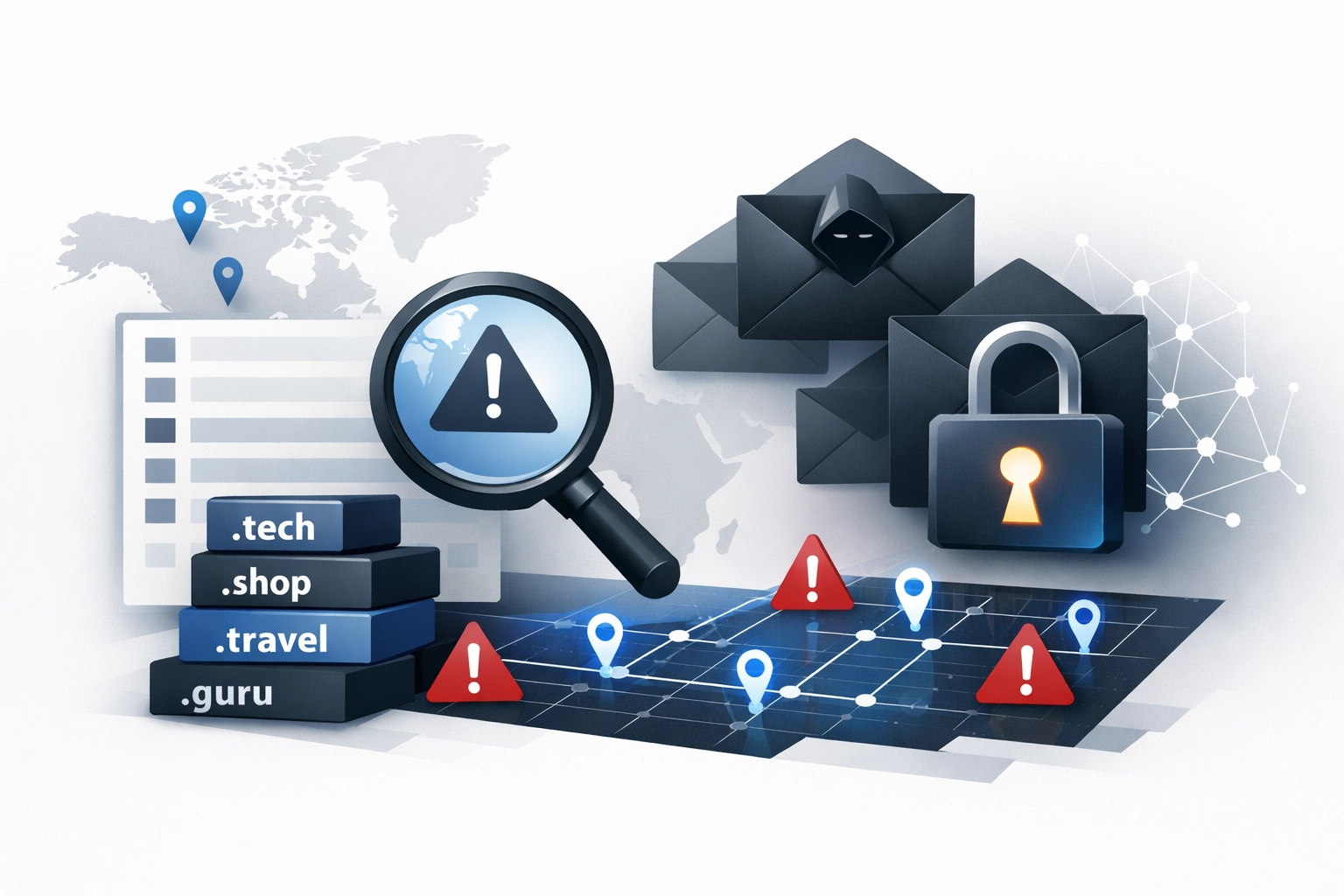
Typosquatting Risk Maps: Using Downloadable Niche-TLD Lists to Uncover Hidden Brand Threats
For most brands, the risk landscape is more complex than a single dot-com domain. Typosquatting—where opportunistic registrants imitate a brand’s name with minor misspellings, alternate TLDs, or visually similar characters—has evolved into a systemic threat that spans dozens of niche TLDs. The stakes are high: customer confusion, phishing, and even revenue leakage can follow from a single misdirected click. A practical way to anticipate and mitigate these risks is to build a typosquatting risk map from downloadable niche-TLD lists, reinforced by verified domain data. This article outlines a field-tested approach that blends data provenance, risk scoring, and action planning while staying native to the needs of brand owners and marketers alike. Note: the discussion leverages industry insights on typosquatting, data access protocols, and best practices for brand protection.
Recent industry data underscores the scale of the problem. Analyses show that digital squatting—including typosquatting, combosquatting, and homograph attacks—continues to rise, with thousands of disputes and ongoing infringement investigations in the global IP ecosystem. For instance, reporting on brand-domain disputes in 2025 highlighted a historically high volume, illustrating why proactive monitoring and domain-list-based risk assessment matter more than ever. - Digital squatting trends and WIPO data. (techradar.com)
Beyond headline risk, organizations must recognize the privacy and data-access considerations that come with bulk domain data. The transition from WHOIS to RDAP—along with evolving redaction and access policies—has real operational implications for how teams verify ownership, assess associations, and refresh risk models. RDAP’s JSON responses and standardized fields enable more scalable, automated workflows, but they also require careful interpretation and governance. RDAP vs WHOIS: why data provenance matters. (blog.whoisjsonapi.com)
To ground this approach in practice, the article introduces a framework you can implement with downloadable lists of niche domains (for example, domains in .fit, .mom, and .rocks). These lists are frequently offered as bulk assets for brand strategy because they surface opportunities and risks that aren’t visible when focusing solely on mainstream extensions. The “download list” model also helps teams quickly scope risk for new markets or product lines before committing significant marketing spend. For organizations exploring niche domains, a disciplined workflow reduces blind spots and aligns brand protections with real-world usage patterns.
1) The case for niche-TLD inventories in risk mapping
Why should a brand care about niche TLD inventories when the core brand is anchored in a .com or a country code domain? The answer lies in consumer behavior and the modern attack surface. Consumers often encounter brands across multiple touchpoints, including regional sites, localized campaigns, or product-specific microsites that deploy alternative TLDs. When those domains are not actively monitored, typosquatted variants can accumulate unnoticed, siphoning traffic, triggering phishing, or diluting brand trust. Leveraging downloadable niche lists provides a structured lens to examine potential threats across the landscape rather than chasing incidents after the fact. Expert insight: industry professionals emphasize that a defensible domain strategy starts with proactive risk assessment across TLDs, not reactive incident response.
From a data perspective, niche-TLD inventories act as a starting point for risk scoring and governance. They aren’t definitive ownership signals, but they reveal surface-area exposure—domains that are plausible targets for impersonation or confusion. As such, they should be integrated with reliable ownership signals (from RDAP, for example) and a clear policy for how to treat discovered assets. For context, consider the ongoing growth of typosquatting incidents and their impact on brand trust. A recent industry overview notes that a rising tide of brand-domain disputes signals the need for explicit risk maps that surface early warnings across niches. What is typosquatting? Tips to avoid dangerous domains. (forbes.com)
2) A practical framework: from list to risk map
The framework below translates a downloadable niche-TLD inventory into a structured risk map you can operationalize within a marketing or security team. It comprises four steps: discovery, assessment, governance, and action. Each step incorporates best practices, data sources, and decision criteria designed to minimize false positives while maximizing coverage of credible threats.
- Assessment — Apply a risk-scoring model that weighs similarity to the brand name, potential audience overlap, and historical activity (traffic, hosting, or abuse signals). A simple scoring rubric could allocate points for orthographic similarity (letters swapped, transposed), phonetic similarity, and the likelihood a typo would land on a real or malicious site. The assessment should also consider the domain’s hosting quality and whether it is parked or active. Expert guidance suggests that defensive domain registrations should be prioritized based on risk tier rather than a blanket approach.
- Governance — Define ownership, monitoring cadence, and escalation paths. RDAP-backed ownership checks should supplement surface-level list data to confirm who, if anyone, currently controls a given domain. This governance layer supports sustainable portfolio management and reduces accidental infringement. See RDAP data practices and consistency discussions for more detail.
- Action — Decide on defensive registrations, takedown requests, or trademark monitoring for high-risk domains. The necessary actions depend on the risk score and the potential impact on customers. In practice, many teams implement tiered responses: high-risk domains receive direct defensive registrations in priority markets; mid-risk items trigger continuous monitoring; and low-risk domains are archived for periodic review.
In this framework, niche lists are not a final verdict on brand safety but a diagnostic tool that exposes what could become a risk if left unaddressed. As you scale, you’ll want to automate parts of the workflow and embed data governance. The effect is a more predictable security and marketing trajectory, with fewer surprises during product launches or regional rollouts.
3) A concrete workflow: applying the framework to three example extensions
To illustrate, let’s walk through a practical workflow with three widely cited niche extensions: .fit, .mom, and .rocks. While these are just examples, the approach generalizes to other niche TLDs in your inventory.
Pull the latest lists for each extension from a trusted provider. For .fit, .mom, and .rocks, identify variants that resemble your brand (e.g., brandname-fit, brandname-mom, brandname-rocks, etc.). Score each candidate domain based on orthographic similarity and potential audience overlap. For example, a domain like brandname-rocks could attract a different audience segment but still cause confusion if your product category is similar to “rocks” (a metaphor or product naming issue). Use RDAP data to verify current ownership, nameservers, and registration dates. If data is redacted, flag for manual review rather than assuming ownership. This is where a robust data-provenance practice matters. RDAP and WHOIS data quality considerations. (blog.whoisjsonapi.com) For high-risk items, decide on defensive registrations in key markets and implement ongoing monitoring. For mid-risk items, set up automated alerts and periodic re-scans; for low-risk items, schedule quarterly reviews.
Applied practically, your workflow should yield a prioritized list of actionable domains and a documented plan for each. This helps align brand strategy with risk mitigation rather than treating risk as a separate, later project. The result is a more resilient, data-driven approach to brand safety across niche TLDs.
4) Expert insight and practical tips
In building and managing risk maps, practitioners consistently emphasize two practical truths: first, data provenance and governance matter as much as the data itself; second, prevention beats cure. As one industry expert notes, a defensible domain strategy begins with a clear policy for defensive registrations and trademark monitoring, rather than reacting to incidents after they harm customers or revenue. Practical guidance on typosquatting prevention. (dn.org)
From a data-technical standpoint, RDAP offers a scalable path for domain data, but practitioners should be mindful of data redaction and coverage gaps that can appear in practice. Several analyses emphasize that RDAP can improve data quality and consistency relative to legacy WHOIS, but it is not a guarantee of perfect signals across all registries or regions. Plan for data quality checks and human-in-the-loop verification where necessary. arXiv: WHOIS vs RDAP consistency study. (arxiv.org)
5) Limitations and common mistakes
No framework is perfect, and typosquatting risk maps are particularly sensitive to data quality, scope, and interpretation. Here are the most common mistakes and how to avoid them:
Not every similar domain will be relevant to your audience or cause confusion. Apply a risk-scoring filter and focus on domains with real audience overlap or plausible navigation paths. Bulk domain lists are only as good as their sourcing and update cadence. Always verify provenance and date stamps, and supplement with ownership data via RDAP where possible. Combine lists with ownership data, traffic signals, and brand monitoring outputs to avoid blind spots. The best practice is to triangulate signals from multiple sources and governance rules. A delay between discovery and defense increases risk. Establish a triage protocol and automate alerts for high-risk domains to expedite response.
For readers concerned about the broader scope of typo-based and brand-imitation threats, additional research and industry coverage highlight the need for proactive approaches and disciplined governance. For example, market analyses link typosquatting risk to customer trust and brand perception, underscoring why risk maps should be built into product launches and regional expansions. Forbes: Typosquatting explained. (forbes.com)
6) Integrating client capabilities: how to operationalize with WebAtla data assets
To make this framework practical for brand teams, consider pairing your risk mapping workflow with reliable data assets that support governance and speed. In particular, a combination of niche domain lists and validated domain data can deliver a repeatable process for ongoing risk assessment. The client’s resources offer valuable touchpoints for practitioners looking to anchor their workflow in practical tools:
- List of domains by TLDs: A comprehensive source to survey inventory across TLDs and identify candidate domains for risk assessment. List of domains by TLDs.
- RDAP & WHOIS Database: A data source for ownership, registration dates, and nameserver information that supports provenance and governance. RDAP & WHOIS Database.
Beyond these, the client’s broader ecosystem includes pricing, country-, and technology-based inventories that can help you enrich your risk map with market-specific signals and technology footprints. When combined with the niche-list approach, you gain a robust, end-to-end workflow for brand protection and localization planning. For teams exploring a broader scope of data, the client’s product pages offer additional context and capabilities, including domain data for specific extensions and regions.
7) Practical takeaway: a ready-to-use snippet for your next meeting
Begin with a one-page risk map that prioritizes three questions for each candidate domain:
- Does the domain resemble our brand in spelling, sound, or meaning?
- Is there plausible audience overlap or a navigable path to our site?
- What is the ownership and hosting status, and what action is warranted (monitor, defend, or de-list)?
Document the data sources used (the niche domain list, RDAP data, and any brand-monitoring signals) and assign owners for each risk item. This simple framework prevents ad-hoc responses and creates a repeatable process for quarterly risk reviews. If you want to start with a macro-level scan, consider pulling lists by TLDs and quickly triaging results to establish a baseline risk profile for the brand portfolio.
Conclusion
As brands grow and expand into new markets, the risk of typosquatting and brand impersonation remains a constant threat. Downloadable niche-TLD lists offer a practical, scalable way to surface threats before they become incidents. When paired with verified ownership data (via RDAP/WHOIS), governance protocols, and a disciplined action plan, these inventories help you convert information into protection and, ultimately, trust. The goal isn’t to eliminate risk entirely—risk is inherent in growth—but to make it visible, manageable, and integrated into everyday brand strategy. By turning lists into a map, you gain foresight that informs product naming, regional campaigns, and domain governance decisions across markets.