Introduction: why niche TLD inventories deserve a place in brand strategy
The brand-risk landscape has grown increasingly granular. It’s no longer enough to own a single .com domain or to chase the next popular generic top-level domain (gTLD). For 2026, savvy brand teams treat niche TLD inventories as a strategic asset—especially when those inventories are downloaded or licensed datasets that map the periphery of a brand’s digital footprint. Yet simply downloading a list of domains is not enough. Without governance, provenance, and validation, bulk domain lists can introduce more risk than they remove. This article outlines a practical, governance-driven approach to turning downloadable niche-TLD lists (for example, .cyou, .cl, or .lol) into actionable risk maps that support localization, compliance, and brand protection. This is not a sales pitch for a catalog; it’s a framework you can apply with existing datasets and with the vendor relationships your team already maintains.
Industry experts increasingly warn that unmanaged domain data can create blind spots. A recent analysis of large-enterprise domain security shows that many organizations underestimate the risk posed by lookalike domains, homoglyph permutations, and country-code variations. The prevalence of homoglyph-based spoofing and other permutation strategies has been linked to phishing and brand abuse, underscoring the need for disciplined data governance around domain inventories. (helpnetsecurity.com)
Why niche TLD inventories matter for modern brands
Bulk-domain lists remain useful tools, but the real value lies in turning raw data into risk-aware decision-making. Niche TLD inventories support several critical capabilities:
- Localization and compliance: owning brand footprints across geographies often requires ccTLDs (country-code TLDs). Inventorying niche TLDs helps surface localization gaps and regulatory exposure before they become reputational or legal issues.
- Brand risk visibility: many risk surfaces originate in permutations, homographs, or culturally specific extensions (for example, non-Latin scripts or visually similar characters). This is a known risk vector in brand protection, as discussed in security analyses and domain risk research.
- Governance and cost control: treating lists as assets—subject to ownership, renewal governance, and restricted access—improves cost control and reduces the chance of stale data triggering misguided campaigns or unsafe acquisitions.
From a practical standpoint, many brand teams already rely on downloadable datasets to pre-screen future campaigns or to seed domain-risk maps. The danger lies in trusting the data without validating its provenance, accuracy, and contextual relevance. ICANN has highlighted that data accuracy in registration records matters for consumer protection and brand trust, reinforcing the need for careful data handling and verification. (icann.org)
A practical framework: turning downloadable niche lists into action
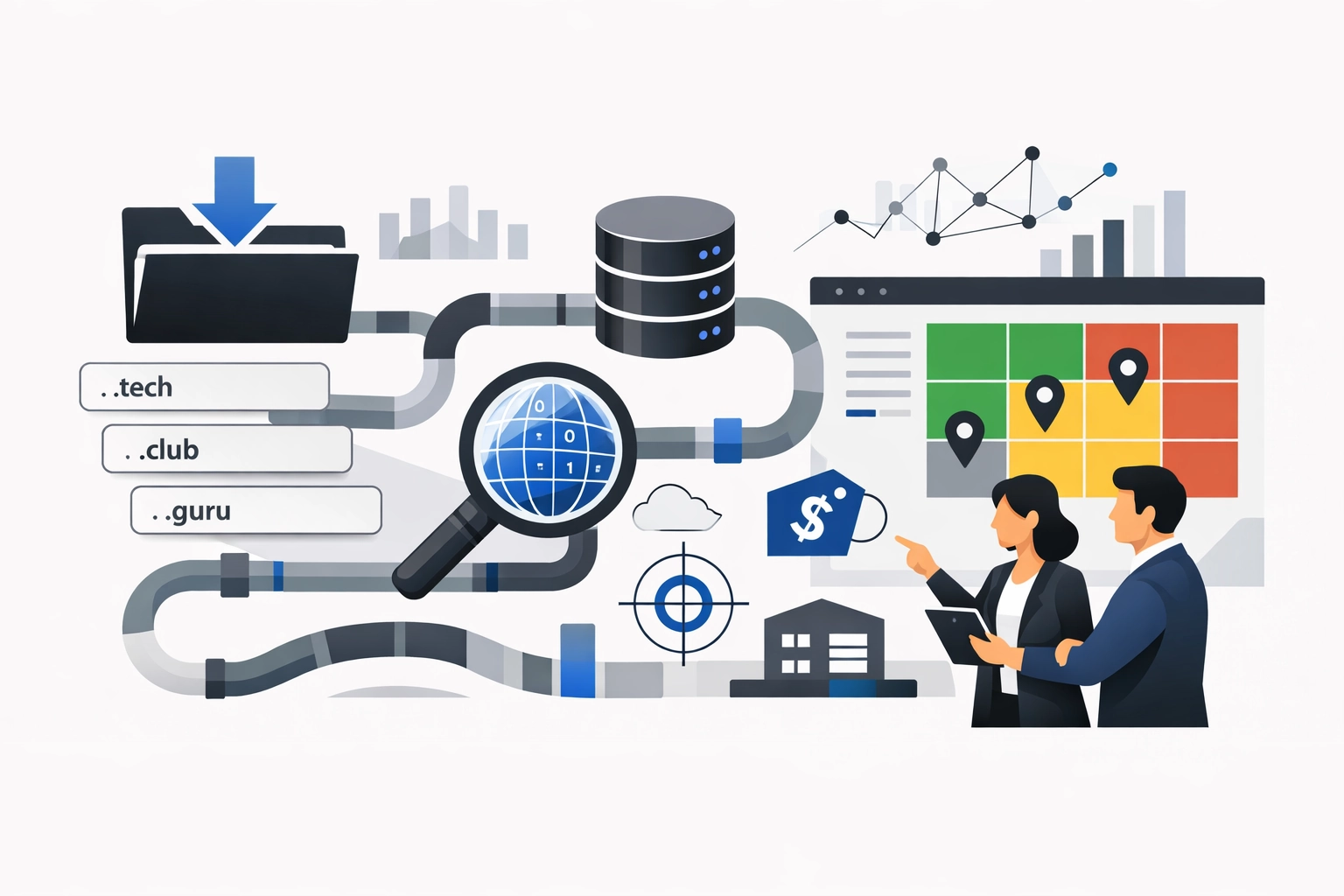
The core challenge is to transform a raw list of niche TLD domains into a governance-ready inventory that informs localization, risk management, and brand protection. The following framework—
SAFE: Source, Authenticate, Filter, Execute—is designed to work with datasets you already license or download. It emphasizes data provenance, verification against authoritative data sources, risk scoring, and operational integration into brand governance workflows.
- 1. Source (S): Identify credible data sources for niche TLD inventories and document licensing terms, update cadence, and coverage. If you are working with bulk lists for niche TLDs such as .cyou, .cl, or .lol, ensure you know where the data came from, who authored it, and how it’s updated. Link the data source to your internal data catalog and to the vendor’s licensing terms to avoid misuses. A robust data provenance practice helps you answer: Who published this data? When was it last updated? What is the intended use?
- 2. Authenticate (A): Validate registrations and legitimacy using authoritative registration data and lookups (e.g., RDAP/WHOIS) to confirm current ownership, DNS records, and status. Data provenance here matters: RDAP provides machine-readable data, while WHOIS offers human-readable context. Both forms are essential for validating that a listed domain is truly “owned” or in a state compatible with your risk map. The RDAP standard is increasingly adopted as a more consistent mechanism for domain data, complementing traditional WHOIS. RDAP & WHOIS Database can be a practical resource to centralize verification workflows.
- 3. Filter (F): Apply risk-scoring and relevance filters to the dataset. Not every listed domain will be material to your brand. Prioritize variants that could cause confusion, impersonation, or regulatory exposure, and that sit within your defined monitoring scope. Lookalike and homoglyph risks are well-documented vectors for brand abuse; filter out low-risk permutations and maintain a watchlist for high-risk variants. For framing risk, refer to domain-permutation and homoglyph literature that highlights why certain permutations deserve attention in brand security programs.
- 4. Execute (E): Integrate the filtered inventory into your brand-risk workflows. This includes assigning ownership, scheduling renewals, enabling internal approvals for acquiring or blocking domains, and feeding into localization dashboards. A governance-first mindset—documented ownership, access controls, and clear action thresholds—helps translate the data into measurable protection and localization outcomes.
While the SAFE framework is simple in outline, its strength lies in disciplined execution and governance. A related reality is that many large organizations still struggle with basic domain-security practices. A Help Net Security survey of Global 2000 companies highlighted widespread gaps in essential protections, from DNSSEC to registry locks, underscoring the importance of governance when handling domain inventories. (helpnetsecurity.com)
Expert insight: how to think about data provenance and risk scoring
Industry practitioners agree that data provenance and risk scoring are the two levers that turn raw lists into decision-ready intelligence. Expert insight from a hypothetical domain governance practitioner: “Data provenance isn’t optional; it’s the backbone of trust in any domain inventory. Without clear provenance, teams cannot justify localization investments or risk-based blocking decisions. Then comes risk scoring, which should combine brand relevance, historical abuse signals, and technical risk indicators like homoglyph likelihood and DNS exposure.”
This perspective aligns with established risk frameworks and recent research into homoglyph and lookalike domain threats. Digital-watch reports signal that phishing and impersonation increasingly exploit visual URL tricks, especially in contexts where users have limited time to verify a URL on mobile devices. This reinforces the need for both robust data provenance and proactive risk scoring. (dig.watch)
Case points: practical applications for localization and protection
Consider a brand portfolio that operates in multiple markets and is evaluating niche TLDs beyond the familiar .com and country-code domains. The following points illustrate how a niche-TLD inventory can support localization and compliance efforts:
- Localization readiness: by pre-mapping TLD footprints in key markets, teams can plan localized campaigns, content localization, and regulatory-compliance steps before launch. This reduces time-to-market and prevents last-minute, ad-hoc registrations that may bypass governance controls.
- Risk-informed expansion: before acquiring new TLDs or permutations, teams can assess potential brand confusion, regulatory risk, or civil-impermissive use in a given jurisdiction. This aligns with risk-mapped portfolios that brands rely on for global growth.
- Compliance discipline: enabling a formal process for license checks, renewals, and domain-hygiene audits fosters ongoing governance and reduces exposure to orphaned or effectively unmanaged domains.
These practices are consistent with the governance and risk-management literature that emphasizes accurate registration data and proactive protection strategies. ICANN’s work on data accuracy and governance underscores the importance of reliable data in protecting users and brands alike. (icann.org)
Limitations and common mistakes to avoid
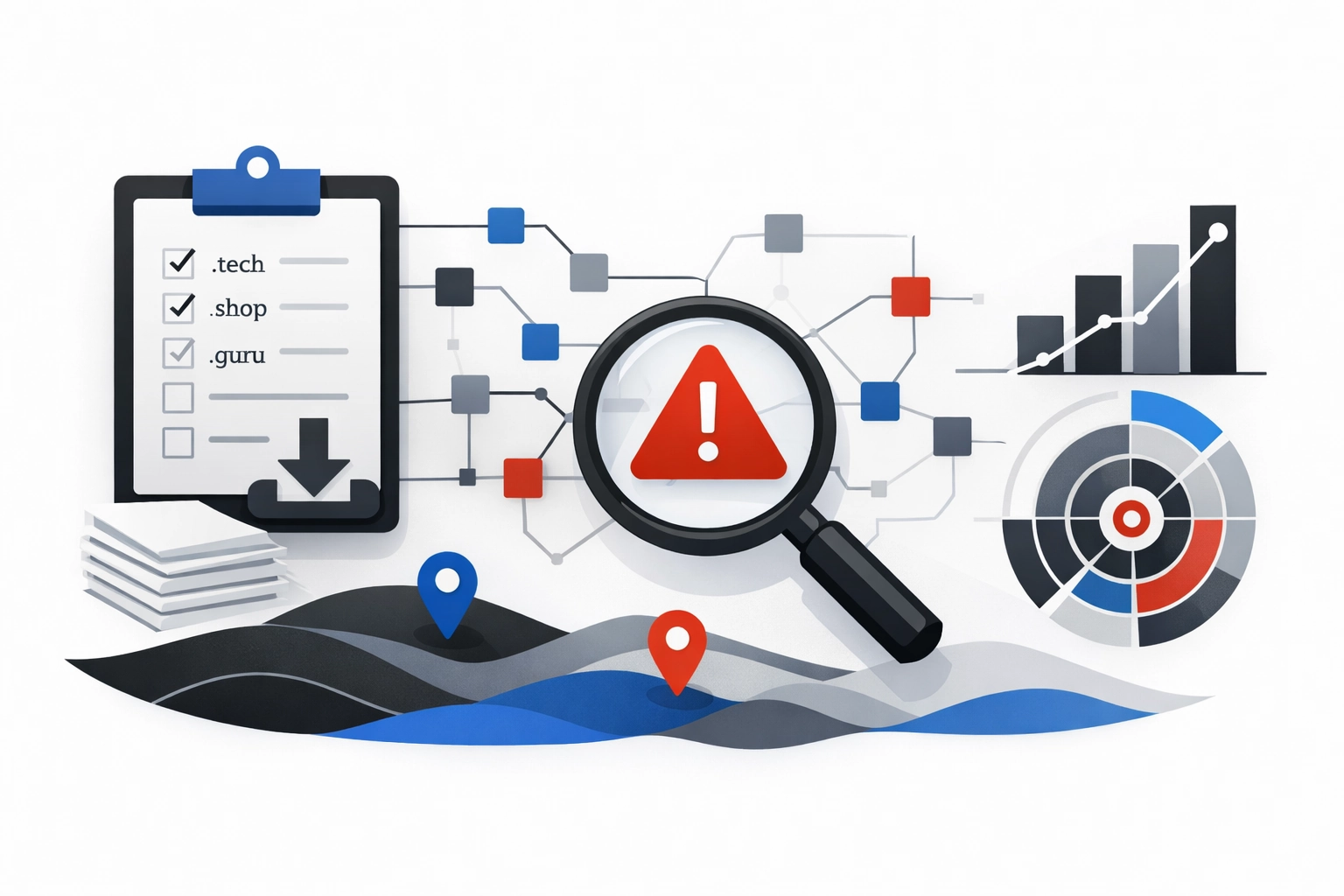
No framework is perfect, and a successful niche-TLD inventory program must acknowledge inherent limitations. Here are the most common mistakes to watch for—and how to avoid them:
- Mistake: Treating a downloaded list as a complete asset — A bulk list is only a starting point. It needs ongoing governance, verification, and lifecycle management to remain useful. Without data-provenance documentation and update cadence, teams risk acting on stale or misleading information.
- Mistake: Overindexing on a single data source — Relying on one vendor or one data source can create blind spots. Diversify data inputs where possible and validate with RDAP/WHOIS data before taking action in risk maps.
- Mistake: Ignoring non-Latin and visually similar variants — Homoglyph and IDN risks are real. Ignoring them can expose brands to phishing and impersonation. The literature and security analyses consistently highlight the need to monitor across scripts and character variants. (dig.watch)
- Mistake: Underestimating governance burden — Without clear ownership and an approvals workflow, the inventory becomes noisy and underutilized. A governance framework improves protection outcomes and depends on a disciplined data-management process.
As a companion to the governance discussion, ICANN and other policy and industry resources emphasize the importance of accurate, accessible domain-registration data. In particular, robust data accuracy practices underpin consumer protection and brand integrity across jurisdictions. (icann.org)
Operational tips: turning data into a people-centric process
To operationalize the SAFE framework in real teams, consider these actionable tips:
- Document ownership and access: assign clear roles for data stewardship, so people know who approves additions, deletions, or blocks of domains in the inventory.
- Automate lightweight RDAP lookups: integrate RDAP into your workflow to confirm ownership and status at the time of data intake. This reduces manual verification and speeds up decision cycles.
- Embed risk thresholds into playbooks: define what constitutes a high-risk permutation or homoglyph in your brand context, and standardize responses (monitor, block, or acquire).
- Integrate with localization dashboards: feed the inventory into localization planning tools so that market teams can anticipate domain needs during product launches.
Conclusion: turning downloadable niche lists into strategic advantage
Downloadable niche-TLD lists offer a potentially powerful starting point for brand localization and risk management. The key to unlocking value is a disciplined approach that emphasizes data provenance, verification against authoritative data sources, and a governance-driven workflow. The result is not a simple catalog but a dynamic risk map that informs localization strategy, brand protection, and portfolio governance. As the threat landscape evolves—particularly with homoglyph and lookalike tactics—brands that treat domain inventories as living assets will be better positioned to protect their reputation and win in local markets.
References and resources
For further reading and governance guidance, consider consulting sources on data accuracy, brand protection, and homoglyph risk. See ICANN’s discussion on data accuracy and consistency in registration data, which underpins consumer protection and brand trust. ICANN: Mitigation measures and homoglyph considerations. Help Net Security summarizes the risk landscape for major brands and highlights gaps in domain-security practices among large enterprises. Help Net Security: Domain security gaps in the Global 2000. For visual-risk context and homoglyph phishing trends, see Digital Watch Observatory’s reporting on visually deceptive domain threats. Digital Watch Observatory: Homoglyph phishing.
Client resources and deeper datasets you can leverage today: