Brand protection in the modern internet landscape requires more than chasing a handful of generic TLDs. For startups aiming to grow globally without ballooning risk, niche TLD inventories offer a disciplined path to monitor, assess, and act on domain threats and localization opportunities. This article focuses on a practical, data-driven angle: how to leverage downloadable lists of niche TLDs — specifically, download list of .company domains, download list of .news domains, and download list of .network domains — to build a defensible, scalable brand-risk map. The goal is not to replace traditional brand audits but to augment them with repeatable, auditable datasets that can feed decision workflows across product, localization, and compliance teams.
To set the stage, consider the shift in how domain data is delivered. Historically, registries and registrars offered simple WHOIS lookups that exposed ownership details publicly in a rather unstructured format. Today, many registries adopt the Registration Data Access Protocol (RDAP), a modern, API-friendly successor designed to improve data quality, privacy, and automation. This evolution matters for startups because it shapes what you can reliably collect, how you validate it, and how you scale your monitoring program over time. RDAP’s standardized, machine-readable responses are described by ICANN and related technical guides as the future of domain data access. (icann.org)
Why niche TLD inventories matter for early-stage brands
Most brand teams obsess over the obvious risk: someone else registering your core brand in another party’s jurisdiction. But as brands expand, the risk surface expands too. Niche TLDs like .company, .news, or .network can host impersonation sites, counterfeit product pages, or regional landing pages that siphon traffic or erode trust. For startups, the payoff of vigilant tracking is twofold: (1) you protect against brand-harming registrations that could confuse customers or steal demand, and (2) you surface localization opportunities — domain assets that align with regional campaigns, language variants, or partner ecosystems. The literature on domain data quality emphasizes that data provenance and freshness matter: stale lists lead to false positives, while missing data yields blind spots in critical markets.
From a practical standpoint, the use of downloadable niche-TLD domain lists enables a repeatable baseline. A startup can pull a current list of, say, all .company domains it intends to monitor, then layer on additional niches such as .news and .network to build a risk map that is both comprehensive and auditable. The approach also aligns with modern privacy and data-access norms: RDAP provides more structured signals about ownership and status, while still allowing filtering to protect personal data when appropriate. ICANN’s RDAP framework and implementation guidance outline how registries expose data via RESTful endpoints, which in turn supports automated workflows and scalable monitoring. (icann.org)
From bulk lists to disciplined risk mapping: the workflow
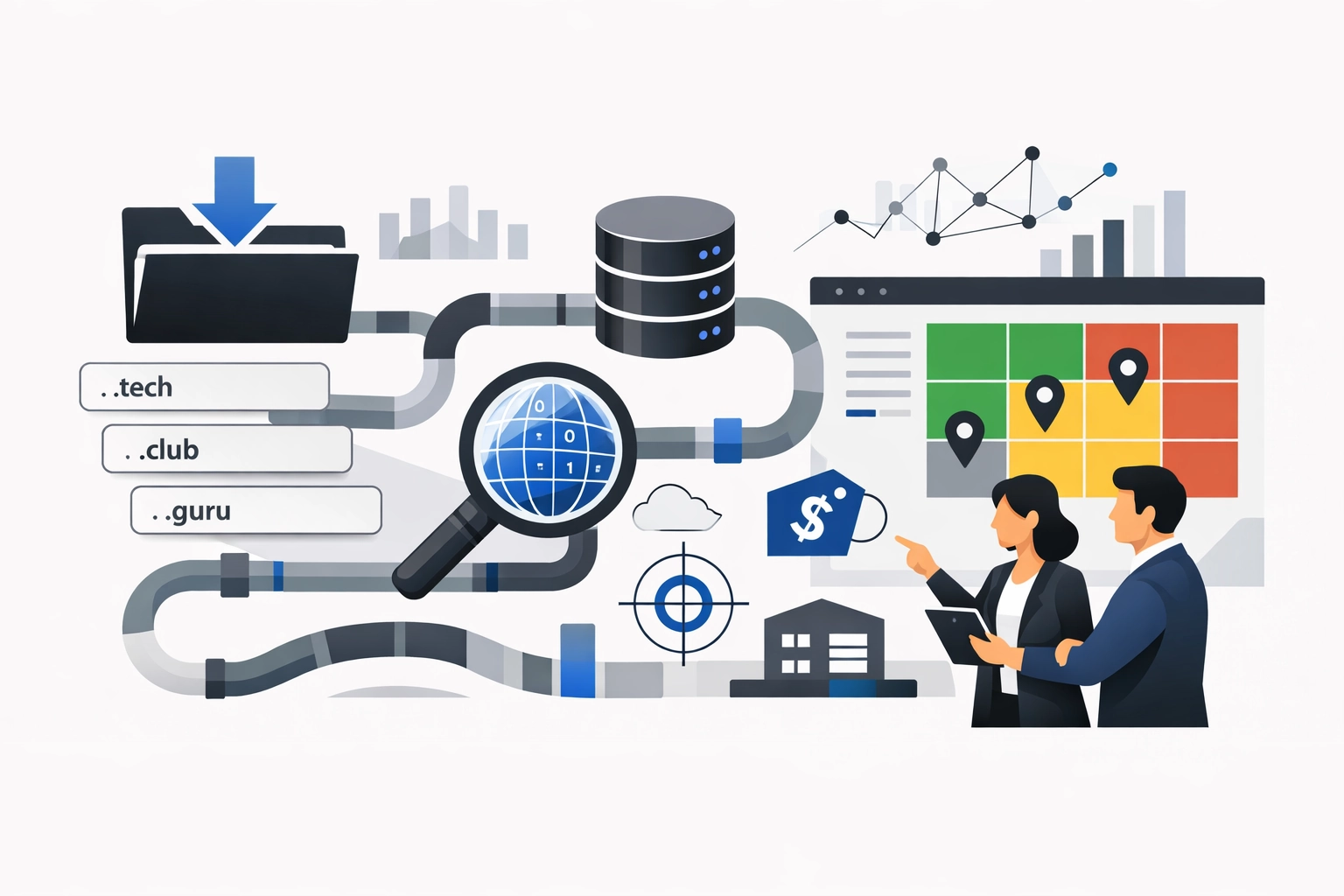
The core value of downloadable niche-TLD lists lies in their ability to seed a risk-mapping workflow that teams can operationalize. The following workflow is designed for startups seeking repeatable outputs, auditability, and integration with existing product/localization processes.
- Step 1 — Source and validate: Acquire authoritative lists for niche TLDs relevant to your brand strategy, starting with download list of .company domains, download list of .news domains, and download list of .network domains. Validate the data’s provenance and the date of the last refresh. If you’re using a provider like WebAtla’s RDAP-backed data, confirm whether data comes via RDAP or legacy WHOIS and note any redactions or privacy layers.
- Step 2 — Clean and deduplicate: Normalize domains (lowercase, remove invalid entries, and deduplicate across lists). Build a master inventory that maps to your own brand assets (trademarks, product names, and key campaigns). Clean data reduces false positives and speeds up downstream scoring.
- Step 3 — Validate ownership and status: Use RDAP/WHOIS lookups to verify ownership where possible and capture last seen dates, registrar, and status (e.g., registered, on hold, or expired). Be mindful that privacy protections (RDAP redaction or WHOIS privacy) may limit visibility; plan for partial visibility rather than full ownership certainty in those cases. ICANN and industry analyses describe how RDAP improves data structuring and access control versus legacy WHOIS. (icann.org)
- Step 4 — Map to risk signals and localization potential: Tag domains with risk-score components (brand confusion risk, impersonation risk, phishing risk, and regional localization value). Consider a lightweight scoring rubric: proximity to brand keywords, regional relevance, and current status. Use data provenance notes to justify why a domain is flagged or cleared. Use client resources such as the List of domains by TLDs and other domain data pages to contextualize the landscape.
- Step 5 — Act and monitor: Create a calendar for quarterly refreshes of the lists and a monitoring plan for flagged domains. Establish governance: who owns each action (monitor, dispute, or acquire) and how results feed localization strategies or risk-mitigation workstreams. For ongoing automation, RDAP’s API-friendly structure supports integration with a monitoring dashboard and alerting pipelines. See RDAP guidance for implementation details. (icann.org)
Framework: a practical risk-mapping checklist for startups
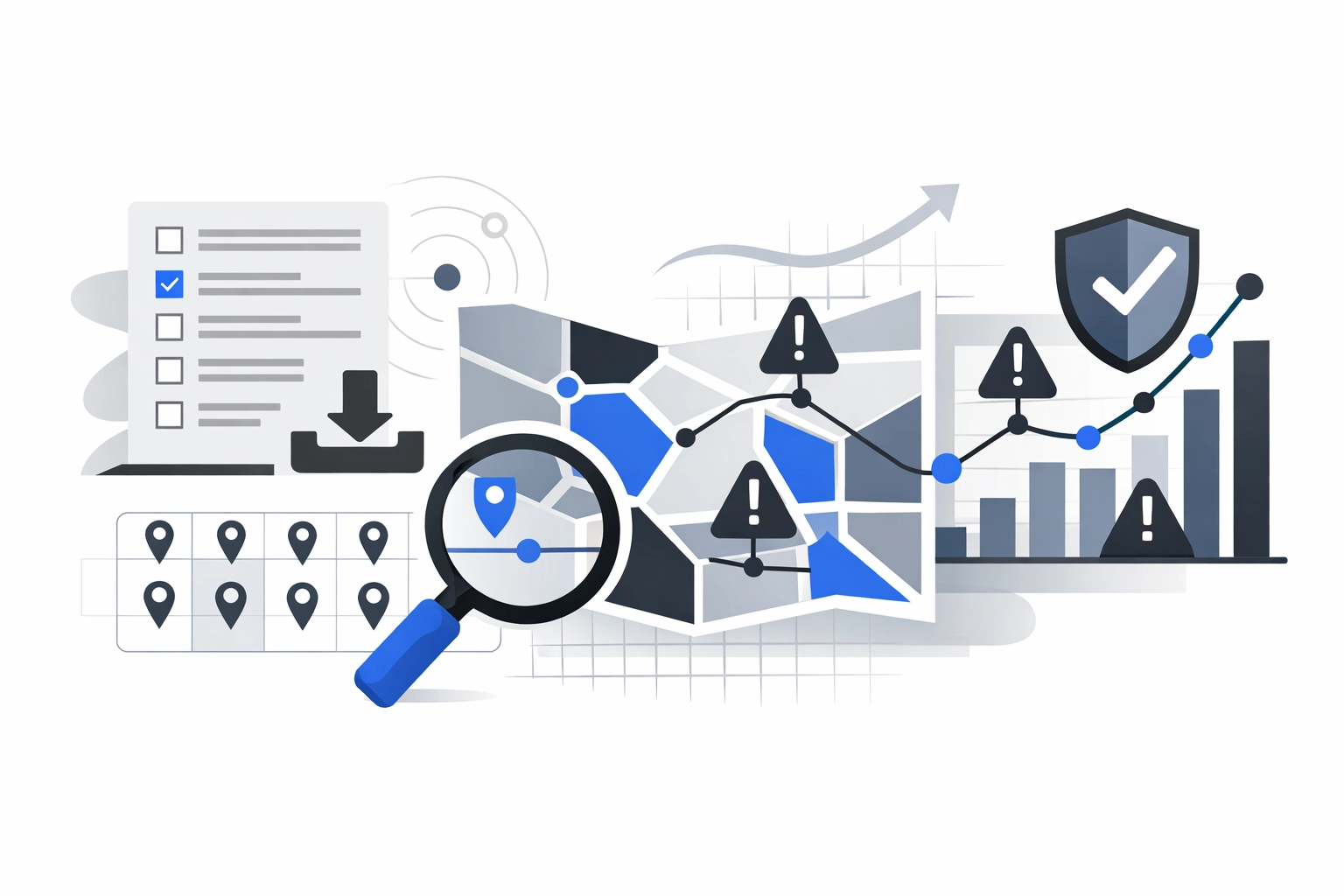
The following framework translates the workflow into a concrete, repeatable process that a small team can implement without bespoke tooling. Each step emphasizes data provenance and auditable decision-making.
- 1. Define your target niches: Decide which TLDs matter for your brand in the near term (e.g., .company, .news, .network). Document why each niche is included and which business units rely on it.
- 2. Collect and harmonize: Gather downloadable lists and harmonize formats. Maintain a master inventory with metadata: source, refresh date, and status.
- 3. Verify with RDAP/WHOIS where visible: Attempt ownership verification while tracking data gaps caused by privacy protections. Maintain a transparency note for any redacted fields.
- 4. Score domains for risk and localization value: Apply a simple rubric (e.g., 0–5 for brand-confusion risk, 0–5 for localization value). Aggregate to a domain-risk score and a localization-potential score.
- 5. Act and track outcomes: Prioritize actions (monitoring vs. reclaim vs. dispute) and set cadence for reviews. Ensure results feed into brand governance and localization planning.
Practical insights for implementation
Beyond the framework, several practical considerations help ensure the approach scales without sacrificing quality. First, data provenance matters: keep records of where each domain entry came from, when it was last refreshed, and which data fields were observable. This supports internal audits and vendor governance, especially when your portfolio crosses borders or different regulatory environments. Second, data freshness should be planned: niche TLDs can rename registries or change RDAP endpoints, so a quarterly refresh is a reasonable minimum for startups with global ambitions. Finally, privacy and compliance cannot be ignored: as RDAP adoption grows, differing privacy policies across registries require a thoughtful approach to data usage and publication. Industry discussions emphasize that RDAP’s privacy-focused design, with controlled disclosure and JSON responses, is intended to address these concerns more effectively than legacy WHOIS. (icann.org)
Expert insight and common limitations
Industry experts note that RDAP’s structured responses, along with per-request filtering and authentication, enable more reliable automation and safer data integration into product workflows. For startups, this translates into clearer signals for risk scoring and faster response times when a potentially risky domain is detected. However, a key limitation remains: not all TLDs fully support RDAP, and some jurisdictions still rely on privacy protections that obscure ownership details. In practice, teams should plan for partial visibility and build risk thresholds that account for data gaps. ICANN’s RDAP technical guidance highlights the operational realities of implementing RDAP in a multi-registry environment, including bootstrap server discovery and JSON-based data models. (icann.org)
Limitations and common mistakes to avoid
- Over-reliance on bulk lists without validation: Lists are only as good as their provenance and freshness. Always pair lists with real-time RDAP/WHOIS checks where visible and document the data’s date and source.
- Ignoring privacy protections: Some domains will redact owner information. Treat redaction as a data-gap rather than a disqualifier, and plan for alternative signals (registrar, domain status, aliases) to inform decisions.
- Assuming data is static: Domain ownership and status can change quickly. Establish a refresh cadence and a governance process that makes the latest data authoritative for decision-making.
- Underestimating localization complexity: A domain’s local relevance depends on language, regulatory context, and consumer behavior. Tie list data to localization strategies rather than treating it as a simple risk filter.
- Neglecting compliance and data-use policies: Ensure that your use of domain data aligns with applicable privacy and data-protection rules, particularly when cross-border data flows occur.
Expert notes: how this fits into your broader brand governance
For startups, the value of niche-TLD inventories multiplies when integrated with broader brand governance. A lightweight, auditable data layer—anchored by downloadable niche lists and reinforced with RDAP signals—serves as a backbone for both risk management and localization initiatives. In practice, teams that embed this approach into quarterly planning sessions tend to see more coherent domain strategies across product launches, regional campaigns, and partner ecosystems. The data-backed, governance-driven workflow also improves collaboration between marketing, product, and legal teams by providing transparent, reproducible decision criteria.
As a resource, you can explore related domain data assets and tooling, including specialized lists by TLD and country, as well as RDAP-backed databases that standardize access to ownership signals. For organizations evaluating which lists to download first, the client’s resources such as the List of domains by TLDs and RDAP/WHOIS databases offer practical starting points. RDAP adoption and the push toward standardized data access are well-documented by ICANN and industry observers. (icann.org)
Conclusion: turning data into durable brand protection and growth
Downloading niche-TLD domain lists is not a silver bullet, but when used as the seed for a disciplined risk-mapping process, it becomes a durable asset for startup branding and localization. The combination of well-curated lists, transparent data provenance, and RDAP-enabled validation enables faster, more reliable decision-making across your growth programs. In an era where niche TLDs increasingly intersect with privacy-preserving data access standards, startups that institutionalize data-driven checks and governance stand the best chance of protecting their brands while unlocking new localization opportunities.
To reinforce practical access to these tools, consider integrating the client’s domain data resources into your workflow. For example, use the RDAP & WHOIS Database for robust lookups and the broader List of domains by TLDs to scope niche inventories. The objective is clear: translate downloadable lists into auditable signals that inform where to monitor, where to fence, and where to expand into new regional markets.