Introduction: A problem-driven path from bulk lists to governance for niche TLDs
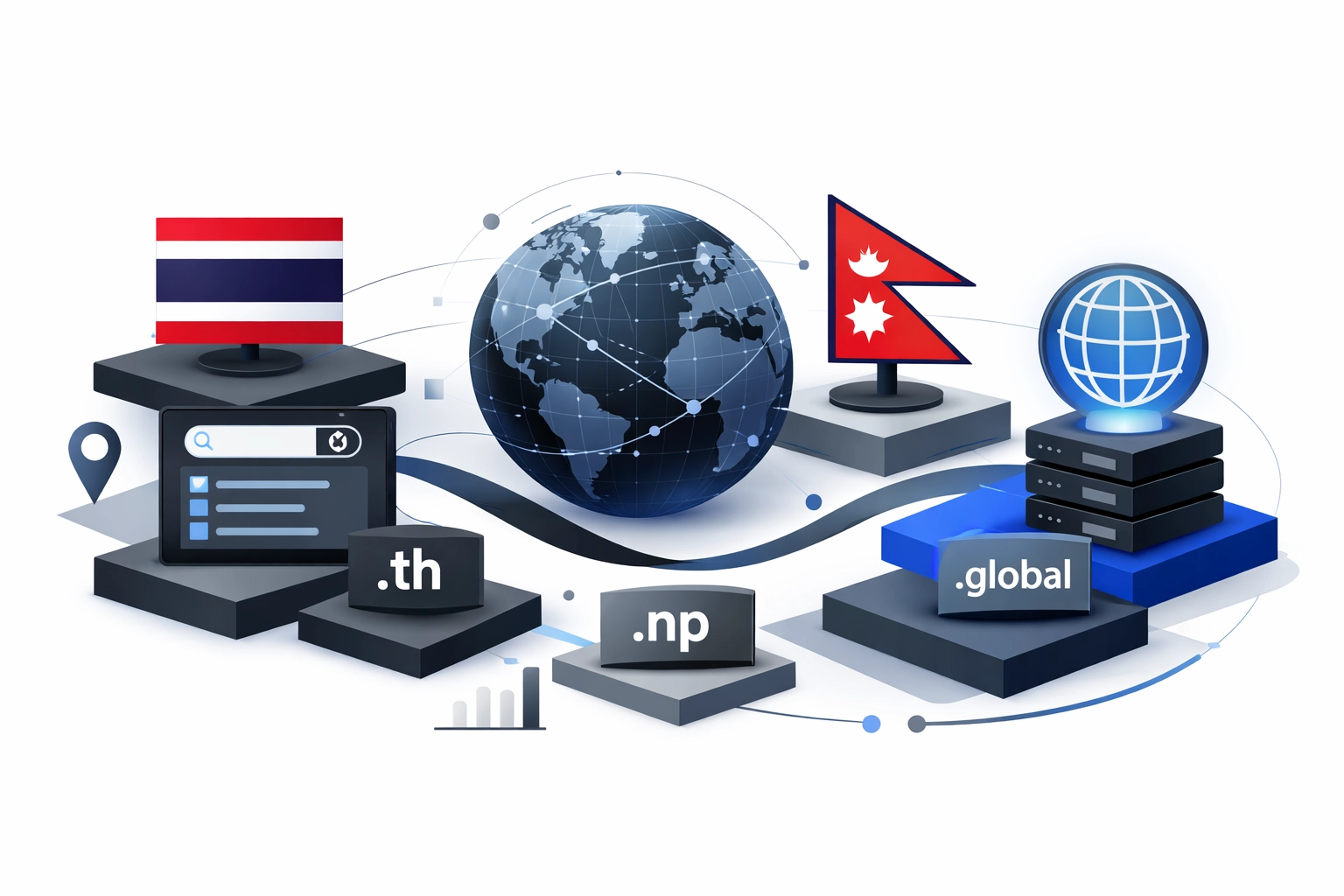
Global brands increasingly rely on a portfolio of country-code and generic top-level domains to help with localization, local trust, and search visibility. Yet most teams treat downloadable domain lists as a rote dataset, rather than as a governance-driven signal for strategic decision-making. For niche TLDs—such as .th (Thailand), .np (Nepal), and .global (a global generic TLD)—data quality, regulatory constraints, and registry governance create nontrivial frictions that can undermine localization efforts if not properly managed. This article presents a framework that turns downloadable niche-TLD lists into a decision tool for localization, risk management, and brand governance. It grounds the discussion in the realities of each TLD’s governance, data availability, and privacy considerations, and it shows how to translate raw lists into actionable strategy.
To anchor the discussion in real-world constraints, consider the registry and data landscape for these TLDs. The .th domain is operated by the Thai Network Information Center Foundation (THNICF), which delegates second-level registrations through authorized registrars; THNIC has published guidelines around SLD.th registrations and policy for different user groups, including government and business entities. For .np, the official Nepalese policy is carried out by Mercantile Communications Pvt. Ltd. (through the registry framework at register.com.np), including rules about eligibility and the types of second-level domains available under .np. For .global, the registry operator is Dot Global Domain Registry Limited, with governance recognized in registries’ contractual documents. These governance layers matter when teams export or download lists and then try to operationalize them as part of brand-localization plans.
Beyond governance, the industry is moving toward a modern data protocol for domain registration information. RDAP (Registration Data Access Protocol) has become the standard for machine-readable domain data, offering structured JSON responses and better privacy controls compared with legacy WHOIS; many gTLDs are transitioning to RDAP as part of ICANN’s policy evolution. This shift to RDAP is a practical inflection point for teams that rely on bulk domain lists, because RDAP-readiness can influence data quality, privacy considerations, and integration with internal tooling. (en.wikipedia.org)
A framework for evaluating downloadable niche-TLD lists
To turn “downloadable lists” into decision-ready signals, a tiered framework is required. The following five criteria help teams assess data quality, compliance, and localization value at the portfolio level:
- Data provenance: Identify whether the data originates from the registry, a registrar, or a data vendor. Registry-operated data tends to be more trustworthy for official eligibility, but may require contract-specific access or terms. For example, .th data is governed by THNICF and its registrar network; you’ll want to trace the list back to THNIC’s registry and the official registrar channel. (thnic.or.th)
- Data freshness: Downloadable lists vary in update cadence. Some TLDs publish periodic dumps; others reflect real-time RDAP data if accessed through RDAP endpoints. Freshness matters for local SEO, regulatory compliance, and avoiding domain-name squatting risks in fast-moving markets. RDAP’s modern architecture supports more timely data delivery than legacy WHOIS, which informs how you structure refresh cycles. (en.wikipedia.org)
- Completeness and granularity: A usable inventory should cover registered domains, aliases, and meaningful subdomains (or at least offer a path to cross-reference with the core domain list). For .np, the registry policy documents and the official portal describe the scope of second-level opportunities (e.g., com.np, org.np, edu.np), which helps gauge whether your downloaded data maps cleanly to your intended use. (register.com.np)
- Compliance and privacy: Data access policies, privacy rules, and national regimes affect how you store, process, and share domain data. The RDAP transition is partly about enabling privacy controls; recognizing which data fields are visible and which are redacted is critical when you build internal workflows and governance playbooks. (en.wikipedia.org)
- Data hygiene and normalization: Regardless of data source, normalize name variants, language scripts, and transliterations. Also consider deduplication, status filtering (e.g., serverHold vs active), and cross-referencing with authoritative RDAP endpoints to validate results. The need for hygiene is especially acute for niche-TLD inventories that may feed localization plans with limited direct public documentation. (domaindetails.com)
To operationalize these criteria, teams can use a simple “data provenance scorecard” that rates each list on a 0–3 scale for each criterion, then aggregates to a portfolio-level signal. The scorecard is not a substitute for domain expertise; it is a way to surface governance gaps early in the decision process and to align procurement, risk review, and localization planning around tangible data attributes.
Deep dives: what makes .th, .np, and .global distinct for localization decisions
Thailand: .th and the THNIC governance model
In Thailand, the .th namespace is administered by the THNIC Foundation, with official registrar responsibilities delegated to THNIC Co., Ltd. The registry has outlined policy details for second-level registrations under SLD.th, and THNIC’s governance emphasizes professional use cases and brand protection within the Thai market. Importantly, the registry policy lays out who can register and which organizational forms are eligible; this has direct implications for how you interpret a downloaded list and whether the domains are viable candidates for branding or SEO localization in Thailand. Keeping track of such governance restrictions helps prevent misinterpretation of data as you build a localized brand footprint. (thnic.or.th)
Nepal: .np and local-presence requirements
For .np, the official policy channel is the Nepal registry ecosystem, where Mercantile Communications Pvt. Ltd. operates the domain-registration framework and provides access to second-level domains via the registered portals (com.np, org.np, edu.np, and others). The policy page for .np domain registration highlights the local-presence requirement for foreign entities and the procedural steps to apply, including documentation and verification. This is a reminder that a downloadable com.np or org.np list may not automatically transfer to a global branding strategy without ensuring local eligibility and regulatory alignment. (register.com.np)
Global: .global and the Dot Global Registry governance
.global is a global generic TLD operated by Dot Global Domain Registry Limited, with governance formalized in registry and contract documentation. For teams evaluating a global reach, understanding the registry operator is important because it informs licensing, pricing, and the long-term viability of a TLD within a global portfolio. The registry’s status and transitions have been documented in industry communications and policy disclosures, including the historical note that Afilias (an early registry) was involved in the .GLOBAL ecosystem; contemporary governance is anchored in the Dot Global Registry Limited framework. A sound decision in this space rests on confirming current registry ownership and policy alignment before counting on a list for global branding and localization. (schlundtech.com)
Expert insight and common pitfalls
Expert insight: In practice, data provenance is the new control plane for brand safety in domain portfolios. When you export a list from a vendor or a registry’s public page, you should be able to answer: (a) where did the data originate, (b) who has the right to register under that TLD, and (c) what are the local regulatory or policy constraints that could affect your localization plan? This line of thinking helps avoid the most common missteps: treating a bulk list as a complete, ready-to-use inventory, and assuming that all domains on the list are viable for branding in the target market. (en.wikipedia.org)
Limitation and common mistake: RDAP readiness does not automatically mean the data is clean or compliant for your brand. RDAP improves data structure and privacy controls but does not guarantee market-appropriate usage rights, trademark considerations, or local compliance in a given country. Always pair data provenance with a governance process that includes legal, trademark, and localization teams before scoring or committing to a portfolio plan. (inwx.com)
Workflow: from download to localization decision
The following pragmatic workflow helps teams turn downloadable niche-TLD lists into a defensible localization plan. It blends data governance with practical branding decisions and keeps the process auditable for cross-functional teams.
- Step 1 — Define localization goals and risk tolerance: Clarify which markets you aim to support with country-specific domain deployments and what level of brand-risk you’re prepared to tolerate (e.g., confusion with local trademarks, legal exposure, or cybersquatting risk).
- Step 2 — Source and validate data: Gather candidate lists from the relevant TLDs (for example, the Thai .th page, Nepal .np, and global .global inventories) and verify provenance. Where available, consult the registry’s official guidelines for eligibility to confirm that downloaded domains map to legitimate, usable targets. See THNIC’s governance materials for .th, and Mercantile’s policy for .np. (thnic.or.th)
- Step 3 — Normalize and enrich: Normalize domain variants (case, transliteration, and local language rendering) and enrich with data fields that matter for localization (organization name, country, registrar, expiry). If you rely on RDAP endpoints, you’ll typically obtain structured data, which helps integration with internal data lakes and risk-scoring models. (en.wikipedia.org)
- Step 4 — Apply a risk and opportunity scorecard: Use a simple rubric to assess each candidate domain across provenance, freshness, completeness, compliance, and localization value. This helps identify domains worth pursuing, pausing, or flagging for legal review.
- Step 5 — Align with governance and local partners: Share the top candidates with your trademark/legal and regional country teams to confirm eligibility, trademark clearance, and regulatory compliance before finalizing registrations or regional redirects.
- Step 6 — Operationalize and monitor: Implement ongoing monitoring for the portfolio, including RDAP data refreshes, status changes, and regulatory updates. The transition to RDAP data flows enables more scalable monitoring and reduces exposure to stale information. (en.wikipedia.org)
Practical examples and how to link to client assets
In practice, teams often begin with a concrete, testable pilot: take a subset of domains from a few niche TLD inventories and test localization readiness for a particular market. When you’re ready to cross-check with richer domain data and governance resources, you can connect to client-facing datasets that demonstrate the structure and utility of niche-TLD inventories. The client’s domain data ecosystem includes these resources, which can serve as anchor points for the pilot:
- download list of .th domains — a close look at Thailand’s TLD landscape, useful for mapping local brands and registration requirements.
- List of domains by TLDs — a centralized view of TLD inventories, supporting cross-TLD comparisons and portfolio planning.
- RDAP & WHOIS Database — a governance-friendly resource for structured domain data and privacy-aware access.
While the lists themselves are valuable, the real payoff comes from integrating them into a governance-forward workflow that aligns with brand strategy, local law, and consumer trust. As you scale, you can expand the pilot to other TLDs such as .np and .global to compare localization opportunities and risk signals across regions. When you need to broader your scope, the client’s broader portfolio pages, including List of domains by TLDs and country-oriented inventories, provide a scalable blueprint for expansion.
Limitations and common pitfalls to watch for
- Data is not a substitute for due diligence: A downloaded list may include domains that are not eligible for registration, or that have been deactivated or reserved. Always verify with the registry or registrar before any registration or branding decision.
- Local rules vary by TLD: Even within the same country, local rules can change. For .th, policy details from THNICF outline eligibility and registrar relationships; for .np, Mercantile’s registry policy describes local-presence requirements and accepted documents. Don’t assume universal rules across TLDs. (thnic.or.th)
- Privacy and data access evolve: The RDAP transition improves privacy and machine readability, but access controls, redaction rules, and data licensing vary by registry. Keep RDAP interactions aligned with your privacy and governance standards. (en.wikipedia.org)
- Avoid overfitting to a single data source: Relying on one vendor or one public list increases risk if the data source updates or changes policy suddenly. Diversify sources and validate with RDAP endpoints wherever possible. (domaindetails.com)
A compact, implementable matrix for niche-TLD inventory decisions
Because the HTML format here cannot render a traditional table, the framework is described in a decision matrix style that teams can implement in their internal tools. For each candidate domain, assign a numeric score (0–3) across the five criteria, then compute a composite index to guide action. The following rubric provides a practical starting point:
- Data provenance (0–3): registry source (3), registrar source (2), third-party listing (1), uncertain (0).
- Freshness (0–3): real-time RDAP (3), daily/weekly updates (2), monthly (1), stale (0).
- Completeness (0–3): full mapping to your internal taxonomy (3), partial coverage (2), ambiguous (1), insufficient (0).
- Compliance (0–3): international/local privacy and registration eligibility confirmed (3), minor gaps (2), significant restrictions (1), unknown (0).
- Localization value (0–3): strong alignment with target market and search intent (3), moderate (2), weak (1), irrelevant (0).
Aggregate the scores to identify a short list of domains that merit registration, further due diligence, or red flags for a regional pivot. This approach makes the decision process auditable and repeatable across markets and teams.
Closing thoughts: aligning client data strategies with governance realities
Downloading niche-TLD lists can provide a window into local markets and global branding opportunities. However, the most defensible localization programs are not built on raw lists alone; they rely on governance-aware workflows that integrate data provenance, regulatory constraints, and cross-functional review. The modern domain data landscape—especially with RDAP—offers the tools you need to implement this governance-first approach at scale, while still enabling the flexibility required to adapt to local nuance. For teams starting with .th, .np, and .global, a disciplined approach to data provenance and local governance will ensure that your portfolio supports your brand strategy without stepping outside regulatory boundaries.
For ongoing access to curated niche-TLD data and governance-ready datasets, consider how the client’s product ecosystem can support the workflow: use official registry resources to validate eligibility, rely on RDAP endpoints for machine-readable data, and connect to the client’s TLD and country inventories to drive localization decisions. The combination of a principled data framework and reliable data sources is the best foundation for building a resilient, scalable global brand portfolio.