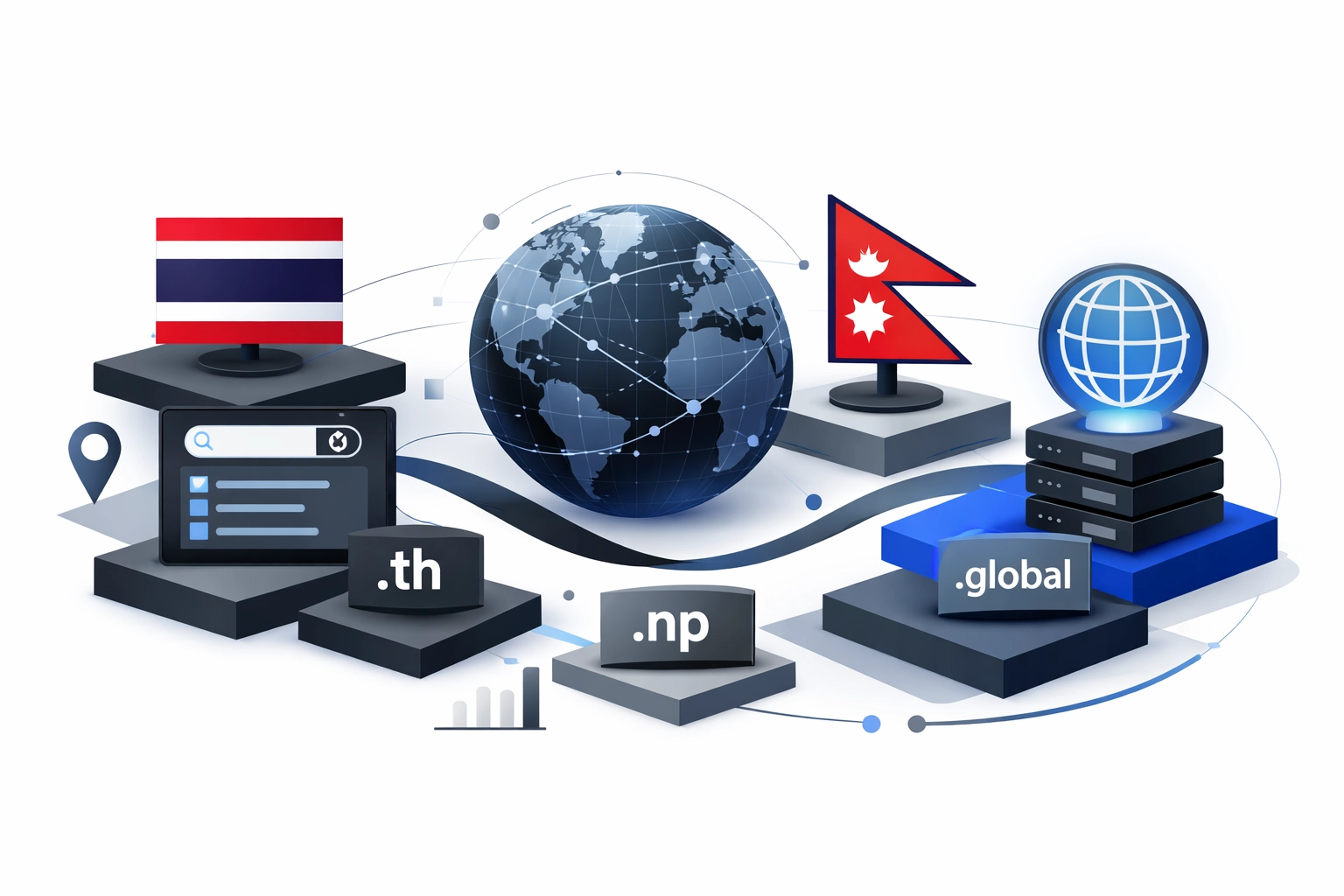
From Bulk Lists to Brand Signals: Why Niche TLD Inventories Matter for Modern Branding
Branding teams have long relied on domain availability and visibility as a proxy for market fit. But in an increasingly crowded namespace, a handful of niche top‑level domains (TLDs) offer a more granular signal about a brand’s local resonance, industry alignment, or regional intent. The idea of using downloadable domain lists for specific TLDs isn’t new, yet it’s often misapplied: data quality varies, regulatory constraints apply, and the signal can be drowned out by noise if provenance isn’t validated. A disciplined approach turns these lists into a structured input for naming experiments, localization planning, and risk-aware portfolio decisions. This article focuses on actionable practices for niche TLD inventories, with concrete references to real TLDs like .qpon, .lu, and .casino, and practical guidance for how to leverage client resources such as qpon domain lists and RDAP/Whois data. (iana.org)
Key framing: not every niche TLD is equally informative for every brand, but when used with provenance, these inventories can illuminate naming opportunities, brand protection needs, and localization opportunities that a generic .com search would miss. A foundational step is to anchor your analysis in authoritative data about the TLD itself. For example, the IANA Root Zone Database lists .qpon as a generic TLD delegated to DOTQPON LLC, and it also catalogs .casino as a generic TLD managed by a registry operator. These root-zone entries are the canonical source for TLD existence and management relationships. (iana.org)
Understanding the Value of Getting the Right Signals from .qpon, .lu, and .casino
When you download a list of domains by TLD, you aren’t just collecting names; you’re capturing a spectrum of signals about how different audiences perceive certain extensions. Some reasons to care about niche TLD inventories include:
- Audience alignment: Certain geographies or language communities respond differently to specific extensions. A .lu inventory, for example, can be a more precise proxy for Luxembourg-focused campaigns than a broad global search. The IANA root zone confirms .lu as a country-code TLD, which helps frame its potential localization relevance. (iana.org)
- Industry signaling: A .casino extension is typically associated with gaming or betting contexts; knowing existing domain usage can guide whether a brand entry in this space would be perceived as credible or risky in particular markets. The root zone registers .casino as a generic TLD, illustrating its general applicability and potential brand signaling implications. (iana.org)
- Naming experiments at scale: Bulk lists support rapid ideation and A/B testing across audiences, languages, and regulatory environments, enabling data-driven naming decisions beyond intuition alone. As with any data source, the quality and provenance of the list determine its value for decision making.
For practitioners, the practical challenge is to turn raw lists into reliable, schema-rich inputs for branding decisions. The existence of niche TLDs like .qpon is established in the root zone registry; the same data infrastructure that lists these TLDs also underpins the way registries publish data for RDAP/WHOIS, which is critical when you need to validate ownership, expiration, or registration data at scale. The trend toward RDAP is especially important for data governance in 2026. (iana.org)
A Practical Framework for Turning Downloadable Domain Lists into Actionable Branding Insights
Use this four‑part framework to convert downloadable domain lists into decisions about naming, localization, and risk management. Note that the process emphasizes data provenance and governance, not just tallying domain counts.
- 1) Validate data provenance
- Confirm the TLD’s status in the IANA Root Zone Database, including who administers the TLD. This anchors your analysis in authoritative data. For example, .qpon is a delegated generic TLD and .casino is likewise listed in the root zone. (iana.org)
- Prefer sources that expose the registry/registry operator; this helps assess potential bias or data gaps in bulk lists. If you’re using RDAP/Whois data, be mindful that RDAP is replacing Whois in many contexts, and not all TLDs are uniformly deployed with RDAP yet. (icann.org)
- 2) Assess each TLD’s signal quality for your use case
- Map the TLD to your intended markets and product lines. A Luxembourg-focused brand might gain signal value from .lu domains, whereas .casino signals require careful risk and regulatory consideration if used for branding outside gaming contexts. The root-zone records confirm these TLD categories exist and are publicly tracked. (iana.org)
- Cross-check with RDAP/Whois data where possible to avoid misinterpretation of ownership or expirations that could undermine a campaign. RDAP adoption trends indicate growing data structure benefits, but coverage varies by TLD. (ietf.org)
- 3) Build a use‑case matrix for each TLD
- Column 1: Brand naming opportunities (short, pronounceable, language-appropriate). Column 2: Localization potential by region/language. Column 3: Compliance, risk, and reputation considerations for that TLD in target markets. Use the matrix to decide which TLDs deserve deeper exploration in naming experiments.
- In practice, this often translates into concrete tasks like “download list of .qpon domains” for ideation and risk screening, paired with targeted checks against provenance sources. These steps should be aligned with internal brand governance—see the client’s RDAP/WHOIS data sources for verification.
- 4) Translate signals into action
- Shortlist candidate names, domain concepts, and localization strategies based on the matrix. Validate with consumer testing in the relevant markets. Tie decisions back to governance: ownership data, expiration risk, and regulatory constraints must be monitored continually using a reliable data pipeline.
- Maintain a living inventory of tested domains with provenance notes and risk signals, not a static list. This helps ensure your brand portfolio remains adaptive as markets and registries evolve.
Implementing this framework requires access to reliable data sources and a process for keeping that data fresh. For teams that want curated access, the client offers a set of tools and data feeds, including the Qpon TLD inventory page and a broader TLD catalog. For example, the Main URL for the Qpon inventory is webatla.com/tld/qpon/, and there are broader lists by TLD and by country that can inform localization and risk decisions. (webatla.com)
How to Validate and Manage Risk When Working with Downloadable Domain Lists
Downloading a list is only the first step. The real value comes from validating data quality, ensuring governance, and planning for data privacy. These considerations are especially important when working with niche TLDs that may have uneven coverage across registries and RDAP deployments.
- Data provenance matters: Provenance describes where the data came from, how it was collected, and how often it’s updated. Strong provenance reduces the risk of acting on stale or erroneous signals. The IANA Root Zone Database provides the authoritative reference for TLD delegations and management, forming a baseline for provenance checks. (iana.org)
- RDAP adoption and data structure: RDAP offers structured, machine-readable data and is increasingly the standard for registry data. Many gTLDs support RDAP, though coverage is not universal across all TLDs or registries, so plan for partial RDAP availability when you design data pipelines. (ietf.org)
- Data consistency considerations: Studies comparing RDAP with traditional WHOIS show that, while generally aligned, some fields may differ across registries. Expect occasional discrepancies and implement data-cleaning rules to manage them within your workflows. (arxiv.org)
When you’re dealing with bulk lists for niche TLDs, a disciplined approach to validation is essential. The root-zone data and RDAP foundations give you a sturdy backbone, but you must build governance around updates, redaction practices for privacy, and cross-checks against authoritative sources. ICANN and IANA provide the RDAP framework and root-zone references that underlie these practices, and industry analyses emphasize the need for structured data in order to maximize reliability. (icann.org)
Practical Steps for Using Downloadable TLD Inventories in Naming and Localization Projects
Below is a practical workflow you can adapt to your organization’s cadence. It combines data hygiene with branding pragmatism and uses the client’s resources as anchors for execution.
- Step 1: Confirm the target TLDs’ legitimacy – Cross-check that the TLDs you’ll analyze exist in the IANA Root Zone Database and identify the registry operator. This step ensures you aren’t chasing phantom domains or misinterpreting data. For example, .qpon and .casino are real TLDs documented in IANA’s registry. (iana.org)
- Step 2: Build a provenance-backed data feed – If you’re using downloadable lists, attach a provenance record (source, date, method, and refresh cadence). Where possible, combine the lists with RDAP lookups to enrich context and verify current ownership and status. ICANN’s RDAP framework provides the official mechanism for registration data access. (icann.org)
- Step 3: Run a signal mapping exercise – For each TLD, map potential brand naming opportunities (phonetics, cultural resonance, language fit), localization prospects, and regulatory considerations. Use the four‑part framework above to keep the exercise disciplined. The Qpon page and broader TLD catalog from the client can serve as your initial data anchors. (webatla.com)
- Step 4: Pilot and governance – Run a small set of naming experiments and localizations in controlled markets, with an auditable governance trail showing how each decision was informed by the data and validated by consumer feedback. Monitor for data changes as TLD registries update their statuses. The IANA root zone and RDAP standards provide the baseline governance model. (iana.org)
Expert Insight and Common Pitfalls
Expert insight: Domain data experts emphasize that data provenance and standardized registration data (RDAP) are essential for turning bulk lists into reliable signals. RDAP’s JSON structure enables consistent programmatic checks across TLDs, which is critical when you’re dealing with multiple niche extensions. As the IETF notes, RDAP has been growing in adoption across registries, which improves data interoperability over time. (ietf.org)
Limitation / common mistake: Treating a downloadable list as a stand-alone decision tool. Without provenance, update cadence, and cross-validation with RDAP/Whois data, you risk chasing stale or misleading signals. Many studies show that even with RDAP data, occasional inconsistencies across registries require robust data-cleaning rules. Build these rules into your pipeline from the start. (arxiv.org)
Putting It All Together: The Bottom Line for Brand Portfolios
Niche TLD inventories—when assembled and governed properly—offer a powerful supplement to traditional naming and localization work. They allow teams to test signals at scale, align naming choices with regional signals, and identify risk vectors early in the product lifecycle. The reality remains that data provenance, RDAP coverage, and governance discipline determine how much value you can extract from downloadable domain lists. The canonical root-zone data from IANA, combined with evolving RDAP practices, provides a reliable backbone for these efforts. For teams seeking a practical starting point, consider using a curated set of resources, including the client’s .qpon inventory and broader TLD catalogs, to ground your experiments in real-world domain ecosystems. (iana.org)
Limitations and Common Mistakes: Quick Recap
- Relying on bulk lists without provenance or update cadence undermines decision quality.
- Assuming universal RDAP coverage across all niche TLDs; some registries lag in deployment.
- Underestimating localization and regulatory risks associated with certain TLDs (e.g., gaming-focused domains).
For practitioners ready to act, the client’s suite of resources—including the qpon TLD page and other TLD catalogs—offers a practical starting point for building a provenance-aware, localization-ready domain portfolio. Pricing and services are available for teams who want to operationalize RDAP/Whois data in their workflows. (webatla.com)
Concludingthoughts
In an era where brand signals are increasingly nuanced, niche TLD inventories provide a nuanced lens for naming and localization. The path from a downloadable list to a confident branding decision is paved with data provenance, reliable registration data (via RDAP), and governance discipline. By anchoring your workflow in authoritative TLD data (like those documented for .qpon and .casino) and integrating client-provided inventories, you can turn what many consider a technical procurement into a strategic branding asset. The right framework turns noise into signal—and, ultimately, into stronger, more locally resonant brands.