Introduction: domain inventories as a living asset in brand strategy
In 2026, the most nimble brands treat domain inventories as more than a static registry of potential web addresses. They use downloadable lists to run fast, controlled experiments—testing naming options, measuring perceived trust, and mapping localization risks before any product launch or marketing push. The practice sits at the intersection of governance, product strategy, and risk management: a disciplined approach to a tool that, when misused, can create more confusion than clarity. The core idea is simple: use curated, scorable lists of domains in niche TLDs to inform decisions about branding, localization, and protection. When paired with a rigorous governance process, downloadable domain lists become a practical asset rather than a data dump. Downloadable lists—whether \u002Ecloud, \u002Ero, or \u002Efun—can be especially valuable for testing, shadow campaigns, and regional experiments without committing capital to first-hop registrations. This article outlines a field-tested playbook to turn lists into action, with concrete steps, a practical framework, and real-world caveats. Note: this topic builds on several industry developments around data access, governance, and brand protection that have shaped how teams work with domain data today. For readers seeking authoritative context, see the evolution from WHOIS to RDAP and ongoing governance discussions in the industry. (rfc-editor.org)
Why downloadable domain inventories matter for agile growth
Historically, brand teams depended on a handful of well-known domains and a yearly portfolio review. Today, a rapid experimentation mindset requires a broader, governance-ready set of data. Downloadable domain lists let teams:
- Rapidly scope potential naming experiments across niche TLDs that align with product positioning (for example, cloud-centric messaging in the .cloud space, or region-focused campaigns in country-code domains).
- Stress-test brand signals under realistic conditions—evaluating perception, memorability, and risk before any public launch.
- Build a defensible inventory governance model that supports localization and compliance while reducing the risk of cybersquatting or impersonation driven by generic lists.
RDAP and the move away from traditional WHOIS data reinforce why this matters: standardized, machine-readable registration data supports better filtering, validation, and risk scoring as you scale. RDAP provides structured data, and organizations are increasingly adopting it as the backbone of domain data workflows. This shift—from uncertain, inconsistent WHOIS data to JSON-based RDAP records—underpins how teams can trust the lists they download and use for governance. (rfc-editor.org)
A three-layer pipeline to convert lists into strategy
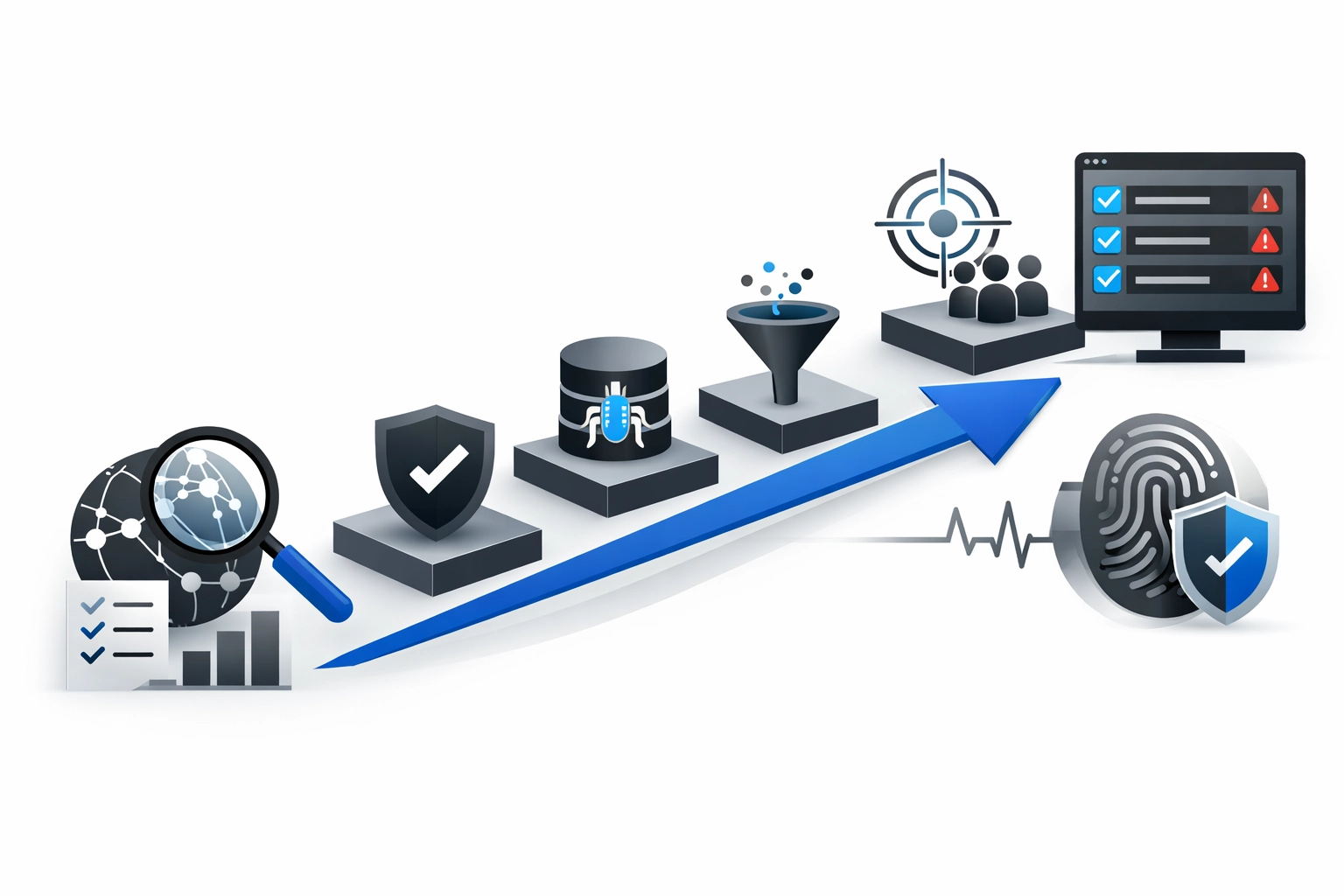
To extract strategic value from downloadable domain inventories, structure the practice into three layers: Discovery, Validation, and Governance. Each layer adds precision and reduces risk, enabling informed decisions about whether to acquire, block, or monitor a given domain. The pipeline is deliberately pragmatic: it avoids raw bulk registrant chasing and focuses on high-signal opportunities that align with product, compliance, and brand safety needs.
Discovery: understanding scope and semantics in the list
The first step is to translate the raw list into a decision-ready map of opportunities and risks. Key questions include: Which TLDs are most relevant to our product or market? Do the semantically meaningful TLDs (such as .cloud for cloud-native offerings) align with our messaging, and are there country codes that reveal localization opportunities? The answers shape which domains we scrutinize, which we deprioritize, and how we design experiments around them. A practical approach is to annotate each domain with a tag reflecting its intended use (brand protection, regional marketing, product experimentation) and an initial risk estimate based on context. Industry guidance emphasizes that RDAP-enabled data—and not bare WHOIS—should underpin this step, because it reduces ambiguity in later stages. (rfc-editor.org)
Validation: validating data quality, ownership, and intent
Validation turns a bulk list into a trustworthy instrument. The core actions are: verify the domain is registered and resolvable, confirm contact or registry data via RDAP, and check for any red flags such as brand confusion risk or suspicious pre-registrations around similar spellings or homoglyphs. Because RDAP delivers data in a machine-readable JSON format, teams can automate checks for registration status, registrar, and last updated timestamps. The RDAP transition is now a standard practice across registries and registrars, a movement supported by major industry bodies and vendors. (rfc-editor.org)
Governance: scoring, triage, and action rules
Governance turns validation into decision leverage. A practical governance model assigns risk scores and action codes (e.g., acquire, monitor, block, or de-prioritize). A well-constructed framework accounts for brand protection, localization, and regulatory constraints. In practice, this means: (1) scoring by risk of impersonation or brand confusion, (2) scoring by localization value or regulatory exposure, and (3) defining clear escalation paths for acquisition or safeguard actions. Industry players highlight the value of a structured governance approach to domain data—one that integrates data quality, security, and business impact. For example, security-focused providers emphasize using brand-tied TLD inventories to reduce impersonation risk, while commentators note that governance reduces the risk of over-committing to niche domains that offer little strategic payoff. (defenddomain.com)
Framework and practical tools: turning lists into decisions
Below is a practical, repeatable framework designed for product teams, marketing, and brand governance. It combines a scoring model, operational workflows, and client-friendly integration—so you can justify budget and governance actions with a clear, auditable trail. We also show how to align with the client’s ecosystem, including the cloud-focused TLD inventory hosted at the client’s site. For example, teams often begin with a targeted subset—such as a download of .cloud domains for cloud-based products—before expanding to other niche TLDs as confidence grows. See the client’s cloud inventory resource here: cloud TLD inventory. (dynadot.com)
Step 1 — Discovery and tagging
- Map TLD semantics to strategic intents (cloud-centric, regional, or entertainment-focused).
- Tag domains by potential use: brand protection, regional marketing, or product-testing placeholders.
- Capture metadata such as registry, registrar, and last updated date from RDAP when available.
Step 2 — Validation and enrichment
- Confirm domain resolution and identify any hosting or DNS anomalies.
- Validate ownership data via RDAP and cross-check with official registry notices where possible.
- Enrich with signals such as similarity to brand names, potential confusion with competitors, and historical usage patterns.
Step 3 — Scoring and triage
- Risk score: impersonation potential, trademark exposure, and likelihood of cybersquatting.
- Strategic score: localization value, market readiness, and fit with product messaging.
- Action code: Acquire for testing, monitor for early brand signals, block to prevent confusion, or deprioritize for future review.
Step 4 — Action and governance
- Document decisions with audit trails, linking each domain to a business case (e.g., a product sprint or localization plan).
- Integrate results with existing brand governance, security controls, and procurement workflows.
- Vet the process against regulatory requirements and data privacy considerations, especially when dealing with country-code TLDs.
Step 5 — Continuous feedback and iteration
- Run quarterly or sprint-based reviews to prune stale entries and re-prioritize based on market dynamics.
- Update risk models to reflect new threats, such as homoglyph-based impersonation or new gTLDs with similar semantics.
- Document lessons learned and adjust the framework to maintain alignment with product roadmaps and brand strategy.
Expert insight: what practitioners say about inventories and governance
Industry practitioners consistently highlight the governance imperative when dealing with bulk domain data. An experienced domain-portfolio practitioner notes that robust governance is as important as data quality: a well-structured discovery-validation-governance loop turns messy lists into actionable risk maps and product-ready signals. This view aligns with mainstream guidance that emphasizes systematic portfolio management and risk-aware decision-making. For example, many practitioners reference guidance on domain portfolio governance and risk management as the core to sustainable growth, particularly when expanding into niche TLDs. (dynadot.com)
Beyond theoretical constructs, there is a practical push from industry sources that stress the transition from plain bulk data to a governance-driven workflow. RDAP, as a standardized data-access protocol, supports automation and more trusted decision-making, as described in industry analyses and RFCs. This transformation is central to using downloadable lists as a driver of strategy rather than a cost-center of data cleaning. (rfc-editor.org)
Limitations and common mistakes you should avoid
Even with a rigorous framework, there are notable limitations and frequent missteps when using downloadable domain lists for strategic work:
- Data completeness varies across TLDs. Not all registries expose RDAP data consistently, and some ccTLD operators may still rely on older WHOIS systems or partial RDAP implementations. This can create blind spots in validation and risk scoring. It’s essential to document data provenance and cross-check with multiple signals where possible. (cabforum.org)
- Bulk lists are not a substitute for a brand strategy. Lists are inputs to decision-making, not a replacement for trademark clearance, consumer research, and local market testing. An over-reliance on lists can lead to misguided acquisitions or wasted resources if the broader brand strategy isn’t aligned. Industry commentary consistently stresses balancing data-driven insights with strategic fit and legal due diligence. (defenddomain.com)
- Bulk actions without governance can undermine trust. If teams attempt mass acquisitions or blocking without auditable governance, it creates governance debt and can trigger downstream compliance or security concerns. A structured process, with documented decisions and review cycles, helps mitigate this risk. (brandsecurity.gmo)
Putting it all together: a practical case and how to start
Imagine a SaaS company planning a cloud-native product launch in 2026. The team uses a targeted download of .cloud domains to prototype branding concepts for a new service. They annotate potential names with aproduct-experiment tag, validate ownership through RDAP lookups, and score domains by brand-fit and localization value. Those with high strategic scores are prioritized for controlled acquisitions or protective registrations, while low-score items are placed in a watch list for ongoing monitoring. The approach minimizes upfront costs while delivering a defensible, data-driven path to market. In parallel, the team runs localization experiments with country-code domains (including potential .ro assets for Romanian markets) to gauge regional resonance before committing to a regional rollout. The cloud-focused inventory at the client’s site can be consulted for a ready-made starting point: cloud TLD inventory. (dynadot.com)
Key to success is the governance layer: clear escalation paths, auditable decisions, and a regular cadence of reviews that tie domain decisions to product milestones and risk controls. In practice, this means your quarterly brand-risk map should align with product sprints, regional launches, and marketing campaigns—so the domain strategy supports, rather than interrupts, growth. The broader industry guidance on RDAP and brand protection underscores that the future of domain data is data-backed, structured, and governed. (rfc-editor.org)
Limitations of the case study and how to adapt for your organization
Case studies are context-dependent. A small team might start with a handful of lists, whereas a multinational brand portfolio could require a more formal governance framework with cross-functional risk committees. The key is to tailor the framework to your organization’s risk tolerance, product cadence, and legal constraints. If you’re evaluating niche TLDs like .ro or .fun, consider both localization opportunities and potential consumer perceptions. Combining a structured inventory approach with authoritative data standards—like RDAP—helps ensure decisions are defensible and scalable. (rfc-editor.org)
Conclusion: domain inventories as a governance-ready engine for growth
Downloadable domain lists are not a one-off tactic; they are a governance-ready engine for brand strategy in an increasingly complex digital landscape. When used with a disciplined discovery-validation-governance pipeline, these lists become a way to test ideas, map risk, and accelerate decision-making around localization and brand protection. The industry shift toward RDAP data strengthens the reliability of this approach, giving teams a structured, auditable basis for action. As brands expand across niche TLDs—whether cloud, regional, or entertainment-focused—the ability to translate bulk data into strategic signals becomes a core capability. If you want to see a ready-made starting point that aligns with this approach, check in with the cloud inventory on the client site and begin the discovery process with a curated download of relevant TLDs. cloud TLD inventory and related lists, such as a broader directory of domains by TLDs or country, are useful anchors for teams embarking on domain governance at scale. (dynadot.com)