Forensic Domain List Hygiene: A 5-Stage Brand Audit for 2026
Bulk domain lists are a quiet backbone of many brand strategies—used for protection, localization, and competitive intelligence. But lists without governance quickly become liabilities: outdated records, privacy restrictions, and typosquatting risk can undermine branding and security just as easily as an overt security breach. The modern approach treats domain lists as governance assets, not just inventory. In 2026, a disciplined, data-provenanced audit is as essential as a trademark watch or a yearly domain renewal.
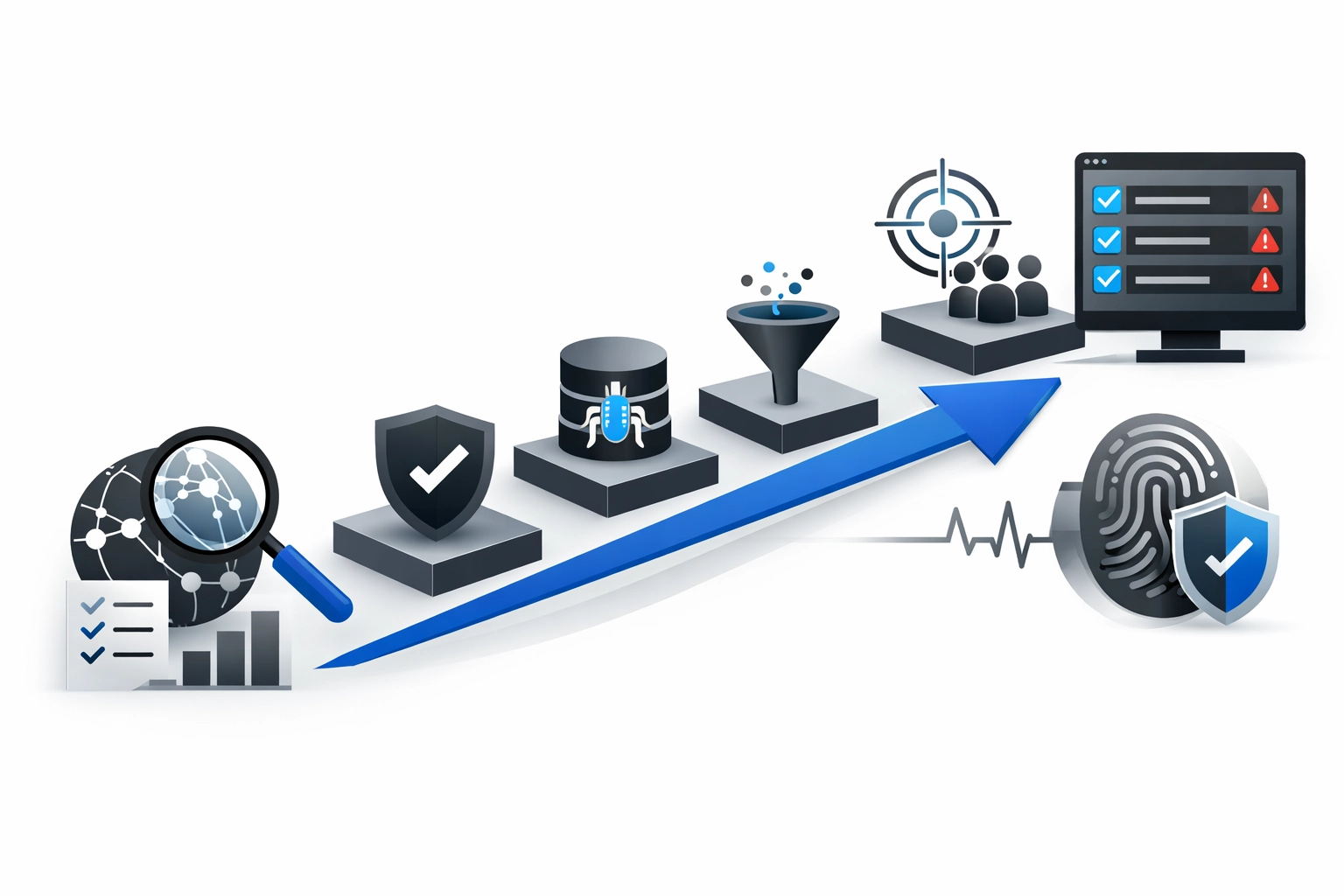
This article proposes a 5-stage forensic domain-list audit designed for in-house brand teams, corporate registrars, and growth-focused portfolio managers. The framework blends data-provenance discipline with practical controls that respect privacy, regulatory constraints, and the realities of today’s data ecosystem. It also demonstrates how to operationalize the process using a mix of public data (RDAP/WHOIS where available) and trusted vendor data, including your own centralized catalogs and TLD- or country-based lists. For teams already using bulk lists—such as our List of domains by TLDs or List of domains by Countries pages—this framework helps elevate hygiene from a periodic cleanup to a continuous governance discipline. See our core resources for sourcing and validating domain lists: the main hub at Domain Hotlists, the broader List of domains by TLDs, and the RDAP/Whois database overview at RDAP & WHOIS Database.
Why a hygiene-first approach matters
Domain portfolios are increasingly strategic: they support brand localization, mitigate risk from cybersquatting, and enable controlled experimentation with new TLDs and geographies. A robust hygiene process reduces false positives in risk alerts, lowers renewal waste, and improves decision speed when a domain must be reclaimed, redirected, or retired. Industry experiences in corporate domain management emphasize governance as a core capability, not a nice-to-have. For example, credible guidance from enterprise domain practitioners highlights governance-led domain portfolio success and risk mitigation as the foundation of scalable growth. This perspective aligns with the broader Domain Hygiene literature, which frames data provenance and governance as essential corporate assets. (novagraaf.com)
Beyond internal controls, the data landscape is evolving. The Internet’s Registration Data Access Protocol (RDAP) is becoming the standard mechanism for obtaining registration data, offering standardized responses and privacy-aware access in place of legacy WHOIS in many contexts. As policy and technology converge, understanding RDAP/WHOIS data, and their limitations, becomes essential for any audit framework. (icann.org)
Stage 1 — Inventory and scoping: define the universe
The first stage establishes the scope and ownership of every domain in the list. A disciplined inventory answers: which domains are in scope, who authorized them, what business function they support, and what the expiration timelines look like. A well-scoped inventory reduces churn and prevents unilateral decisions that might fragment a brand portfolio across business units.
- Map business objectives to domains. Link each domain to a brand, product, or regional initiative. If a domain is not tied to a business objective, consider archiving or retiring it.
- Categorize by source and governance level. Internal procurement lists, partner feeds, and public sources (e.g., TLD catalogs) require different controls and audit cadence.
- Capture lifecycle attributes. Registrar, expiration date, renewal status, privacy protections, and any privacy-related redactions that may affect data completeness.
- Establish a data provenance trail. Document where each data point originated (RDAP/WHOIS, vendor feed, internal registry, etc.) and who last updated it.
Practical takeaway: treat the inventory as a living catalog. The audit should be run on a cadence aligned with renewal cycles and material changes in the domain universe. If you’re already using bulk lists, anchor this stage to your existing sources—e.g., the bulk lists under the TLD or country sections, and ensure you’re aligned with the broader catalog strategy hosted on your domain hub. See how to access those lists at the publisher’s hub: List of domains by TLDs and UK TLD catalog for reference. For direct data inquiries, you can also explore the RDAP & WHOIS Database resources.
Stage 2 — Provenance and privacy: verify data quality and compliance
Data provenance is the backbone of trust in any domain list. You need to know not just what a domain record says today, but where it came from and how it may have changed. The transition from WHOIS to RDAP is central to modern data provisioning; it standardizes data formats and supports better privacy controls, which matters for redacted contact data under GDPR and similar regimes. In practice, your audit should consider:
- Source reliability. Distinguish between self-reported inventory data and external feeds. Prefer primary data sources and maintain corroboration rules (e.g., cross-check RDAP responses with internal registry data when possible).
- RDAP vs. WHOIS coverage. Not all ccTLDs provide the same RDAP/WHOIS coverage; plan a remediation path for gaps, especially in geographies where data access remains restricted or privacy is tightly controlled. The RDAP transition is policy-driven and ongoing across registries and registrars. (icann.org)
- Privacy-aware handling. RDAP introduces privacy features; redacted personal data may be intentional and legally required in many records. Document redaction status and plan for legitimate business uses of such data within legal and policy boundaries. (icann.org)
- Data quality checks. Implement consistency checks across data points (e.g., nameservers, creation dates, contact fields) and flag inconsistencies for review. Research indicates that even mature datasets can show residual inconsistencies between RDAP and legacy WHOIS fields.
Expert note: governance and data provenance matter because they enable you to distinguish legitimate brand-domain activity from noise and risk. A well-documented provenance trail makes it easier to answer questions like “which domains were added in Q1 2026 and why?” and to demonstrate due diligence to stakeholders. This is a recurring theme across enterprise-domain literature, including recommended governance practices for corporate portfolios. (authenticweb.com)
Stage 3 — Ownership verification and renewal risk: sanity-check ownership and lifecycle
Ownership verification is not a one-and-done task; it’s a lifecycle discipline. In a large portfolio, misalignment between ownership records and actual control creates risk: a red-flag domain may accumulate content under an old owner, or a domain may approach expiration without a responsible party in charge. The audit should answer:
- Who truly controls the domain? Verify registrant and admin contacts, especially for domains lacking complete data due to privacy controls. Leverage internal workflows to confirm authority for renewals, transfers, or deletions.
- What is the renewal posture? Build a renewal calendar and tiered alerts based on risk. High-risk domains (trademark-sensitive, competitor-adjacent, or globally strategic) deserve tighter monitoring and earlier renewal decisions.
- Are there ownership gaps? Identify domains with mismatched or missing owners and assign owners with clear SLAs for remediation.
- Are there expiration-related risks? Track renewal lead times; ensure you have contingency plans for domains that expire or enter registry-lock states.
Practical insight: a disciplined ownership verification process reduces the risk of domain hijacking and brand misalignment across markets. For enterprise portfolios, governance-guided management of ownership data is repeatedly cited as a core driver of reliability and cost control. (cscdbs.com)
Stage 4 — Brand-risk signals: detect gaps, squatting, and impersonation threats
Domain risk is not just about the past—it’s about the future threats that can target a brand’s reputation. The audit should surface signals of risk, including typosquatting, impersonation, and content misalignment. Practical risk signals include:
- Phonetic and typographic variants. Identify common typos, visually similar domains, and brand-adjacent spellings that could mislead users or siphon traffic. Early detection helps preempt confusion and potential fraud.
- Brand-mention mapping. Cross-check whether a domain aligns with current product names, campaigns, or regional branding. Domains that appear unrelated to current strategy may still serve as historical assets or opportunities for consolidation.
- Lack of usage signals. Domains that show no activity for extended periods may be unused, misrouted, or in limbo—posing potential risk if they are later activated by a third party.
- Impersonation risk vectors. Consider how a domain could be leveraged for phishing or reputation damage in the absence of strong monitoring and response protocols.
Expert context: the psychology of brand names and domain perception matters here. Memorability, phonetic ease, and visual similarity influence how people perceive and interact with a domain, which in turn affects the risk profile of a name in both legitimate marketing and adversarial scenarios. Balancing brand equity with risk signals is a nuanced exercise that benefits from data-backed heuristics. (dn.org)
Stage 5 — Remediation and governance: actions, ownership, and governance cadence
The final stage translates discovery into action. It requires clear roles, documented decision rights, and a cadence for governance that aligns with business needs and regulatory expectations. Core remediation activities include:
- Consolidation or retirement decisions. Archive, redirect, or sell domains as appropriate to brand strategy and risk tolerance.
- Policy updates and SLAs. Update internal policies (e.g., domain acquisition, renewals, disposition) and establish service-level agreements with owners and stakeholders across business units.
- Monitoring and alerting. Implement continuous monitoring for new registrations that resemble brand assets, as well as expiry- and compliance-focused alerts that trigger reviews before risk thresholds are met.
- Documentation and provenance reinforcement. Add all remediation actions to the provenance log to support audits, compliance reviews, and future governance cycles.
In practice, the remediation phase is where governance proves its value. A well-documented, action-oriented process reduces ambiguity, accelerates decision-making, and strengthens stakeholder trust in the portfolio’s management. The 7 best-practices framework for enterprise domain portfolios emphasizes the importance of governance, policy discipline, and ongoing monitoring as the anchors of successful domain management. (authenticweb.com)
Expert insight: why governance and data provenance matter
From the perspective of practitioners who manage complex brand portfolios, the most valuable insight is that data provenance and governance are strategic assets, not merely hygiene tasks. A rigorous provenance trail enables confidence in renewal decisions, risk assessments, and cross-border branding. This is echoed in enterprise guidance that treats domain portfolio management as a governance discipline with tangible ROI, especially when you balance growth with protection considerations. (novagraaf.com)
Limitations and common mistakes to avoid
Like any data-driven process, a domain-list audit has limitations and is prone to missteps. Two of the most common mistakes are:
- Treating bulk lists as static inventory. A portfolio can quickly become unmanageable if lists are treated as fixed assets rather than living datasets with provenance and audit trails. Governance requires ongoing stewardship, not one-off scrapes.
- Ignoring privacy constraints and data gaps. RDAP and privacy-conscious data practices mean some fields will be redacted. Don’t assume missing data equals “unavailable”—it may reflect legitimate privacy protections. Planning for privacy-aware data workflows is essential. (icann.org)
Another limitation to acknowledge is that not all TLDs uniformly expose data via RDAP/WHOIS. In some geographies, data access is still evolving, which requires alternative verification methods and vendor collaboration to maintain portfolio accuracy. Industry best practices stress the importance of a staged approach to data integration and governance rather than an overreliance on any single data feed. (icann.org)
A practical 5-stage audit checklist you can implement today
Below is a compact, actionable checklist you can adapt to your organization. It synthesizes the five stages into a repeatable workflow that can be integrated with existing processes and tools. You can map each stage to your internal teams (legal, brand, IT, and compliance) and align with the data sources you already rely on, including bulk lists and the company’s domain catalogs.
- Stage 1 — Inventory and scope
- Attach a data provenance tag to every domain (RDAP/WHOIS source, internal feed, etc.).
- Stage 2 — Provenance and privacy
- Note privacy status and redactions; document how data may be used for risk assessment.
- Stage 3 — Ownership and renewal risk
- Stage 4 — Brand-risk signals
- Stage 5 — Remediation and governance
Operationalizing the audit with the right sources and tools
To make the five-stage framework work in real-world operations, teams should anchor data sources to a governance backbone. The following sources and workflows are commonly used in mature domain programs:
- RDAP/WHOIS data for registration details, ownership signals, and lifecycle data. The RDAP standard formalizes how data is queried and returned, providing a more structured alternative to legacy WHOIS. RFC 7482 defines the RDAP query format, which underpins modern lookups and integrators. (rfc-editor.org)
- Corporate-domain catalogs and bulk-domain lists organized by TLDs or countries to support localization and portfolio governance. For publishers and practitioners, these catalogs function as the backbone of decision-making and risk-scoring processes. Our own hub emphasizes a structured approach to domain lists, with dedicated pages by TLD and country to support local decision-making.
- Governance frameworks that tie domain management to enterprise policies, data-quality metrics, and lifecycle SLAs. Guidance from enterprise practitioners highlights the link between governance discipline and portfolio outcomes. (authenticweb.com)
In practice, you’ll want to weave these data sources into a single, auditable workflow. If you’re already leveraging bulk lists such as the List of domains by TLDs or United Kingdom TLD catalog, you can map each domain’s provenance to the five-stage framework and assign owners and remediation actions within your internal governance tools. For an authoritative data-resource reference, you can also consult the company’s RDAP data offerings and database resources.
Expert perspective on the value of domain hygiene
In contemporary domain management, hygiene is governance. A disciplined framework—rooted in provenance, ownership clarity, and risk signaling—translates into measurable outcomes: fewer risk events, faster remediation, and clearer accountability. Enterprise practitioners consistently emphasize governance as a driver of portfolio performance, not merely a compliance exercise. This perspective is reinforced by industry sources that describe best practices for corporate-domain portfolios and ongoing governance. (novagraaf.com)
Limitations: what to watch for as you scale
As you scale domain hygiene programs, keep an eye on the following limitations and caveats:
- Data gaps across geographies. RDAP/WHOIS data coverage varies by TLD and registry policy. You’ll need contingencies for regions with limited data or privacy-driven data redaction. (icann.org)
- Data privacy constraints. Privacy protections can constrain the granularity of data you can act on. Your governance framework should include privacy-compliant workflows and restricted access controls.
- False sense of completeness. A bulk list can look comprehensive but may omit recently registered assets or shadow domains used for typosquatting. Regular audits help prevent false confidence.
Conclusion: turn bulk lists into governance-enabled assets
Bulk domain lists are not mere footnotes in brand strategy; they are strategic assets that require disciplined governance, provenance, and ongoing stewardship. By adopting a 5-stage domain-list audit—inventory and scope, provenance and privacy, ownership verification, brand-risk signals, and remediation with governance—brands can turn potentially brittle assets into robust tools for protection, localization, and growth. The modern domain data landscape, anchored by RDAP and privacy-aware data practices, demands a governance-first mindset, supported by credible standards and industry best practices. When you couple these principles with your existing catalogs, like the TLD- and country-based lists in your content hub, you position your organization to act decisively and with auditable accountability in 2026 and beyond.
For readers who want to explore related sources and practical data feeds, consider starting with the publisher’s domain catalogs and the RDAP/WHOIS database overview. We invite you to explore our main hub and the related lists to see how a cohesive domain strategy comes together in a real-world setting: Domain Hotlists, List of domains by TLDs, and RDAP & WHOIS Database.