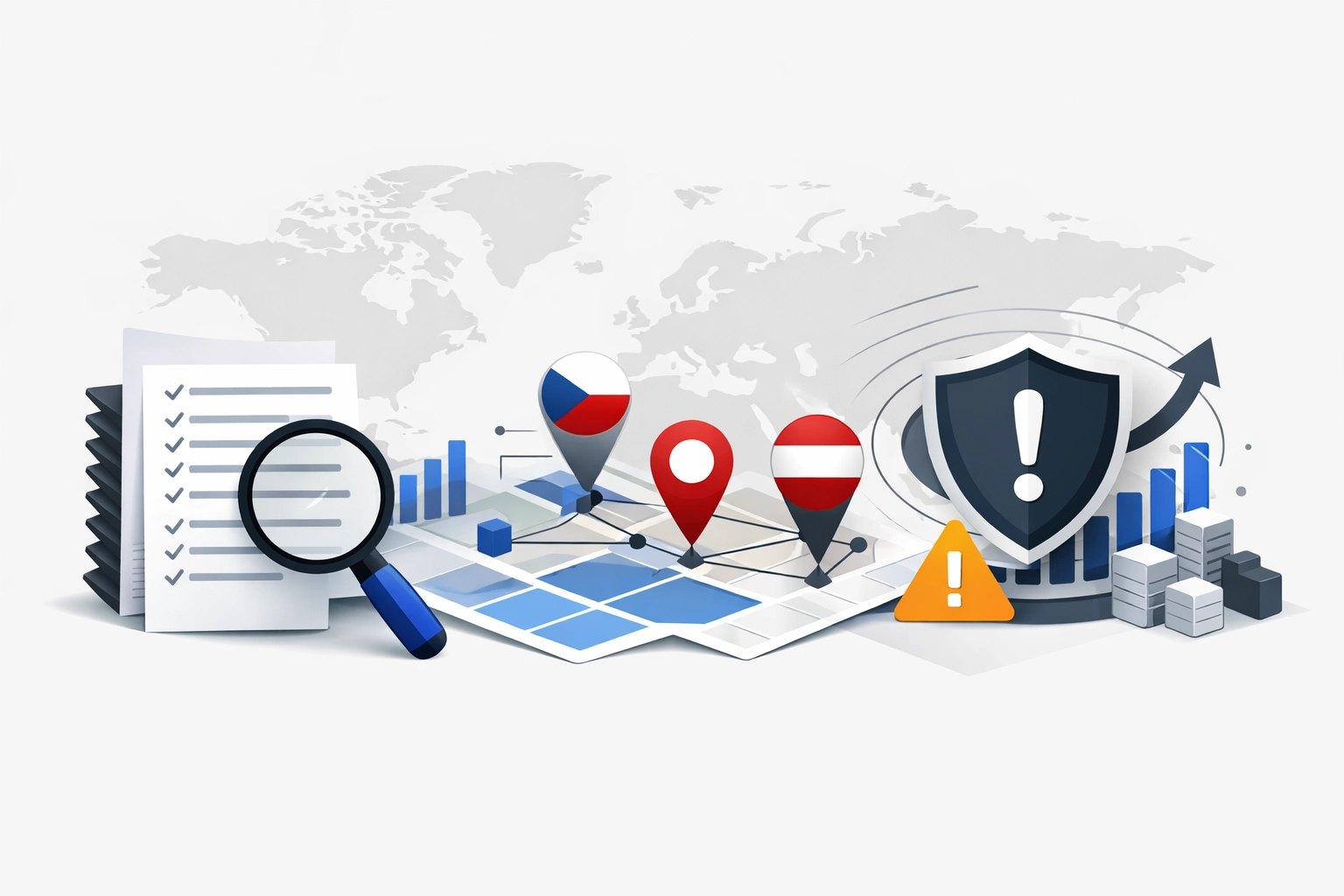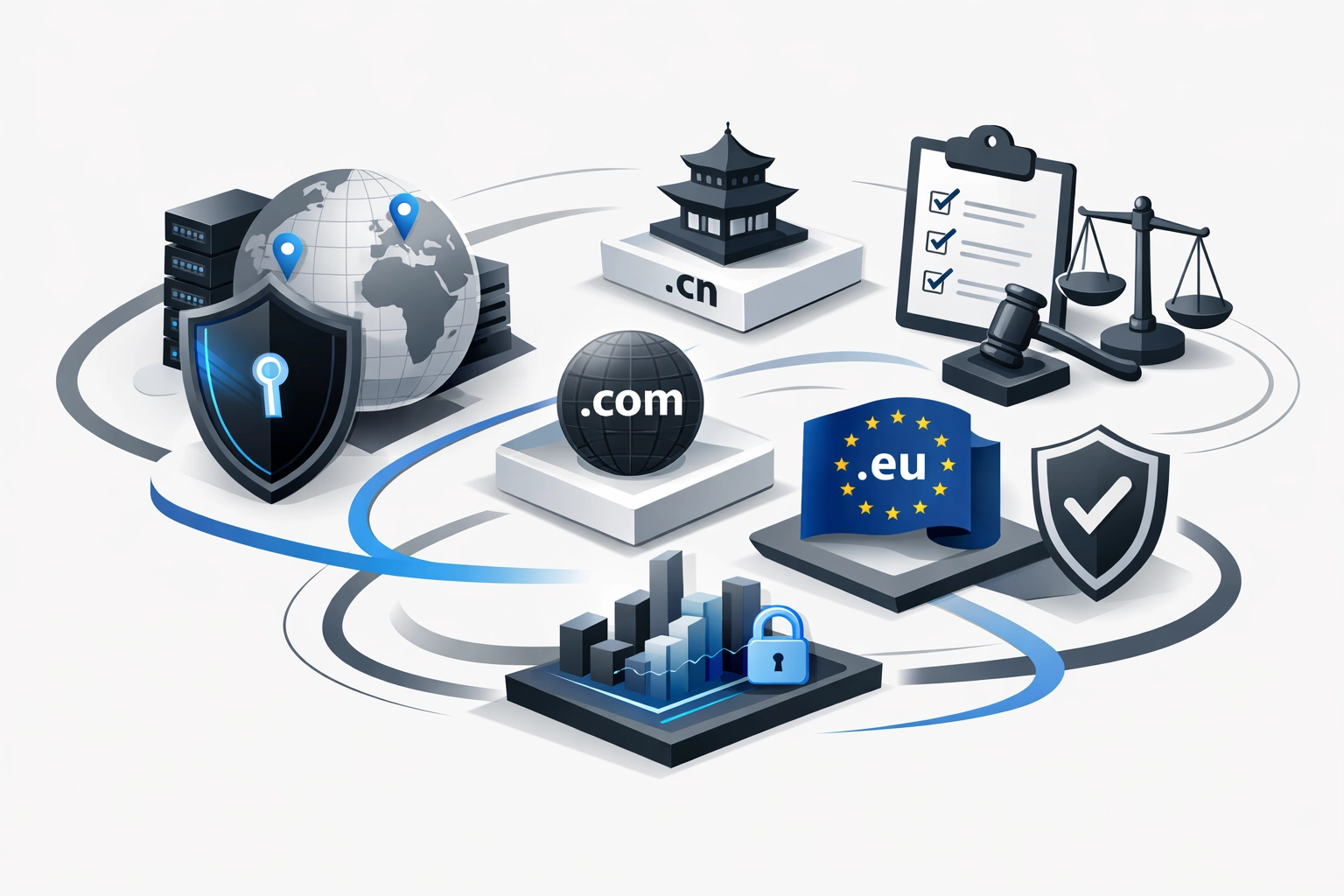
Downloadable domain lists are not just static inventories. When treated through a risk-oriented lens, these datasets become early-warning signals for brand protection, competitive intelligence, and localization strategy. In 2025–2026, brand abuse via typosquatting, lookalike domains, and cross-TLD leakage surged, turning bulk lists into strategic assets for defenders. A 2025 WIPO-backed trend analysis cited by technology outlets shows thousands of domain-name disputes as brands increasingly contend with imposters across extensions. This evolving landscape compels security, marketing, and localization teams to move beyond “owning a list” to turning lists into actionable risk intelligence.
For practitioners, the shift is practical: if you can detect patterns in a bulk list—near-duplicates, visual confusability, and cross-border leakage—you can preempt brand damage, reduce user confusion, and inform where to invest in localization and enforcement. This article offers a field-tested framework for extracting risk signals from downloadable domain lists, with concrete steps you can operationalize today.
Why downloadable domain lists deserve a risk-focused approach
Bulk lists are often used for inventory, procurement, or compliance checks. Yet the same data, under a risk lens, reveals patterns that correlate with brand exposure and consumer trust issues. For example, typosquatting can erode brand equity and open doors to phishing or malware if malicious variants are not monitored or gated effectively. Industry observers have highlighted the uptick in typosquatted and lookalike domains as threats become more sophisticated and diverse across new gTLDs and brand TLDs. A 2025 trend analysis highlighted a dramatic rise in domain-name disputes and brand impersonation incidents across major brands. This is not merely a legality concern; it is a user-experience and localization risk. (techradar.com)
Beyond immediate abuse, lists can illuminate localization opportunities and risks. When brands expand into new geographies, correlating domain extensions with local expectations (language, scripts, and local branding) helps avoid confusion and builds trust. In practice, a risk-focused review of downloadable lists can surface near-duplicate domains tied to specific regions, enabling proactive localization alignment and enforcement planning.
Data quality and the (changing) data plumbing: RDAP, WHOIS, and provenance
Historically, domain data relied on WHOIS responses. Today, the industry is migrating toward the Registration Data Access Protocol (RDAP), a structured, authenticated, and privacy-conscious protocol designed to replace WHOIS for generic top-level domains (gTLDs). ICANN has communicated the transition publicly and continues to guide registries and registrars through RDAP adoption, including official lookup services and recommended tooling. The sunset of traditional WHOIS in many gTLDs marks a shift toward more consistent data formats and access controls, with RDAP enabling better data quality management, paging, and provenance tracking. ICANN’s RDAP guidance and related governance materials provide the baseline for how modern domain data should be queried and consumed. (icann.org)
However, not all TLDs have RDAP everywhere at once, and some zones still rely on traditional WHOIS intercepts or hybrids. The broader lesson for practitioners is to treat data provenance as a first-class variable: know whether a given domain record came through RDAP or WHOIS, and track the last-checked date. A recent practitioner-oriented explainer notes that RDAP offers a standardized JSON response and better privacy controls, while registries may still serve WHOIS data for ccTLDs or non-RDAP zones. Keeping a record of data source and freshness supports reliable risk assessment and scheduling of lookups. (blog.whoisjsonapi.com)
For teams implementing bulk-list workflows, the practical takeaway is to design data pipelines with explicit provenance fields (data_source, last_checked, and freshness thresholds) so downstream risk scoring and enforcement decisions are auditable and repeatable. The move toward RDAP also aligns with privacy and regulatory expectations, especially in regions enforcing data-protection regimes. ICANN’s RDAP FAQs and transition guidance emphasize that RDAP is the future-facing data protocol for domain registration data. (icann.org)
Turning domain lists into risk intelligence: a practical framework
Below is a practical, field-tested workflow that helps teams extract meaningful risk signals from downloadable domain lists. It combines data hygiene, signal detection, and governance considerations into a repeatable pattern you can adapt to your organization’s risk appetite and localization goals. The workflow avoids treating lists as a mere catalog and instead uses them to quantify risk exposure, prioritize action, and inform cross-functional decisions.
Step 1 — Data hygiene and provenance validation
- What to do: Normalize domains (lowercase, punycode normalization for IDNs, remove obvious parking artifacts), deduplicate, and validate currency by comparing against a last_checked date. Record whether each record came via RDAP or WHOIS and the data source’s reliability for that TLD.
- Output: A clean, deduplicated list with clear provenance stamps and freshness indicators, suitable for downstream risk scoring.
Step 2 — Signal discovery: typoesquatting, lookalikes, and combos
- What to do: Scan for typosquatting (misspellings), homoglyph risks (visual confusability), combosquatting (brand plus keywords), and cross-TLD leakage (brand in non-primary TLDs that could mislead users).
- Output: A prioritized set of candidate domains flagged as potential brand risks, with rationale codes (typo, lookalike, or combosquat) and suggested enforcement type (monitoring, takedown, or brand alert).
- Context: Typosquatting is a persistent, evolving risk vector acknowledged by security researchers and industry analysts; monitoring patterns in bulk lists helps teams stay ahead of abuse that commercial tools might miss. (sentinelone.com)
Step 3 — Risk scoring and business impact prioritization
- What to do: Apply a lightweight risk score (e.g., likelihood x impact) that accounts for domain age, registrar reputation, language/IDN risk, and regional relevance. Weight signals by geography and market importance (e.g., local language scripts, popular local search terms, and country-specific branding).
- Output: A ranked action list (watch, monitor, request enforcement, or ignore) tied to business impact.
- Context: Cross-border risk is not uniform; localization strategy benefits from prioritizing domains that overlap with key markets or critical brand assets. Research indicates that domain-related risk increases as brands expand globally, making proactive monitoring essential. (techradar.com)
Step 4 — Action playbook: enforcement, monitoring, and governance
- What to do: For high-risk variants, initiate enforcement actions (trademark filings, DNS takedowns where permitted, or legal avenues). For moderate risks, set up continuous monitoring and alerting. Ensure alignments with privacy and data-use policies in your region.
- Output: An auditable enforcement log, ongoing monitorings, and a localization-adjusted risk posture for each market.
- Context: Real-world risk management requires a both a rapid response for high-risk items and a disciplined monitoring program for broader exposure. Industry sources emphasize the value of ongoing monitoring to combat evolving typosquatting and brand impersonation. (strategicrevenue.com)
Step 5 — Governance, data provenance, and compliance
- What to do: Document provenance, data-refresh cadence, and data-use policy. Maintain an evidence trail linking each risk decision to the respective domain record and its source (RDAP vs WHOIS). Consider privacy laws and regulatory constraints when handling registrant data.
- Output: A governance-ready framework for bulk-domain usage, with auditable decisions and clear roles across security, privacy, and legal teams.
- Context: RDAP emphasizes data standardization and privacy controls, which improves governance capabilities for brand protection programs. ICANN’s guidance and RDAP transition materials provide the governance backbone for modern domain data operations. (icann.org)
Putting Steps 1–5 into practice creates a feedback loop: validated data feeds risk signals, which informs enforcement and localization decisions, which in turn updates the data hygiene checks. This loop helps teams maintain an accurate, defensible portfolio of domains across TLDs while aligning with regional branding and regulatory requirements.
Expert insight and practical caveats
Expert insight: In practice, risk intelligence from domain lists hinges on two things: data freshness and data provenance. A modern approach treats the data source (RDAP vs WHOIS), the last-check timestamp, and the confidence of each signal as first-class facts in the risk score. When these factors are tracked rigorously, teams can reduce false positives, prioritize enforcement, and better align localization investments with real exposure. This perspective aligns with industry understandings of RDAP’s structured data and privacy advantages, while also acknowledging that not every TLD has RDAP fully deployed yet. (icann.org)
Limitation and common mistake: Over-reliance on raw lists without validating ownership, content, or intent leads to wasted effort and misdirected enforcement. Lists capture surface signals, not authority or intent. A robust program couples bulk-list analysis with cross-referenced signals (content checks, registrar reputation, and threat intelligence) and treats data freshness as a moving target. Security practitioners also caution that not all identified variants pose real risk; some may be erroneous or benign, making manual validation essential for high-stakes actions. (dnsfilter.com)
Localization and cross-TLD risk: a practical perspective
Global brands increasingly rely on country- and city-specific TLDs to signal local relevance. Lists can reveal where localization gaps or misalignments exist—domains parked in regions with weak brand presence or dormant in markets where you intend to invest. A disciplined review of bulk-domain data helps product and marketing teams tailor local experiences, language variants, and verification workflows. The client’s portfolio pages for country and city TLDs (for example, the country-based and brand TLD inventories) illustrate how teams use localized data to support global growth strategies. See the client’s domain galleries for country-focused and city-focused extensions and the broader catalog of TLDs for localization planning: List of domains by TLDs, .nyc TLD inventory, or .berlin TLD inventory.
Real-world implementation touchpoints: client integration and practical tooling
To operationalize the risk-intelligence workflow above, teams can integrate a structured domain-data layer that records last-check dates, data source, and signal provenance. A modern approach is to use a centralized RDAP and WHOIS database that records, for each domain, when it was last checked and which data source was used. This capability enables schedule-driven lookups, more reliable risk scoring, and easier audit trails for enforcement and localization decisions. A recent overview from Webatla discusses the practical implications of RDAP adoption and data-tracking in bulk-domain workflows, emphasizing data freshness and source visibility as core capabilities. RDAP & WHOIS Database and related product literature outline the data science and governance foundations you need for a robust domain portfolio. (medium.com)
For organizations that need quick access to per-TLD inventories (including major gTLDs like .com, .org, and .net as well as brand TLDs), the client’s public pages provide ready references to domain lists by TLD. Leveraging these resources alongside a risk-focused process helps teams avoid governance gaps and shorten time-to-action for brand protection in new markets.
Limitations and common mistakes (in short)
- Limitation: Lists reflect surface signals, not confirmed ownership or intent. Always pair bulk-list signals with content checks and risk-context assessment.
- Common mistake: Treating RDAP data as universally available for every TLD. While RDAP is the future, many ccTLDs and some gTLDs still rely on alternative data access methods; verify data source and freshness for each record. (icann.org)
- Limitation: Data redaction and privacy controls can obscure meaningful fields. Build governance that tracks data-provenance and consent considerations across jurisdictions. (docs.apwg.org)
Conclusion: turning bulk-domain lists into strategic risk intelligence
Bulk-domain lists offer more than a catalog of possible names. When processed with a risk-aware framework—emphasizing data provenance, signal discrimination (typosquatting, lookalikes, combosquat), and localization context—these datasets become a proactive defense and a strategic input into global growth plans. The migration to RDAP provides a more reliable data backbone and better governance, while industry insights underline the necessity of ongoing monitoring to stay ahead of abuse patterns. If you’re building a risk-led portfolio program, start with a disciplined data-hygiene protocol, a clear framework for signal detection and prioritization, and a governance model that makes every action auditable and defensible. For teams seeking a practical way to operationalize these ideas today, consider starting with a bulk-domain review that includes: provenance tagging, signal classification, risk scoring, and an enforcement-or-monitoring decision desk linked to localization priorities.
For readers who want to explore the client’s capabilities, the RDAP & WHOIS database and the broader suite of domain-data resources provide a solid foundation for building a robust domain risk intelligence program. Pricing and product details can help you scale this approach to your organization’s size and risk appetite, while public inventories by TLDs and geographic extensions offer quick-reference anchors for localization work.