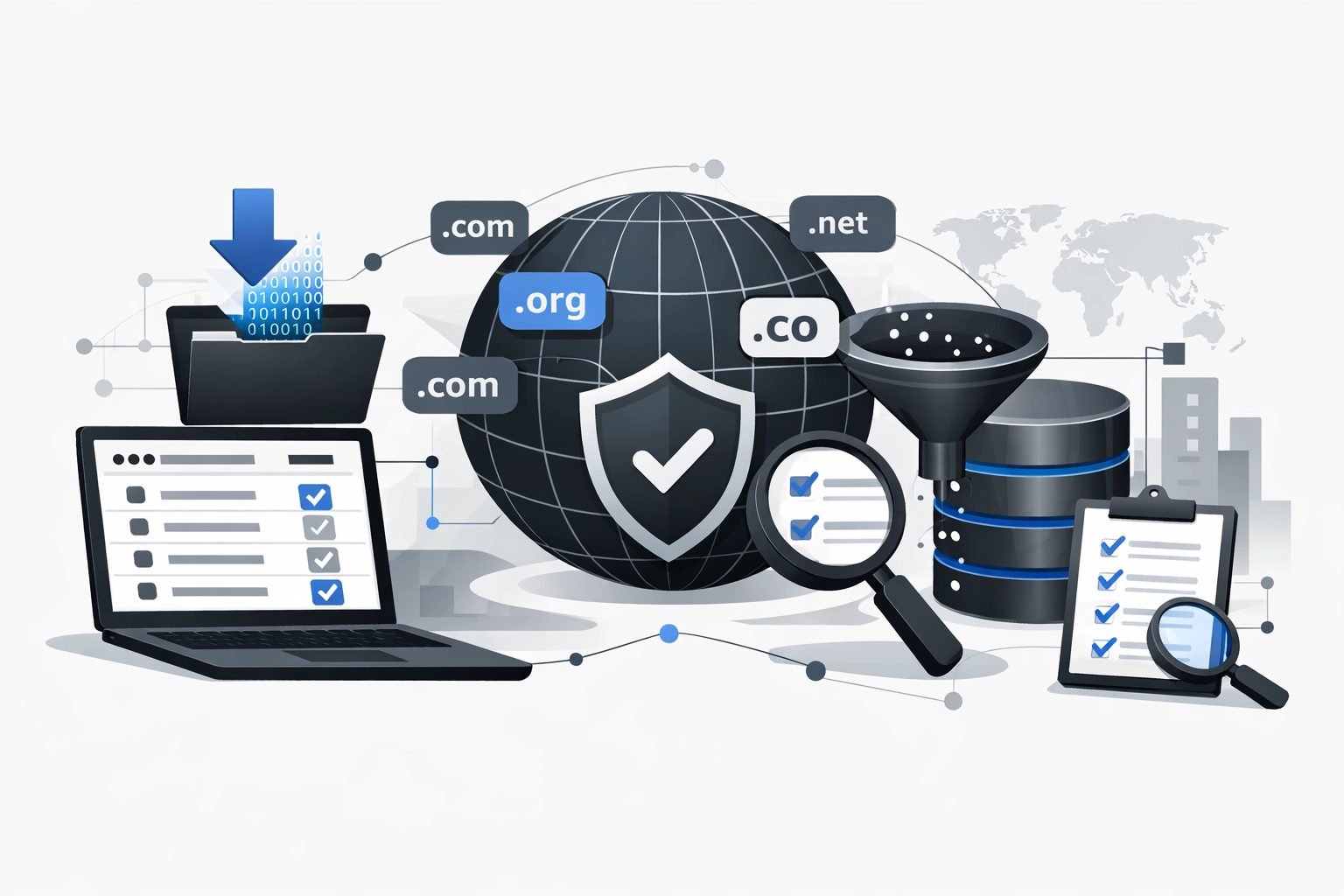
Introduction: The value and risk of domain lists
Domain lists are more than a raw collection of strings. For both beginners and seasoned practitioners, they represent a backbone for localization, brand protection, partner onboarding, and competitive intelligence. When used correctly, a curated inventory derived from downloadable domain lists helps teams assess exposure across markets, plan geotargeted experiences, and monitor potential brand risks in real time. When used poorly, outdated data, privacy concerns, and inconsistent licensing can turn a valuable asset into a legal and operational burden.
The data quality problem in downloadable lists
Two simple truths shape every domain-list project: data decays, and not all sources are equally trustworthy. Domains change hands, registrations lapse, and some lists include noise such as parked domains or duplicates. A robust approach must separate signal from noise without drowning teams in manual checks. The core quality attributes to monitor are recency (how fresh is the list), coverage (which TLDs and geographies are included), accuracy (is the data reflecting current registrations), and licensing (what are you allowed to do with the data).
A practical workflow to build a domain inventory
Below is a lightweight, repeatable workflow that anyone can apply, from a solo founder to a multinational brand operations team.
- Discover — Identify authoritative sources and how they can feed your inventory. Consider official TLD pages such as the List of domains by TLDs and individual TLD pages (for example, download list of .cn domains). Also consider modern data-provisioning endpoints such as RDAP/WHOIS services described by providers like ICANN and the IANA RDAP requirements.
- Assess — Evaluate licensing terms, update cadences, and data-usage restrictions. If a source prohibits redistribution or imposes heavy attribution requirements, you’ll need governance rules to comply.
- Transform — Clean, deduplicate, and normalize fields. Standardize domain strings (lowercase, remove extraneous whitespace), map to internal owners, and flag any domains that require privacy masking or special handling.
- Activate — Integrate with your governance stack. Create owner mappings, enforce change alerts, and schedule regular refreshes (monthly is a practical starting cadence for many teams).
- Notify — Maintain transparency with stakeholders. Publish a data-dictionary and an access policy for internal teams and partners to reduce misinterpretation and misuse.
A framework for data hygiene: the CLEAN approach
To avoid common missteps, adopt a concise data-hygiene framework you can apply to every list pull. We call it CLEAN:
- Clean and normalize — remove duplicates, standardize case, and strip noise such as trailing dots and irrelevant subdomains.
- Link and map — connect each domain to internal accounts (brand, legal entity, region) so ownership is unambiguous.
- Enforce privacy considerations — apply masking or proxy services where personal data appears in registrant records, and stay aligned with regional privacy rules.
- Activate governance — assign data stewards, publish a data-dictionary, and establish a cadence for refreshing lists.
- Notify stakeholders — ensure legal, marketing, and IT teams know when and how to use the data and where to report issues.
What to do with the data: practical use cases
Domain inventories built from downloadable lists feed a range of decision-making processes. A few representative uses include:
- Brand-protection workflows — identify similar or competing domains that could be used in phishing or typosquatting campaigns.
- Localization planning — map country-code TLDs and geographic targets to language and content requirements.
- Vendor and partner onboarding — verify partner domains against approved lists to prevent misuse or brand leakage.
Expert insight and key limitations
Experts in data governance emphasize that data freshness is often the limiting factor in domain-list projects. An industry veteran notes that “recency matters more for brand-protection signals than sheer volume.” In practice, this means teams should prioritize sources with frequent refreshes and implement automated checks to catch stale registrations. One clear limitation is the legal and privacy complexity surrounding public registrant data. As ICANN and privacy regulators debate access rules, teams should build privacy-conscious workflows that minimize exposure while maximizing signal quality.
For those who want to dive deeper into the data-provision landscape, familiarizing yourself with RDAP over WHOIS is a practical first step. RDAP provides structured responses, bootstrap mechanisms for discovering RDAP servers, and standardized data formats across many TLDs, with some exceptions. See ICANN’s RDAP page for details, and the IANA RDAP requirements to understand how bootstrap and server coverage are managed. RDAP (ICANN) • RDAP requirements (IANA).
Choosing sources: licensing, accuracy, and scope
Not all sources with a downloadable list are created equal. Some offer free, broad coverage but limited recency; others provide premium datasets with strict licensing. When you plan to download list of .cn domains, download list of .xyz domains, or download list of .top domains, you must verify licensing terms and whether redistribution is permitted for your intended use. A governance-first approach helps ensure you do not infringe on data-use restrictions or expose the organization to compliance risk. The client pages on the WebAtla platform illustrate how data teams combine RDAP and WHOIS data with TLD-specific lists to build an actionable portfolio. For more on data access practices, you can explore the RDAP/WHOIS database page on the client site. RDAP & WHOIS Database and the CN page at CN domain list, as well as the general list of domains by TLDs at List of domains by TLDs.
Technical note: balancing usefulness and privacy
As organizations rely more on public registration data, the tension between usefulness and privacy becomes sharper. Public registrant data can be valuable for security operations, but privacy laws and policy debates influence what data you can legally store and share internally. Operators of RDAP services often provide richer data models than traditional WHOIS, but you should still implement access controls, data minimization, and audit trails to protect individuals’ privacy while preserving operational value.
Limitations and common mistakes
- Mistake 1: treating every domain in a downloaded list as actively in use. Many are parked, expired, or captured by cybersquatters; they require verification before actions like risk assessment or takedown campaigns.
- Mistake 2: ignoring licensing terms. Some lists are for research use only, others prohibit redistribution or commercial use altogether. Always read the license before integration into internal systems.
- Mistake 3: neglecting governance. Without data stewards and a clear data-dictionary, the same domain may wind up assigned to multiple owners, causing confusion and misalignment with brand strategy.
- Mistake 4: underestimating the importance of recency. If you refresh quarterly instead of monthly, you risk basing decisions on stale signals, especially in high-velocity markets or during product launches.
Putting it into practice: a simple playbook for small and large brands
Small brand teams can start with a lean version of the workflow, focusing on a few high-priority regions and a monthly refresh cadence. Larger organizations, in contrast, should invest in an integrated data-hygiene workflow, linking domain data to internal systems like asset management, risk, and marketing. The following quick-start playbook aligns with the CLEAN framework and the three key use cases described above:
- Step 1 — Create a one-page data policy that defines allowed uses of domain lists, refresh cadence, and privacy controls.
- Step 2 — Pick a primary data source (for example, CN TLD page and the general tld list) and a RDAP/WHOIS data stream. Integrate them in a staging environment for deduplication and standardization.
- Step 3 — Build a simple owner map and a data-dictionary for common fields (domain, registrar, expiration, status, owner, region).
- Step 4 — Establish monthly refresh and a change-notice process to alert stakeholders when a domain’s status changes.
- Step 5 — Validate outputs with a risk scoring rubric that weighs brand-protection risk, localization relevance, and compliance posture.
Conclusion
Domain lists are a powerful asset when treated as a data product rather than a static resource. By combining authoritative sources with a disciplined workflow, beginners and professionals can build a reliable domain inventory that supports brand protection, localization, and partner governance. The key is to balance signal quality with privacy and licensing considerations, and to maintain a clear governance structure that keeps the data fresh and explainable. For teams seeking a ready-to-use backbone, the WebAtla platform provides integrated RDAP/WHOIS data and TLD-specific lists to support both the discovery and the governance phases of domain-list work.