Introduction
Choosing a domain extension is more than a technical step in website setup. For global brands and multilingual audiences, the extension communicates credibility, cultural alignment, and even anticipated security. In a digital landscape where the majority of websites are still anchored by the familiar .com, the rest of the domain extension ecosystem offers both opportunity and risk. A well-chosen TLD can reduce cognitive load for users, improve recall, and signal alignment with local markets; a poor choice can undermine trust, slow search and navigation, or become a constant reminder of a branding mismatch. This article proposes a practical, research-informed framework for evaluating domain extensions in a multilingual, multicultural context, with real-world implications for brand strategy. Note: the global scope of domain registrations is large and still predominantly led by established extensions like .com, though growth in new gTLDs and ccTLDs continues to accelerate. Verisign reports hundreds of millions of domain registrations across all TLDs, underscoring the scale and complexity of this ecosystem. (investor.verisign.com)
The signals sent by domain extensions across languages and cultures
Extensions don’t just locate a site on the Internet; they convey signals about trust, familiarity, and international intent. For most users, .com remains the default anchor for credibility and ease of recall, a position reinforced by broad recognition and historical familiarity. Industry data confirms .com’s dominance in the global market, though the share varies by region and over time as new TLDs gain traction. For example, industry reporting through 2025 still shows .com holding a substantial share of registrations and a leadership role in consumer perception, with other extensions carving niches in tech, information, and local markets. (statista.com)
Beyond .com, the signals change by language, context, and cultural associations. Tech startups often gravitate toward .io or .ai to convey innovation, while country-code TLDs (ccTLDs) anchor local presence and trust for regional users. Brand-led gTLDs (brand TLDs) promise authentic, centralized control of the brand network but require careful governance and security considerations. These dynamics have practical implications for global branding: a misaligned extension can look out of touch in some markets even if it makes sense in others. A growing body of industry commentary and research emphasizes that the extension matters less as a purely technical address and more as a trust and usability signal for diverse audiences. (atom.com)
A cognitive lens: memorability, trust, and cross-cultural recall
Memorability is a core component of domain effectiveness. When a user hears a brand name and searches for it later, the ease with which they recall the domain is critical to both direct navigation and word-of-mouth growth. Research and industry commentary repeatedly point to the enduring advantage of familiar, pronounceable, and semantically aligned domain names, with the extension playing a supporting but non-trivial role in recall. Practical takeaways include favoring extensions that align with the user’s language and cultural expectations, and avoiding extensions that introduce pronunciation or meaning friction. Some observers propose scoring approaches that blend lexical familiarity, extension familiarity, and brand alignment to estimate memorability more robustly. (dn.org)
Trust signals also interact with memory. In the information economy, the extension is a cue that helps users judge safety and legitimacy before they ever click. While .com enjoys high baseline trust in many markets, newer or less common TLDs can still earn credibility when paired with strong branding, security indicators, and consistent governance. A practical implication is that brands should not rely solely on the extension to convey trust; security, transparency, and quality content must accompany the domain’s appearance. For researchers and practitioners, the takeaway is that recognizability of extensions can influence clicks and perceived credibility, especially in languages with distinct script systems and cultural expectations. (atom.com)
A practical framework for multilingual domain-extension evaluation
This section presents a framework designed for both beginners and professionals who are selecting domain extensions for global brands. The framework is anchored in language alignment, cultural signals, usability, and governance—elements that collectively shape user trust and navigation efficiency. We call it the LINGUA framework, a posture for evaluating domain extensions through six practical filters. Each filter is described below with concrete questions you can apply during market planning and brand strategy sessions.
Language Alignment
- Does the extension harmonize with the primary language(s) of target markets?
- Are there any linguistic ambiguities or false friends in key languages?
- Would a native speaker in a target market naturally search for the brand with this extension?
Intelligibility and Pronounceability
- Is the extension easy to pronounce in dominant languages of the markets you serve?
- Does it avoid potential mispronunciations or misreadings when read aloud?
- Would a speaker of a non-Latin script associate the extension with a recognizable concept in their language?
Navigation and Recall
- Does the extension contribute to easy recall when combined with the brand name?
- Are there competing brands that could create confusion due to similar-sounding extensions?
- Will users type the full domain in voice assistants or mobile search, or will shortcuts be common?
Geographic and Cultural Signaling
- Does a ccTLD (for a specific country) strengthen local trust or create regional expectations?
- Are there cultural associations with particular gTLDs that align with product categories (e.g., tech, education, or environment)?
- Would multiple local extensions be needed to support localization at scale?
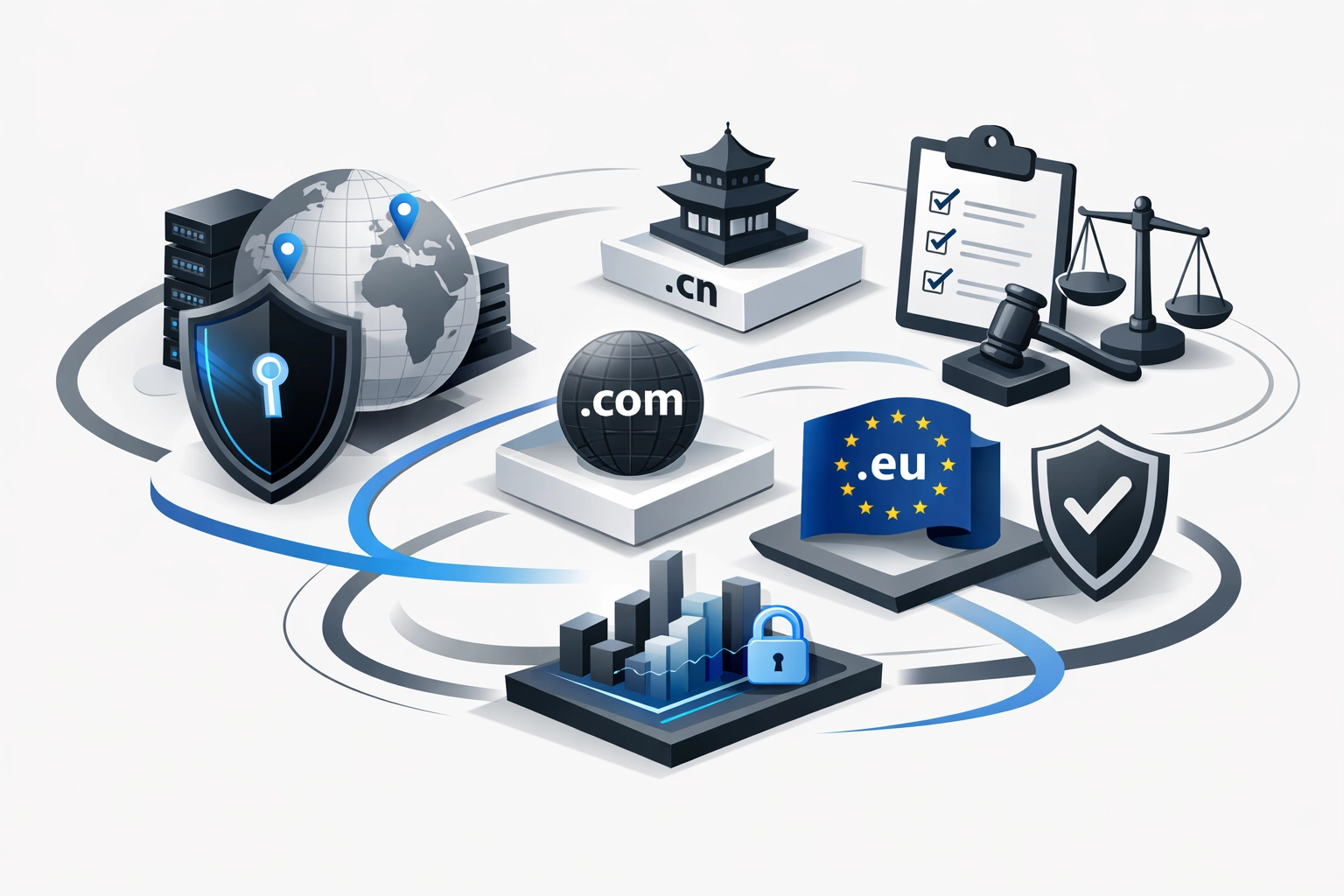
Governance, Security, and Brand Control
- Can you manage a coherent brand network across extensions with clear registration and renewal policies?
- Do you have a plan for domain security, DNS integrity, and brand protection across multiple TLDs?
- Are there brand- or product-specific governance considerations that justify a brand TLD or a curated set of gTLDs?
Accessibility and Availability
- Is the extension widely accessible to registrants in your target markets (pricing, restrictions, IDN support)?
- Are there practical constraints on availability for your preferred brand name in certain TLDs?
- How quickly can you implement changes across extensions if a rebrand or localization is required?
As a practical example, a multinational consumer brand evaluating extensions for global reach might start with a core set that balances traditional credibility (such as .com or country-specific extensions in key markets) with targeted, purpose-built options for product lines or regional campaigns. The key is to align the extension with user expectations in each locale while maintaining a clear governance strategy to avoid a fragmented identity. For those seeking authoritative data and directory resources during this process, WebAtla's TLD directory can help map available options, while a pricing session can reference WebAtla Pricing to understand cost implications.
What the data says about signals, trust, and popularity
While trust is ultimately a product of brand strength, security, and user experience, the extension itself remains a signal that users weigh before engaging. Industry data reinforces that the number of registered domains across all TLDs sits in the hundreds of millions, illustrating both the scale of the ecosystem and the variety of choices available to brands. Verisign’s Domain Name Industry Briefs document ongoing growth and distribution across gTLDs and ccTLDs, underscoring the importance of a deliberate portfolio strategy rather than a single-domain approach. For context, Verisign reported hundreds of millions of domain registrations at various points in 2024–2025, illustrating the dynamic, high-volume nature of the market. (investor.verisign.com)
In practice, what users perceive about a TLD depends on the market and the context. Studies and industry commentary converge on the view that .com remains the most trusted and memorable extension in many markets, but other extensions—especially those tied to a region or a specific technology—gain credibility when backed by strong branding and security signals. For example, technology-forward domains like .io or .ai are widely used by startups and AI-focused brands to indicate domain relevance, but they still require a foundation of credible content and robust security to earn broad cross-cultural trust. (atom.com)
Examples and practical implications for global brands
Consider three hypothetical scenarios to illustrate how the LINGUA framework can influence decision-making:
- Global tech brand: A company launching a world-wide product with a strong AI component might pair a core .com domain with a geographically strategic ccTLD for key markets (e.g., .de for Germany, .fr for France) to maximize local trust while preserving global authority. If the brand name is already well-known, a brand-specific gTLD could be evaluated as a long-term expansion option, provided governance and security controls are in place.
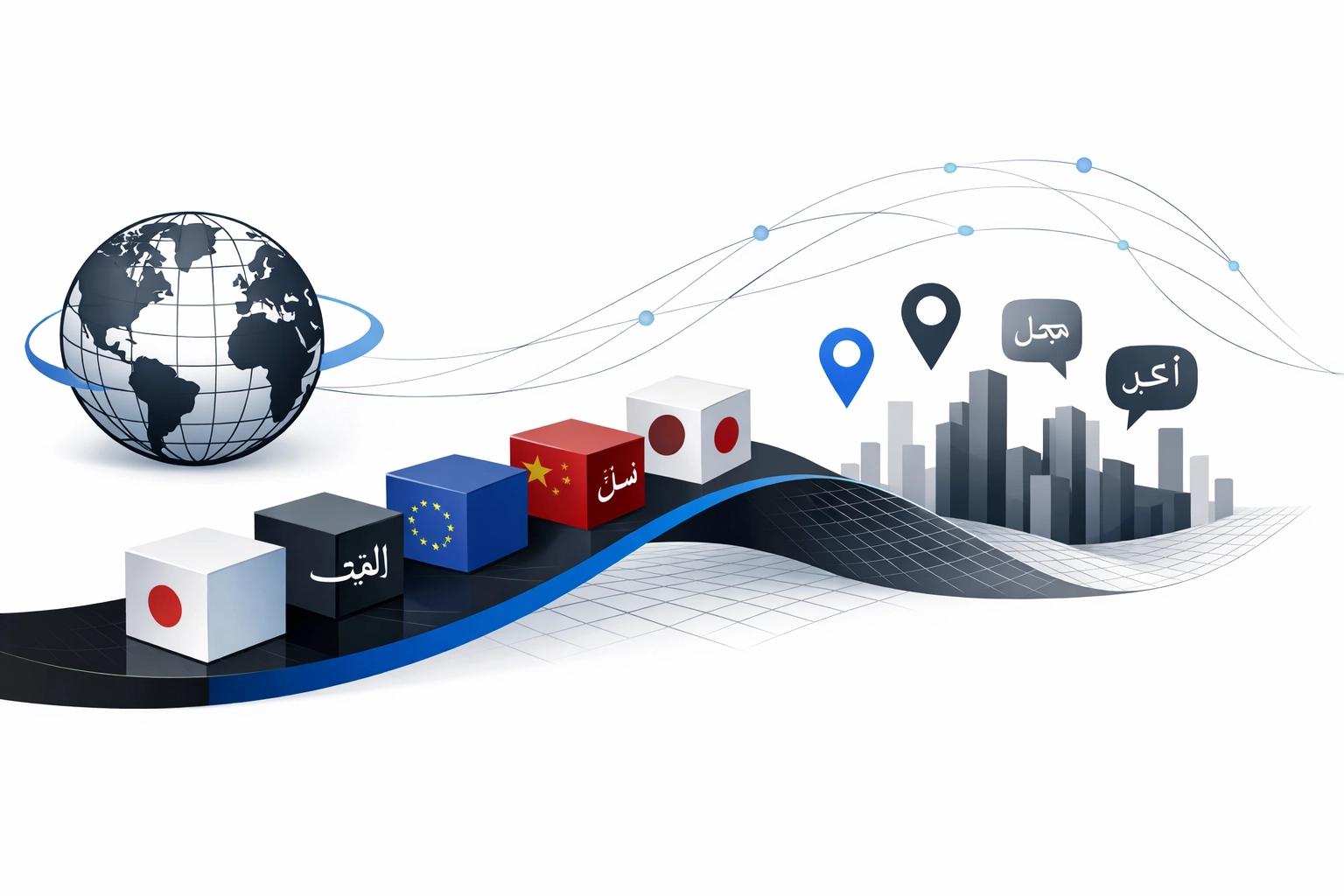
- Regional consumer brand entering new markets: In markets where the local language uses non-Latin scripts, choosing a local ccTLD (or an internationally friendly gTLD with robust IDN support) can improve usability and search appearance in local SERPs, while retaining a strong global brand through .com as a primary anchor.
- Educational or nonprofit initiative with multilingual audiences: An organization serving multilingual educational content may prioritize extensions that convey information credibility (e.g., .edu-like trust in content contexts) while ensuring accessibility across languages and alphabets.
In all three scenarios, the discipline is to treat the domain extension as part of the brand’s global identity—one that must be managed with governance, security, and ongoing optimization. For organizations evaluating or building a domain portfolio, it may be prudent to browse a directory of options and compare costs and availability; the WebAtla TLD directory is a practical starting place. For broader framework alignment, WebAtla's country-domain listings can help map regional needs alongside language considerations.
Limitations and common mistakes (and how to avoid them)
As with any framework, LINGUA has its limits. Here are the most frequent missteps and how to mitigate them:
- Over-prioritizing the extension over brand alignment. A striking TLD can capture attention, but it won’t sustain trust without consistent branding, quality content, and security signals. The extension should support a coherent brand narrative, not drive it in a vacuum. Experts emphasize that trust signals—https, transparent privacy, clear governance—are essential across all extensions. (atom.com)
- Neglecting local market realities. Relying solely on a global extension without local context can undermine search appearance and user behavior in key regions. Data from industry reports and region-specific adoption patterns suggest balancing core anchors with market-specific signals. In practice, a portfolio that includes targeted ccTLDs and regionally meaningful gTLDs often performs better than a one-size-fits-all approach. (statista.com)
- Underestimating governance complexity. Managing multiple extensions requires disciplined governance around renewals, brand protection, and security. Evidence from governance-focused research and industry discussions suggests a clear plan reduces risk and improves long-term brand coherence. (globalcyberalliance.org)
Another limitation is that most data on memorability and trust comes from surveys or brand sentiment studies that can vary by population and context. While many sources agree that .com maintains a trusted status, the degree of impact from non-.com extensions is nuanced and highly contingent on how well the extension is integrated into the overall brand strategy. This underscores the importance of a tailored, audience-specific approach rather than chasing universal rules. For those seeking a practical way to explore options with a credible partner, WebAtla offers a curated directory and pricing information to inform portfolio decisions.
What experts say—and a practical takeaway
Expert voices emphasize that the extension is a signal, not a substitute for fundamentals. A notable insight is that domain familiarity can strengthen brand trust when paired with secure, high-quality experiences. In 2025–2026 discussions about domain extensions, practitioners highlight that recognized extensions may still outperform obscure options in broad consumer contexts, but niche or brand-accurate extensions can unlock competitive advantages in specific markets, especially when governance and security align with user expectations. In this sense, the optimal strategy is a thoughtful blend of anchor credibility (core extensions) and context-appropriate experimentation (niche extensions) guided by rigorous governance and measurable outcomes. (atom.com)
Conclusion: a deliberate, multilingual approach to domain extension strategy
The domain extension landscape is not a mere afterthought. For global brands and multilingual audiences, it’s a strategic signal that affects trust, recall, and navigational ease. The practical framework outlined here—the LINGUA approach—helps branding teams assess language alignment, intelligibility, navigation, geographic signaling, governance, and availability in a structured way. While the data landscape shows that .com remains dominant in many markets, extensions that align with local languages and cultural associations can meaningfully improve user experience when combined with strong branding and rigorous security practices. For teams seeking a dedicated source of directory data and comparative options, exploration through the WebAtla portfolio (including the TLD directory and related resources) offers a pragmatic path forward as you shape a coherent global domain strategy.
Where to start and how to act next
1) Define your core markets and language needs. 2) Use the LINGUA filters to shortlist extensions that align with user expectations in those markets. 3) Validate with small-scale tests (A/B experiences, local search comparisons, and brand recall tests). 4) Establish governance and security baselines across extensions. 5) Revisit and refine as markets evolve and new TLDs mature. For ongoing reference, you can explore the WebAtla TLD directory and related resources to map current options and pricing.
If you’d like a hands-on evaluation of specific extensions for a real brand scenario, the client resources at WebAtla (including the TLD directory, country lists, and pricing) provide a practical starting point to translate this framework into action: Domain extension directory, country-domain mappings, pricing overview.